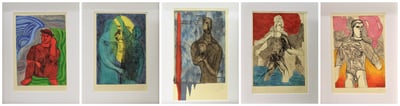
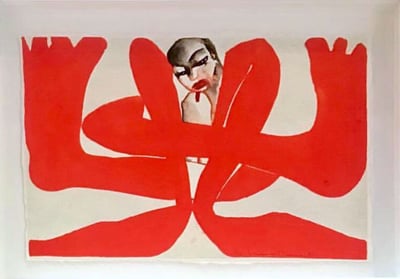
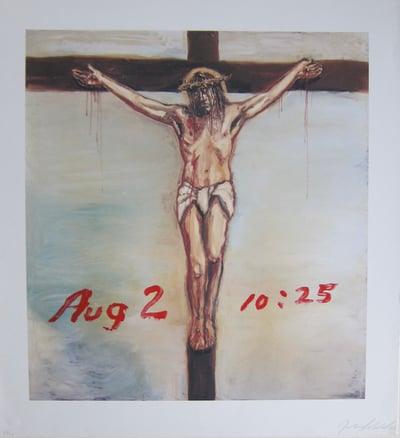
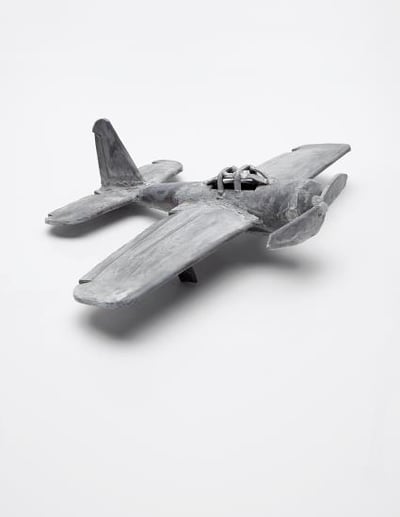
Copperplate etching, monotype, drypoint and aquatint on Zerkall handmade paper, ivory colour, 250g.
- The portfolio containing 5 works by Sandro Chia, dedicated to "Elektra" (work by Hugo von Hofmansthal, set to music by Richard Strauss) signed and numbered by the artist on the front
- Realized in April 1995 in Radierwerkstatt Zein/Vienna.
- Thaddeus Ropac Salzburg-Paris gallery edition.
- The folder made by Ammering/Ried.
- Sheet size 82 x 60 cm / print 56 x 40 cm
- Folder dimensions: 83×63 cm
- Titles: Agamemnon, Orestes, Elektra Calma Folle, Elektra Orestes, Elektra.
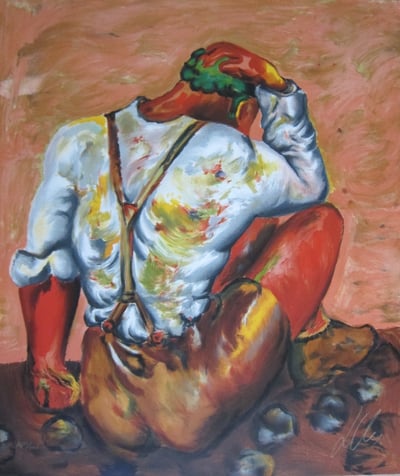
Sandro Chia’s Elektra is a striking portfolio of five mixed-media prints, dedicated to the ancient Greek myth of Electra, as interpreted through Hugo von Hofmannsthal’s play and Richard Strauss’ opera. The portfolio, realized in April 1995, combines copperplate etching, monotype, drypoint, and aquatint techniques on Zerkall handmade paper. The vivid, expressive colors and dramatic, textured lines capture the intensity and complexity of the myth’s characters—Agamemnon, Orestes, and Elektra herself. Each piece in the series embodies a sense of emotional turbulence, befitting the tragic themes of vengeance, grief, and madness. The raw energy of the etching and aquatint work reflects Chia’s signature style, where the figures seem to emerge from the paper with a mix of abstracted form and classical references. This limited edition, signed and numbered by the artist, was published by Galerie Thaddaeus Ropac (Salzburg-Paris), and is housed in an elegant folder, reinforcing the gravitas of the Elektra narrative.
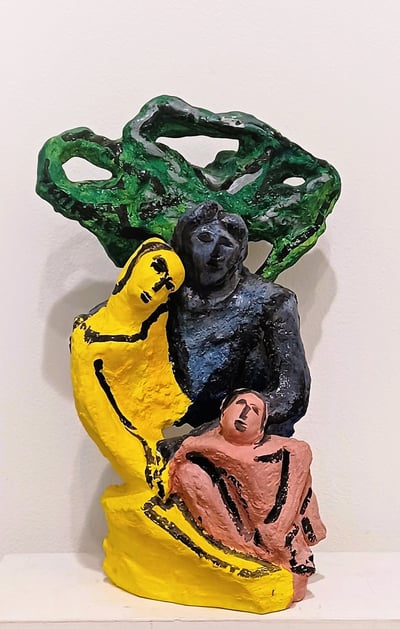
Sandro Chia (Italy, 1946) is a prominent painter and sculptor, associated with the Transavanguardia movement. Known for his expressive, figurative style, his works blend mythology, history, and personal symbolism, often rendered in vibrant colors and dynamic compositions. Chia’s art has been exhibited globally, cementing his role in revitalizing Italian contemporary art.
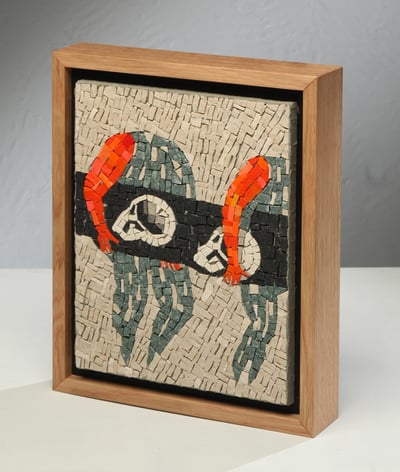
Mixed MediaMixed media refers to artwork that incorporates more than one medium within a single piece. Unlike multimedia art, which combines distinct forms of visual art and often includes elements like sound, video, or digital media, mixed media focuses on combining traditional art materials, such as paint, ink, and collage. Mixed media art allows artists to achieve a wide range of effects and textures by layering and blending different materials.
Copperplate etching, monotype, drypoint and aquatint on Zerkall handmade paper, ivory colour, 250g.
- The portfolio containing 5 works by Sandro Chia, dedicated to "Elektra" (work by Hugo von Hofmansthal, set to music by Richard Strauss) signed and numbered by the artist on the front
- Realized in April 1995 in Radierwerkstatt Zein/Vienna.
- Thaddeus Ropac Salzburg-Paris gallery edition.
- The folder made by Ammering/Ried.
- Sheet size 82 x 60 cm / print 56 x 40 cm
- Folder dimensions: 83×63 cm
- Titles: Agamemnon, Orestes, Elektra Calma Folle, Elektra Orestes, Elektra.
Sandro Chia’s Elektra is a striking portfolio of five mixed-media prints, dedicated to the ancient Greek myth of Electra, as interpreted through Hugo von Hofmannsthal’s play and Richard Strauss’ opera. The portfolio, realized in April 1995, combines copperplate etching, monotype, drypoint, and aquatint techniques on Zerkall handmade paper. The vivid, expressive colors and dramatic, textured lines capture the intensity and complexity of the myth’s characters—Agamemnon, Orestes, and Elektra herself. Each piece in the series embodies a sense of emotional turbulence, befitting the tragic themes of vengeance, grief, and madness. The raw energy of the etching and aquatint work reflects Chia’s signature style, where the figures seem to emerge from the paper with a mix of abstracted form and classical references. This limited edition, signed and numbered by the artist, was published by Galerie Thaddaeus Ropac (Salzburg-Paris), and is housed in an elegant folder, reinforcing the gravitas of the Elektra narrative.
Sandro Chia (Italy, 1946) is a prominent painter and sculptor, associated with the Transavanguardia movement. Known for his expressive, figurative style, his works blend mythology, history, and personal symbolism, often rendered in vibrant colors and dynamic compositions. Chia’s art has been exhibited globally, cementing his role in revitalizing Italian contemporary art.
Painting is a bit like finding one's roots again.
- Sandro Chia
Sandro Chia (b. 1946 Italy) is an Italian painter and sculptor, renowned for his vibrant and expressive works that played a significant role in the Transavanguardia movement, Italy's version of Neo-Expressionism. Emerging in the late 1970s, Chia's work is characterized by bold colors, dynamic brushstrokes, and a revival of figurative painting, often featuring mythological, historical, and personal themes. His style is both sensual and monumental, combining elements of classical art with a contemporary twist. Chia’s paintings and sculptures often exude a sense of energy and vitality, reflecting his interest in the human figure and its emotional depth. As a leading figure in the resurgence of figurative art in the late 20th century, Chia has left a lasting impact on contemporary art.
Postmodernism is an art movement that emerged as a reaction against authority and traditional boundaries, seeking to blur the lines between art and everyday life. It aimed to bridge the gap between the cultural elite and the general public by embracing eclectic mixtures of earlier conventions and styles. Postmodernist art often challenges established norms and celebrates diversity, irony, and pastiche, making it a movement that reflects the complexities of contemporary culture.