Acrylic and oil on hand-painted ceramic.
- Support: cement and iron
- Signed on the base.
- Bibliography: Sandro Chia, Sculpture, Figures with Tree and. Domestica, 1994, p. 10-11
- M. Pratesi: "De Statua - Aspects Of Italian Sculpture Of The Twentieth Century" 2003, Ed. Masso delle Fate, Signa (FI), p. 81.
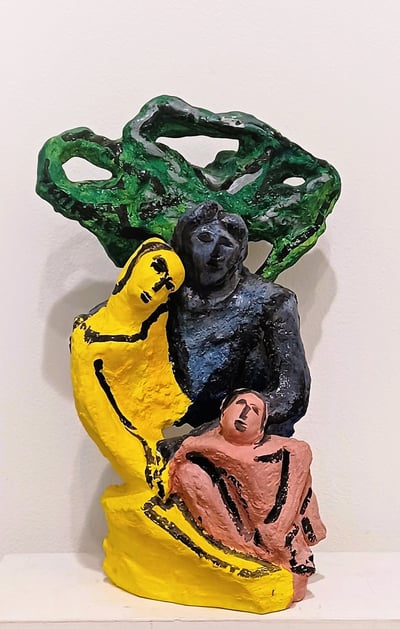
Sandro Chia’s Figure con albero is a hand-painted ceramic sculpture created in 1994. The piece depicts a trio of abstracted figures, positioned in a dynamic and intimate grouping, set against a stylized tree. The vibrant use of acrylic and oil paints brings a sense of immediacy and energy to the work, with bold colors like yellow, black, and pink applied to emphasize the flowing forms of the figures. The tree, rendered in green, serves as a backdrop that adds both depth and symbolism, possibly referencing themes of growth, shelter, or rootedness. The rough, textured surface of the ceramic creates a tactile quality, further enhancing the expressive nature of the sculpture.Chia, a key figure in the Transavanguardia movement, often explores the human condition, mythological themes, and classical forms through his works. In Figure con albero, the intertwining figures seem to suggest a narrative of connection, protection, or familial bonds, all conveyed through Chia’s characteristically dynamic, expressive style. Signed on the base, the sculpture is supported by cement and iron, grounding its sculptural presence both physically and conceptually.
Sandro Chia (Italy, 1946) is a prominent painter and sculptor, associated with the Transavanguardia movement. Known for his expressive, figurative style, his works blend mythology, history, and personal symbolism, often rendered in vibrant colors and dynamic compositions. Chia’s art has been exhibited globally, cementing his role in revitalizing Italian contemporary art.
CeramicCeramic is a term used to describe objects made from clay or other inorganic materials. These objects can be either decorative or functional and have been created since at least 4,000 B.C. Ceramic art involves making, decorating, and firing these objects in a kiln, a special high-temperature oven.
Acrylic and oil on hand-painted ceramic.
- Support: cement and iron
- Signed on the base.
- Bibliography: Sandro Chia, Sculpture, Figures with Tree and. Domestica, 1994, p. 10-11
- M. Pratesi: "De Statua - Aspects Of Italian Sculpture Of The Twentieth Century" 2003, Ed. Masso delle Fate, Signa (FI), p. 81.
Sandro Chia’s Figure con albero is a hand-painted ceramic sculpture created in 1994. The piece depicts a trio of abstracted figures, positioned in a dynamic and intimate grouping, set against a stylized tree. The vibrant use of acrylic and oil paints brings a sense of immediacy and energy to the work, with bold colors like yellow, black, and pink applied to emphasize the flowing forms of the figures. The tree, rendered in green, serves as a backdrop that adds both depth and symbolism, possibly referencing themes of growth, shelter, or rootedness. The rough, textured surface of the ceramic creates a tactile quality, further enhancing the expressive nature of the sculpture.Chia, a key figure in the Transavanguardia movement, often explores the human condition, mythological themes, and classical forms through his works. In Figure con albero, the intertwining figures seem to suggest a narrative of connection, protection, or familial bonds, all conveyed through Chia’s characteristically dynamic, expressive style. Signed on the base, the sculpture is supported by cement and iron, grounding its sculptural presence both physically and conceptually.
Sandro Chia (Italy, 1946) is a prominent painter and sculptor, associated with the Transavanguardia movement. Known for his expressive, figurative style, his works blend mythology, history, and personal symbolism, often rendered in vibrant colors and dynamic compositions. Chia’s art has been exhibited globally, cementing his role in revitalizing Italian contemporary art.
Painting is a bit like finding one's roots again.
- Sandro Chia
Sandro Chia (b. 1946 Italy) is an Italian painter and sculptor, renowned for his vibrant and expressive works that played a significant role in the Transavanguardia movement, Italy's version of Neo-Expressionism. Emerging in the late 1970s, Chia's work is characterized by bold colors, dynamic brushstrokes, and a revival of figurative painting, often featuring mythological, historical, and personal themes. His style is both sensual and monumental, combining elements of classical art with a contemporary twist. Chia’s paintings and sculptures often exude a sense of energy and vitality, reflecting his interest in the human figure and its emotional depth. As a leading figure in the resurgence of figurative art in the late 20th century, Chia has left a lasting impact on contemporary art.
Postmodernism is an art movement that emerged as a reaction against authority and traditional boundaries, seeking to blur the lines between art and everyday life. It aimed to bridge the gap between the cultural elite and the general public by embracing eclectic mixtures of earlier conventions and styles. Postmodernist art often challenges established norms and celebrates diversity, irony, and pastiche, making it a movement that reflects the complexities of contemporary culture.