

Rosette, 1984
Form
Medium
Size
- Inches
- Centimeters
Edition
Price
- USD
- EUR
- GBP
- CHF
- Authenticity Guaranteed
- Insured Shipping
- Online Since 2005

Thomas Lange
Prometheus, 1986
Tapestry
Tapestry
EUR 2,700

Thomas Lange
Tatowiert II (red), 1984
Drawing / Watercolor
Mixed Media
EUR 2,000
Thomas Lange
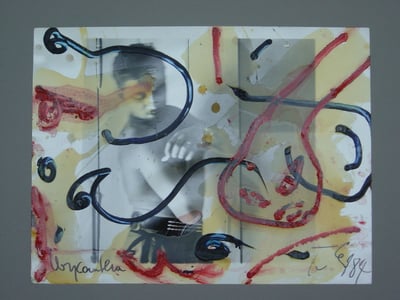
Tatowiert II (cream), 1984
Drawing / Watercolor
Mixed Media
EUR 2,000

Thomas Lange
Tatowiert II (brown), 1984
Drawing / Watercolor
Mixed Media
EUR 2,000

Thomas Lange
Rosette, 1984
Painting
Oil on canvas
EUR 4,000

Thomas Lange
Casar, 1984
Painting
Oil on canvas
EUR 5,000

Thomas Lange
Tatowiert II (mixed), 1984
Drawing / Watercolor
Mixed Media
EUR 2,000
Thomas Lange
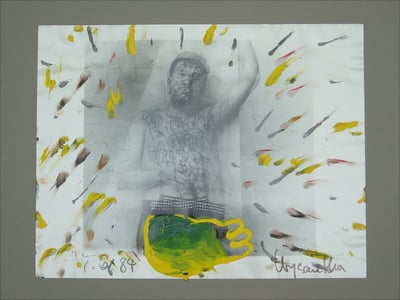
Tatowiert II (yellow), 1984
Drawing / Watercolor
Mixed Media
EUR 2,000

Thomas Lange
Brancacci - Petrus im Gefa?ngnis, 1995
Painting
Oil on canvas
EUR 15,000

Thomas Lange
Brancacci (redisch), 1995
Painting
Oil on canvas
EUR 2,500

Thomas Lange
Brancacci (green), 1995
Painting
Oil on canvas
EUR 2,500
Thomas Lange
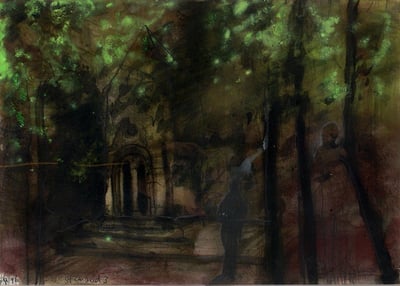
Steinwald 3, 1996
Drawing / Watercolor
Mixed Media
EUR 1,600

Thomas Lange
Steinwald 10, 1996
Drawing / Watercolor
Mixed Media
EUR 1,600

Thomas Lange
Steinwald 11, 1996
Drawing / Watercolor
Mixed Media
EUR 1,600

Thomas Lange
Pontormo in A?gypten, 1996
Drawing / Watercolor
Mixed Media
EUR 2,900

Thomas Lange
Zeittunnel (brown), 1999 - 2000
Drawing / Watercolor
Mixed Media
EUR 1,600

Thomas Lange
Zeittunnel (green), 1999 - 2000
Drawing / Watercolor
Mixed Media
EUR 1,600

Thomas Lange
Zeittunnel (red), 1999 - 2000
Drawing / Watercolor
Mixed Media
EUR 1,600

Thomas Lange
Zeittunnel (blue), 1999 - 2000
Drawing / Watercolor
Mixed Media
EUR 1,600

Thomas Lange
Ohne Titel (Dark Colors), 2003
Painting
Oil on canvas
EUR 2,500
Thomas Lange
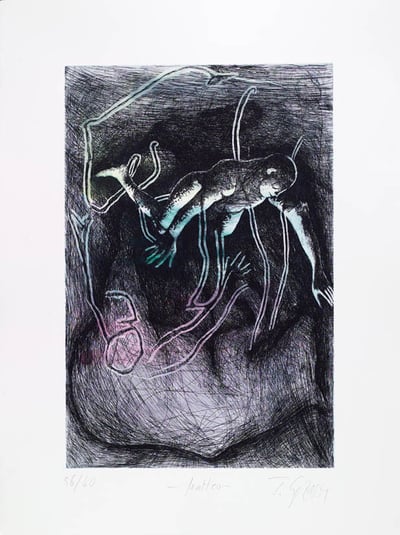
Matteo, 2004
Limited Edition Print
Mixed Media
Currently Not Available
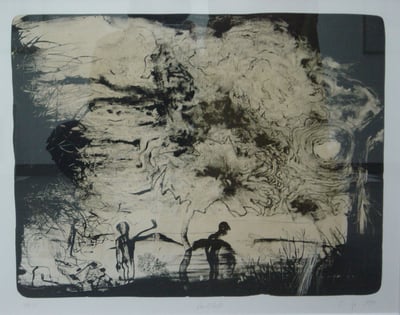
Thomas Lange
Landschaft, 1990
Limited Edition Print
Lithograph
Currently Not Available
Related Artists


What is figurative art?
Sometimes known as Figurativism, figurative art refers to sculptures and paintings that are clearly or specifically derived from real objects, making them representational. The term figurative art is often used in contrast to abstract art. However, since the emergence of abstract art, figurative art has come to describe any form of modern art that has strong references to the real world or actual situations.

Thomas Lange
Rosette, 1984
120 x 150 cm


