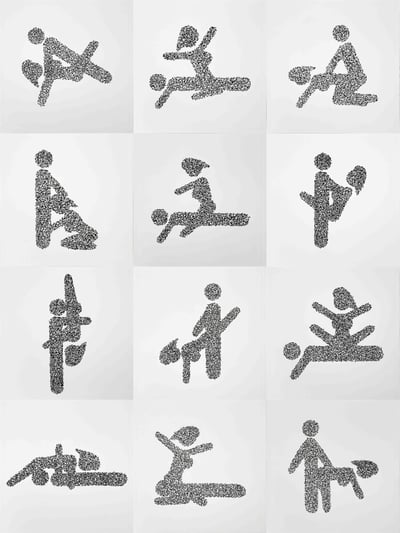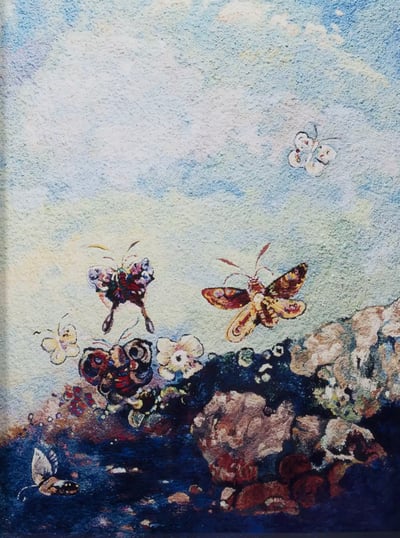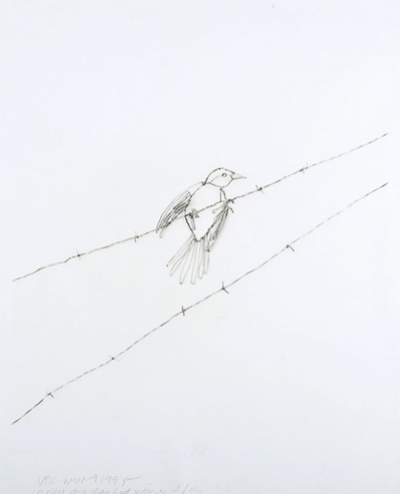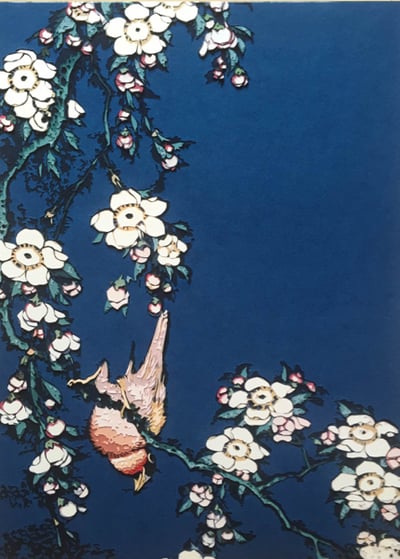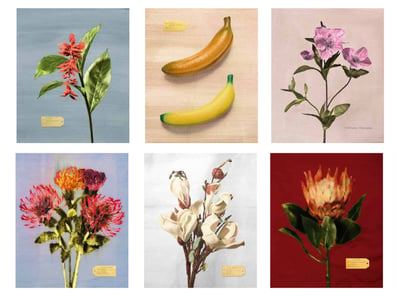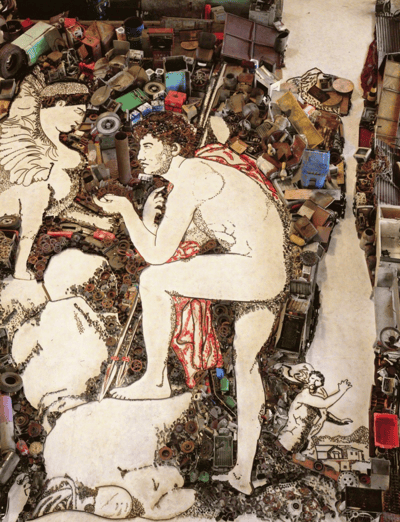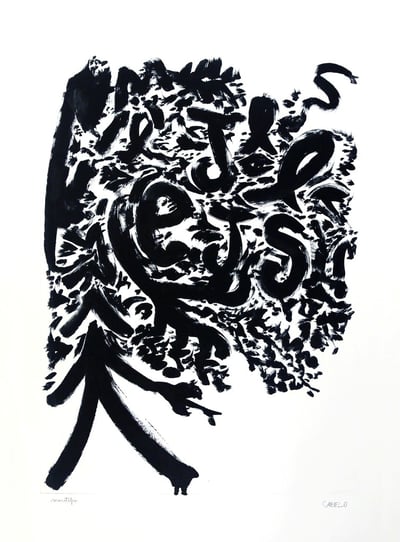
Portfolio of 6 Pigmented Ink Printings; on Hahnemüle paper.
Vik Muniz’s After Sonia Delaunay (2025) is a portfolio of six pigmented ink prints on Hahnemühle paper that reinterprets the vibrant modernist language of Sonia Delaunay through Muniz’s contemporary lens. Issued in an edition of 20, each print measures 49.8 x 38.1 cm (19.60 x 15 in.) and presents stylized female figures composed of bold geometric forms and saturated color blocks. Drawing inspiration from Delaunay’s Orphist exploration of rhythm, abstraction, and fashion, Muniz translates her dynamic patterns into crisp, graphic compositions. Set against textured white grounds, the figures appear both decorative and architectural, balancing movement with flatness. The portfolio reflects Muniz’s ongoing engagement with art history, appropriation, and the transformation of iconic visual vocabularies into new contexts.
Vik Muniz (Brazil, 1961) is a celebrated contemporary artist known for his innovative use of unconventional materials like chocolate, garbage, and thread. He recreates iconic images with these mediums, blurring the line between high art and everyday objects. Muniz’s works explore perception, memory, and the relationship between art and reality.
Pigment print A pigment print is a type of print that uses ink colored with pigment particles. Pigment ink is commonly used in inkjet printing because it is more durable and resistant to fading compared to dye-based ink, which is more vibrant but less stable over time.
Portfolio of 6 Pigmented Ink Printings; on Hahnemüle paper.
Vik Muniz’s After Sonia Delaunay (2025) is a portfolio of six pigmented ink prints on Hahnemühle paper that reinterprets the vibrant modernist language of Sonia Delaunay through Muniz’s contemporary lens. Issued in an edition of 20, each print measures 49.8 x 38.1 cm (19.60 x 15 in.) and presents stylized female figures composed of bold geometric forms and saturated color blocks. Drawing inspiration from Delaunay’s Orphist exploration of rhythm, abstraction, and fashion, Muniz translates her dynamic patterns into crisp, graphic compositions. Set against textured white grounds, the figures appear both decorative and architectural, balancing movement with flatness. The portfolio reflects Muniz’s ongoing engagement with art history, appropriation, and the transformation of iconic visual vocabularies into new contexts.
Vik Muniz (Brazil, 1961) is a celebrated contemporary artist known for his innovative use of unconventional materials like chocolate, garbage, and thread. He recreates iconic images with these mediums, blurring the line between high art and everyday objects. Muniz’s works explore perception, memory, and the relationship between art and reality.
The great challenge is how to make smart, intelligent art that can speak to everybody.
- Vik Muniz
Vik Muniz is a photographer and artist from Brazil. He was originally a sculptor, but grew increasingly interested in the artistic photographs that were being taken of his work. Vik Muniz now focuses his artistic talents completely on photography, and uses a number of unconventional items such as diamonds, garbage and chocolate syrup to create images that depict certain events in history and pop culture. Vik Muniz got his start in art in a rather unique way. He was working in advertising as a teenager, and on his way back from a formal gala, he tried to break up a street fight. One of the the men accidentally shot him in the leg, and paid Muniz not to press charges against him. Vik Muniz then moved to New York, where he worked in an art studio his friend lent him and began sculpting. Vik Muniz is very popular with art enthusiasts, and his Rio de Janeiro's MAM was second in attendance only to Picasso's exhibits. Vik Muniz was also part of the documentary Wasteland, where the artwork he'd created in the garbage dumps outside of Rio de Janeiro was featured. The movie was nominated for an Academy Award. (Artist website)
Photorealism is a genre of art or artistic movement that involves drawing, painting, and other graphic media in which the artist carefully studies a photograph and attempts to reproduce it as realistically as possible in another medium. While the term can broadly describe any artwork created in this manner, it specifically refers to a group of painters and paintings in the U.S. art movement that emerged in the late 1960s and early 1970s.