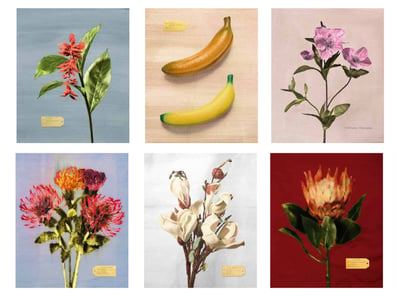
Flora Industrialis by Vik Muniz is a striking portfolio of 70 photographs, with each piece depicting botanical imagery in a hyper-realistic style. The set includes photographs of various flowers and plants, meticulously arranged and presented against soft, textured backgrounds. The attention to detail in the depiction of these organic forms, such as bright red flowers, soft pink petals, and even a pair of bananas, blurs the line between nature and industrialization, as suggested by the title. Each image is paired with a small, metallic plate, giving the photographs a sense of categorization or display reminiscent of scientific documentation. Muniz’s work often explores themes of perception, and here, the viewer is invited to reflect on the intersection between nature and human-made processes in an industrial world.
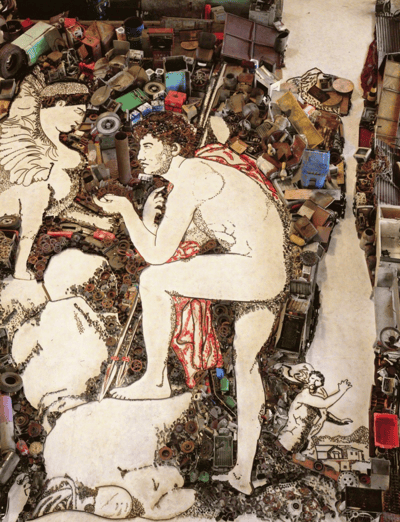
Vik Muniz (Brazil, 1961) is a celebrated contemporary artist known for his innovative use of unconventional materials like chocolate, garbage, and thread. He recreates iconic images with these mediums, blurring the line between high art and everyday objects. Muniz’s works explore perception, memory, and the relationship between art and reality.
PhotographA photograph is an image captured with a camera. Traditionally, photographs were made by exposing film and then developing the image on light-sensitive paper using chemicals. Today, photographs can also be captured digitally and printed or displayed electronically. The process requires a camera, whether film or digital, and a photographer.
Flora Industrialis by Vik Muniz is a striking portfolio of 70 photographs, with each piece depicting botanical imagery in a hyper-realistic style. The set includes photographs of various flowers and plants, meticulously arranged and presented against soft, textured backgrounds. The attention to detail in the depiction of these organic forms, such as bright red flowers, soft pink petals, and even a pair of bananas, blurs the line between nature and industrialization, as suggested by the title. Each image is paired with a small, metallic plate, giving the photographs a sense of categorization or display reminiscent of scientific documentation. Muniz’s work often explores themes of perception, and here, the viewer is invited to reflect on the intersection between nature and human-made processes in an industrial world.
Vik Muniz (Brazil, 1961) is a celebrated contemporary artist known for his innovative use of unconventional materials like chocolate, garbage, and thread. He recreates iconic images with these mediums, blurring the line between high art and everyday objects. Muniz’s works explore perception, memory, and the relationship between art and reality.
The great challenge is how to make smart, intelligent art that can speak to everybody.
- Vik Muniz
Vik Muniz is a photographer and artist from Brazil. He was originally a sculptor, but grew increasingly interested in the artistic photographs that were being taken of his work. Vik Muniz now focuses his artistic talents completely on photography, and uses a number of unconventional items such as diamonds, garbage and chocolate syrup to create images that depict certain events in history and pop culture. Vik Muniz got his start in art in a rather unique way. He was working in advertising as a teenager, and on his way back from a formal gala, he tried to break up a street fight. One of the the men accidentally shot him in the leg, and paid Muniz not to press charges against him. Vik Muniz then moved to New York, where he worked in an art studio his friend lent him and began sculpting. Vik Muniz is very popular with art enthusiasts, and his Rio de Janeiro's MAM was second in attendance only to Picasso's exhibits. Vik Muniz was also part of the documentary Wasteland, where the artwork he'd created in the garbage dumps outside of Rio de Janeiro was featured. The movie was nominated for an Academy Award. (Artist website)
Environmental art is a collective term that refers to a wide range of artistic practices and works that engage with historical and ecological themes. The term often encompasses ecological concerns, although it is not exclusively defined by them. Environmental art acknowledges and appreciates the early history of the environmental art movement, including works with activist themes and those celebrating the connection between nature and the artist through the use of natural materials.