
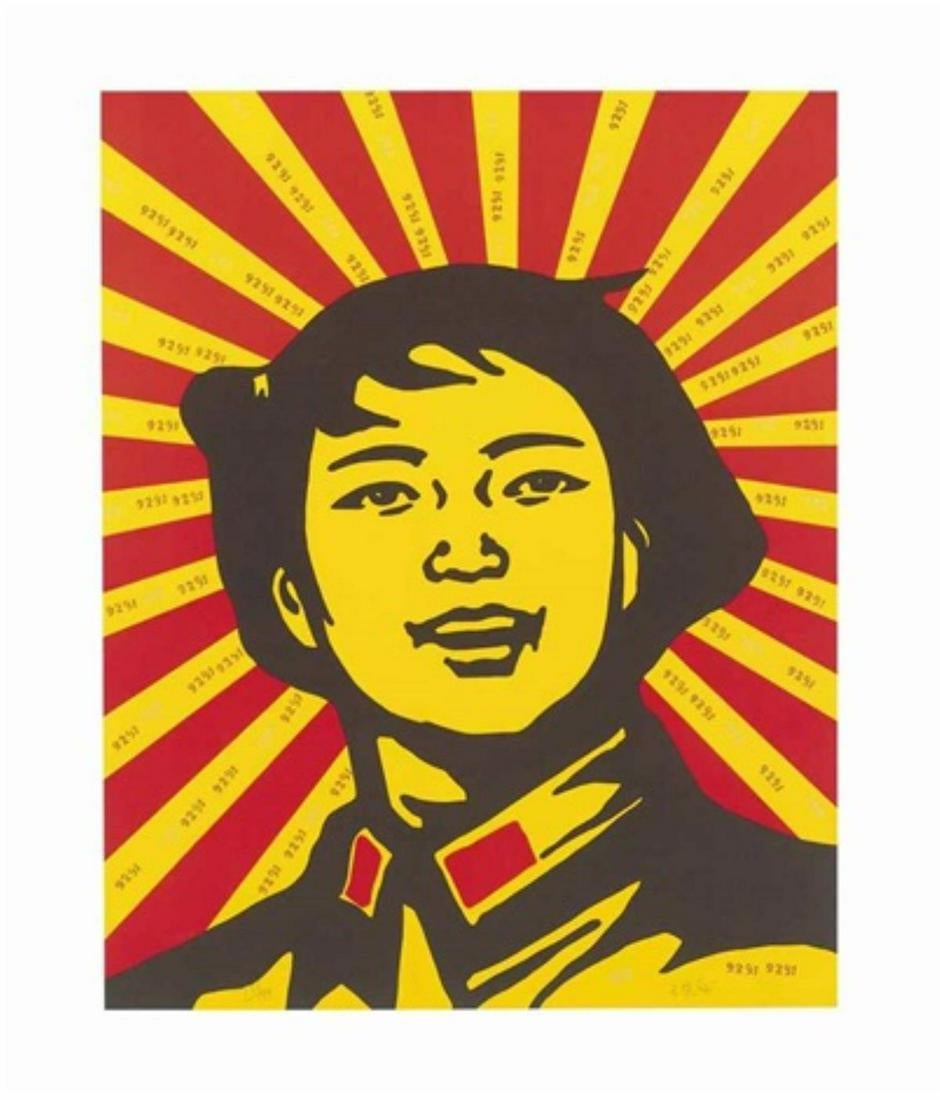
Original lithograph on paper - Limited edition of 199 - In Excellent condition - Hand signed by Wang Guangyi
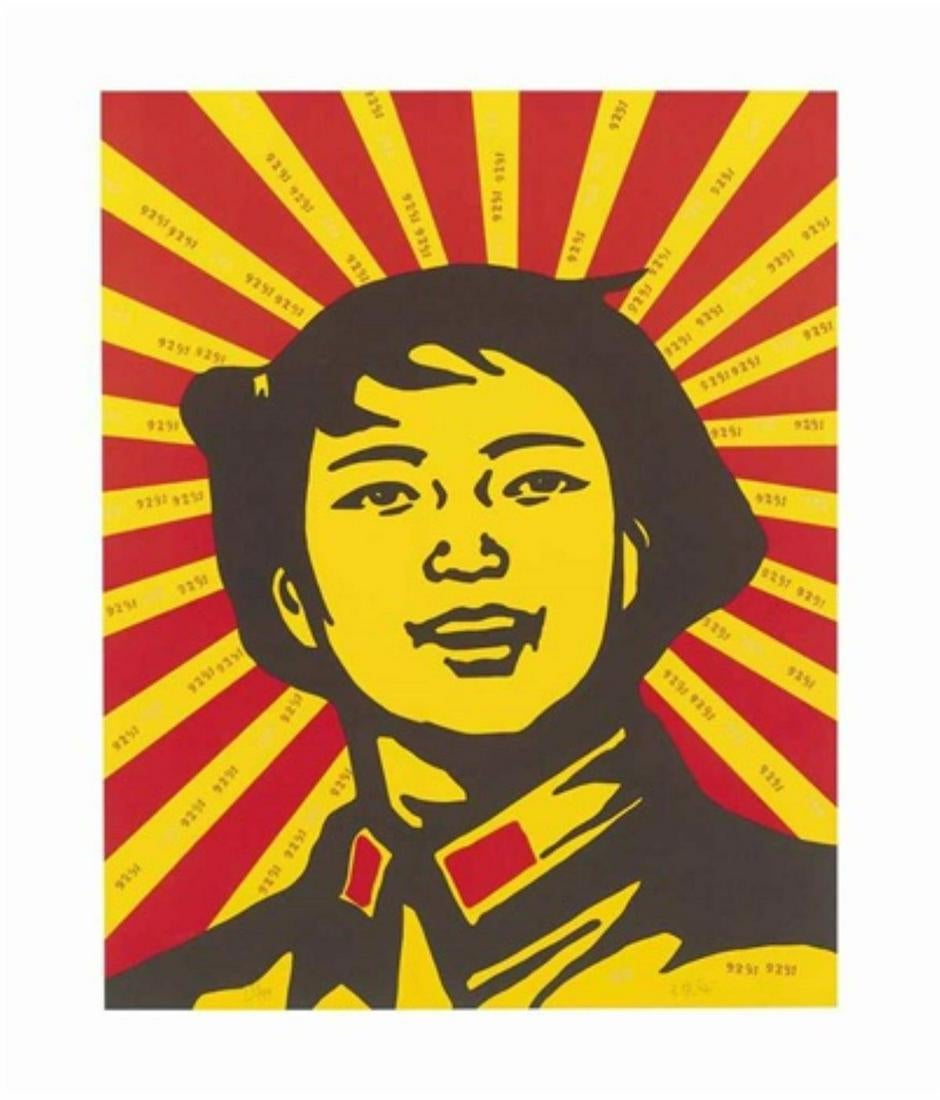
Face of the Believer by Wang Guangyi is a lithograph that captures the essence of Chinese socialist realism with a modern pop art sensibility. Created in 2003, this limited edition print features a stylized portrait of a young woman in a military uniform, set against a radiant background of red and yellow rays emanating from her. The composition, with its bold use of primary colors and strong contrast, recalls propaganda art, evoking themes of patriotism and ideological conviction. The woman’s confident expression and the repetitive motif of text across the rays contribute to the work's sense of unity and intensity. Guangyi is known for critiquing and recontextualizing cultural symbols, and this piece exemplifies his exploration of belief systems, collective identity, and the power of visual symbols in shaping societal values.
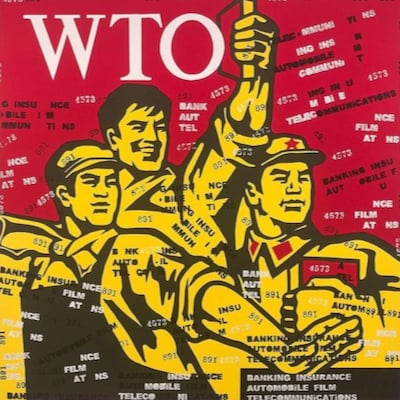
Artwork Copyright © Wang GuangyiWang Guangyi (China, 1957) is a Chinese artist renowned for his 'Great Criticism' series, which juxtaposes Cultural Revolution propaganda with Western brand logos, critiquing consumerism and political ideology. A leading figure in China's Political Pop movement, his work has been exhibited globally, including at the Venice Biennale.
Artwork Copyright © Wang GuangyiFace of the believer, 2003
Form
Medium
Size
- Inches
- Centimeters
Edition
Price
Available works →
- Authenticity Guaranteed
- Insured Shipping
- Online Since 2005
●
●Inventory 6979
●Signed
●Comes with gallery invoice and certificate
●Sell Us a Similar Artwork. Learn more.
Original lithograph on paper - Limited edition of 199 - In Excellent condition - Hand signed by Wang Guangyi
Face of the Believer by Wang Guangyi is a lithograph that captures the essence of Chinese socialist realism with a modern pop art sensibility. Created in 2003, this limited edition print features a stylized portrait of a young woman in a military uniform, set against a radiant background of red and yellow rays emanating from her. The composition, with its bold use of primary colors and strong contrast, recalls propaganda art, evoking themes of patriotism and ideological conviction. The woman’s confident expression and the repetitive motif of text across the rays contribute to the work's sense of unity and intensity. Guangyi is known for critiquing and recontextualizing cultural symbols, and this piece exemplifies his exploration of belief systems, collective identity, and the power of visual symbols in shaping societal values.
Artwork Copyright © Wang GuangyiWang Guangyi (China, 1957) is a Chinese artist renowned for his 'Great Criticism' series, which juxtaposes Cultural Revolution propaganda with Western brand logos, critiquing consumerism and political ideology. A leading figure in China's Political Pop movement, his work has been exhibited globally, including at the Venice Biennale.
Artwork Copyright © Wang Guangyi- Recently Added
- Price (Low-High)
- Price (High-Low)
- Year (Low-High)
- Year (High-Low)
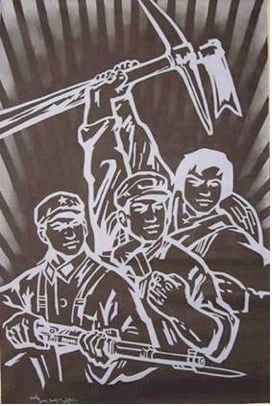
Wang Guangyi
Eternal Halo, 2004
Painting
Oil on canvas
Inquire For Price

Wang Guangyi
Face of the believer, 2003
Limited Edition Print
Lithograph
Currently Not Available
Available works by Wang Guangyi
See all →Wang Guangyi
Eternal Halo, 2004
Painting
Oil on canvas
Inquire For Price
Related Artists

Artwork by Wang Guangyi
What is Political Pop?
Political Pop was an art movement that emerged in China during the 1980s, blending the Pop Art style of Western countries with the socialist realism of China. This movement arose during a time of rapid social and political change in China, as artists sought to create works that questioned and critiqued these cultural shifts. Political Pop often juxtaposed iconic images from Chinese propaganda with Western consumer culture, highlighting the tensions between tradition and modernization.

Wang Guangyi
Face of the believer, 2003
79 x 63.5 cm


