
Triptych of two screen prints in blue and pink and one print coated in gold foil with gold leaf hand-applied by the artist.
- Paper size: 32 x 23.5 cm (each).
- With portfolio containing; title page, photographs, reproductions and text by Paul Wember, loose within the original folder
- Published by the Kaiser Wilhelm Museum, Krefeld, Germany, on the occasion of the exhibition Monochrome und Feuer at the Museum Haus Lange, Krefeld
Yves Klein’s Monochrome und Feuer (1961) is a striking triptych that explores the artist’s deep interest in color, material, and perception. This mixed media work consists of two monochrome screen prints in vibrant blue and pink, accompanied by a central print coated in gold foil with hand-applied gold leaf. The intense, saturated color fields in the blue and pink panels evoke Klein’s signature fascination with pure color, while the gold central panel adds a reflective, textural element, creating a dynamic interplay of light. Klein’s use of gold leaf brings a tactile, almost ethereal quality to the piece, further emphasizing his exploration of immateriality and the metaphysical aspects of art. This triptych was published in conjunction with the exhibition Monochrome und Feuer at the Museum Haus Lange, Krefeld, Germany, marking an important moment in Klein’s career and his pioneering work with monochrome art.
Artwork Copyright © Yves KleinYves Klein (France, 1928–1962) was a groundbreaking artist and key figure in postwar European art. Known for his signature 'International Klein Blue' (IKB), his monochrome paintings and performance art explored spirituality and immateriality. Klein’s innovative practices, including 'Anthropometry' body paintings and conceptual works, influenced movements like Minimalism and Conceptual Art.
Artwork Copyright © Yves KleinMonochrome und Feuer, 1961
Form
Medium
Size
- Inches
- Centimeters
Edition
Price
Available works →
- Authenticity Guaranteed
- Insured Shipping
- Online Since 2005
●
●Inventory 14996
●No signature
●Comes with gallery invoice and certificate
●Sell Us a Similar Artwork. Learn more.
Triptych of two screen prints in blue and pink and one print coated in gold foil with gold leaf hand-applied by the artist.
- Paper size: 32 x 23.5 cm (each).
- With portfolio containing; title page, photographs, reproductions and text by Paul Wember, loose within the original folder
- Published by the Kaiser Wilhelm Museum, Krefeld, Germany, on the occasion of the exhibition Monochrome und Feuer at the Museum Haus Lange, Krefeld
Yves Klein’s Monochrome und Feuer (1961) is a striking triptych that explores the artist’s deep interest in color, material, and perception. This mixed media work consists of two monochrome screen prints in vibrant blue and pink, accompanied by a central print coated in gold foil with hand-applied gold leaf. The intense, saturated color fields in the blue and pink panels evoke Klein’s signature fascination with pure color, while the gold central panel adds a reflective, textural element, creating a dynamic interplay of light. Klein’s use of gold leaf brings a tactile, almost ethereal quality to the piece, further emphasizing his exploration of immateriality and the metaphysical aspects of art. This triptych was published in conjunction with the exhibition Monochrome und Feuer at the Museum Haus Lange, Krefeld, Germany, marking an important moment in Klein’s career and his pioneering work with monochrome art.
Artwork Copyright © Yves KleinYves Klein (France, 1928–1962) was a groundbreaking artist and key figure in postwar European art. Known for his signature 'International Klein Blue' (IKB), his monochrome paintings and performance art explored spirituality and immateriality. Klein’s innovative practices, including 'Anthropometry' body paintings and conceptual works, influenced movements like Minimalism and Conceptual Art.
Artwork Copyright © Yves Klein- Recently Added
- Price (Low-High)
- Price (High-Low)
- Year (Low-High)
- Year (High-Low)

Yves Klein
Table d’Or, 1961/1963
Sculpture / Object
Mixed Media
EUR 24,800

Yves Klein
Table Rose, 1961/1963
Sculpture / Object
Mixed Media
EUR 22,500
Available works by Yves Klein
See all →Yves Klein
Table d’Or, 1961/1963
Sculpture / Object
Mixed Media
EUR 24,800
Yves Klein
Table Rose, 1961/1963
Sculpture / Object
Mixed Media
EUR 22,500
Related Artists

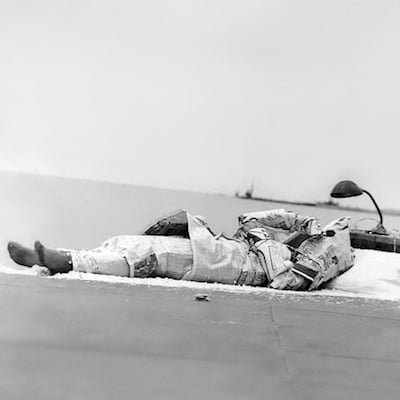
Artwork © Allan Kaprow’s “Happenings”
What is Happening?
A Happening is a term used to describe artistic and theatrical events held by artists in the 1950s and 60s. These events were typically staged in gallery installations or planned environments and often involved audience participation, along with elements like lighting, sounds, and slide projections. Happenings were a precursor to performance art, which later included the active participation of the artists themselves.


