

Alighiero Boetti
Alighiero Boetti (Italy, 1940–1994) was a key figure in the Arte Povera movement, celebrated for his conceptual and collaborative approach. Renowned for his embroidered maps and textual works, Boetti’s art often explored themes of duality, language, and global interconnectedness. His innovative practice blurred boundaries between artist and artisan.
© Alighiero Boetti. All rights reserved.
- Recently Added
- Price (Low-High)
- Price (High-Low)
- Year (Low-High)
- Year (High-Low)
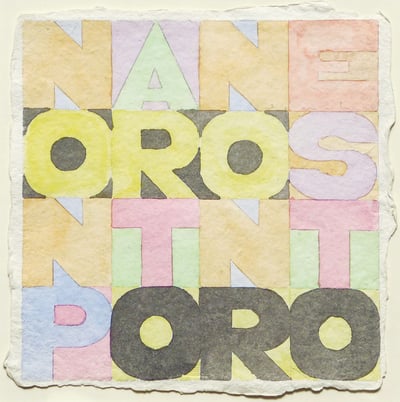
Alighiero Boetti
Non parto non resto (Nove quadrati), 1979
Drawing / Watercolor
Watercolor
Inquire For Price

Alighiero Boetti
Ammazzare il tempo, 1983
Limited Edition Print
Serigraph
Currently Not Available
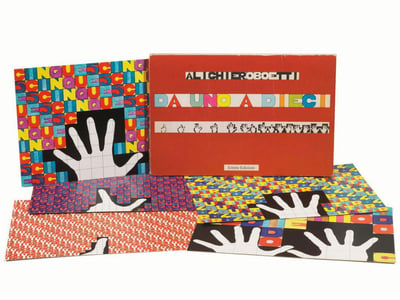
Alighiero Boetti
Da uno a dieci, 1980
Limited Edition Print
Offset Print
Currently Not Available
No sold works to show.
It's just a question of knowing the rules of the game.
- Alighiero Boetti
- Alighiero Boetti
Alighiero Boetti (b. 1940 Italy, d. 1994 Italy) was a prominent Italian conceptual artist and a key figure in the Arte Povera movement. Boetti's work is celebrated for its exploration of duality, order, and chaos, often using everyday materials to challenge traditional notions of art. His most famous works include the embroidered world maps, known as "Mappa," created with the help of Afghan artisans, which reflect his interest in geopolitics and the collaborative process. Boetti was fascinated by the interplay between the individual and the collective, a theme that runs throughout his diverse body of work, ranging from sculpture and installation to drawing and textile art. His innovative approach and intellectual depth have cemented his place as a significant figure in 20th-century art. (Artist website)
Related Artists


Related Articles
Popular, Art Movements - August 7, 2024
Art and Social Change: How Contemporary Artists Address Global Issues
Discover how contemporary artists drive social change! Explore impactful works addressing global issues like inequality, climate change, and human rights.Read More
Art Movements - March 28, 2024
Lettrism: The Alphabet as Art
Discover Lettrism, the art of the alphabet! Explore how artists like Isidore Isou redefined letters as visual art, blending poetry, design, and modern expressio…Read More
News, Popular, Collecting, Artists - August 12, 2026
In Minor Keys: Finding Intimacy and Identity at the 61st Venice Biennale — and in Your Collection
Explore how Koyo Kouoh’s 61st Venice Biennale vision, In Minor Keys, is shifting contemporary collecting toward quiet introspection, memory, and personal identi…Read More Artwork by Antoni Tapies
What is Arte Povera?
A movement and style in art that originated in Italy during the 1960s. It integrates elements of minimalism, performance art, and conceptual art by using everyday or seemingly worthless materials, such as newspapers, stones, or rags. The goal was to challenge and subvert the commercialization of art.
Explore »

