
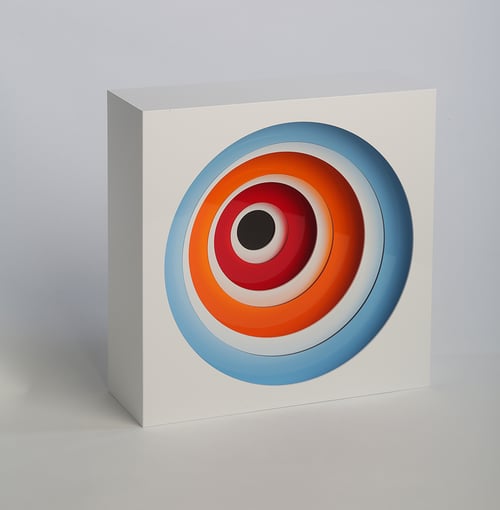
Gregorio Vardanega
Gregorio Vardanega (Italy/Argentina, 1923–2007) was a kinetic artist known for his pioneering use of light and movement. Associated with the Op Art and kinetic art movements, he created dynamic installations that used electronic lights and transparent materials to explore visual perception and spatial depth, leaving a lasting impact on Latin American modern art.
© Gregorio Vardanega. All rights reserved.
- Recently Added
- Price (Low-High)
- Price (High-Low)
- Year (Low-High)
- Year (High-Low)

Gregorio Vardanega
Boite à Cercles de Couleurs, 1970
Sculpture / Object
Acrylic sculpture
Currently Not Available
Gregorio Vardanega was a painter and sculptor born in Italy. Because his family migrated to live in Argentina, from the age of three his formal education was there, and he eventually studied in Buenos Aires at the Escuela Nacional de Bellas Artes. He also won gold medals in Argentina and Brussels; during the Exposition of Visual Art and the International and Universal Exposition, respectively. Gregorio Vardanega worked in acrylic glass and overlapping wires making structures. He also worked with kinetic art, and it is the artworks in this medium which are his most famous expressions. He was fascinated with moving, colored lights and their interaction with geometric, kinetic sculptures. He considered his work to be architectural in essence and hoped that his towers of lights, metal and glass might become large installation pieces in the future. He art shows attention to the urban landscape and how it might be transformed through art. One of Gregorio Vardanega's most highly regarded pieces is Tour Orthogonale, 1987; a vividly colorful tower of aluminum, Plexiglass and a motor. Another is Multiplication Electronique II, Ed. 2, 1966 made of Plexiglass, wood, light bulbs and motor. Gregorio Vardanega is associated with other kinetic artists including his wife, Martha Boto, and friends Carlos Cruz-Diez and Jesus Soto. Boto and Vardanega called the kind of artistic research they were doing “chromocinetism”. This reflects their interest, and that of society at the time, in outer space, scientific exploration; things unknown, and how movement, lights, colors and their art could reflect those social forces. The two continued to remain in contact with Argentinian artists from the group Arte Nuevo and MADI when Gregorio Vardanega returned to live in Paris in 1959, which was also the year he met Martha Boto.
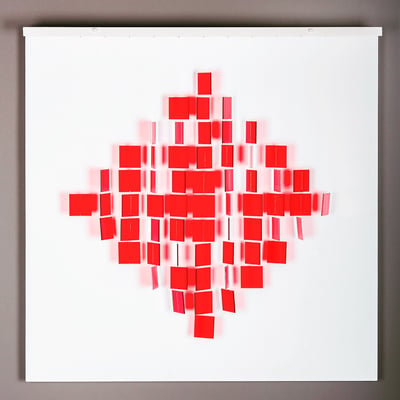
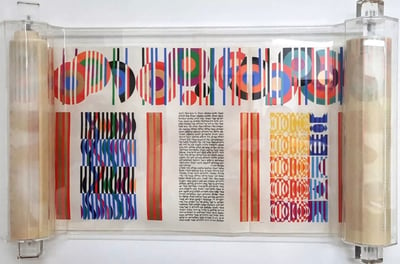
Related Artists


Related Articles
News, Popular, Collecting, Artists - August 12, 2026
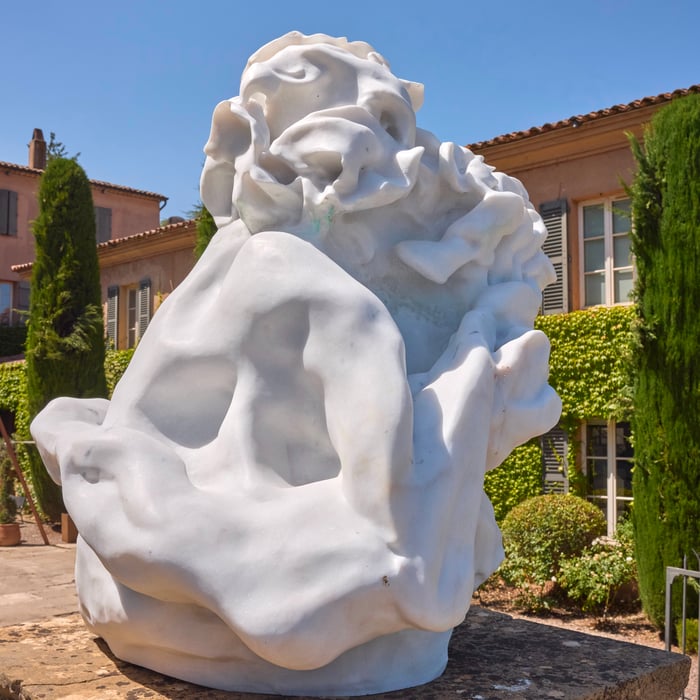
In Minor Keys: Finding Intimacy and Identity at the 61st Venice Biennale — and in Your Collection
Explore how Koyo Kouoh’s 61st Venice Biennale vision, In Minor Keys, is shifting contemporary collecting toward quiet introspection, memory, and personal identi…Read More

 Artwork by Roy Lichtenstein
What is late modernism?
Late Modernism refers to the continuation and evolution of Modernist principles in art, architecture, and literature from the mid-20th century into the late 20th century. This movement maintains a focus on form, abstraction, and the rejection of traditional styles, but it often incorporates more complexity and ambiguity compared to early Modernism. Late Mode…
Explore »

