

What is a drawing/watercolor?
Drawing and watercolor are two traditional art techniques which stand alone as media, but are often used in conjunction with each other. Drawing can create the basic outlines for watercolor painting. Drawing over dried watercolor or using watercolor pencils are combined media techniques.
- Show All
- Established
- Discoveries
- Show All
Artworks Related to Drawing / Watercolor

Maurice Wyckaert
Untitled (unique)
Drawing / Watercolor
Mixed Media
EUR 1,875
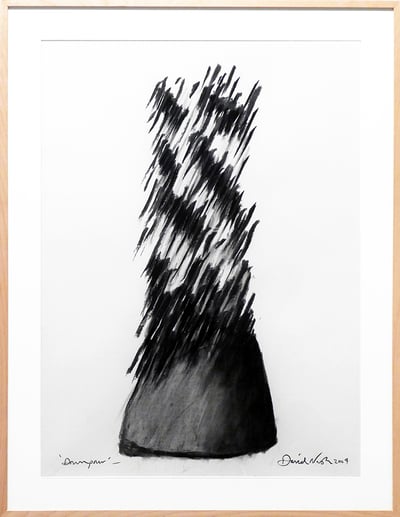
David Nash
Downpour, 2004
Drawing / Watercolor
Charcoal
Inquire For Price

Juan Usle
The Book of Landscapes II, 1987
Drawing / Watercolor
Mixed Media
Inquire For Price

Alfons Borrell
Untitled (Orange, Green, and Shaded Form), 1987
Drawing / Watercolor
Mixed Media
Inquire For Price

Juan Usle
The Book of Landscapes I, 1987
Drawing / Watercolor
Mixed Media
Inquire For Price

Gert & Uwe Tobias
Ohne Titel (collage), 2014
Drawing / Watercolor
Collage
EUR 2,750

Allen Jones
Study for Night Fever, 1990
Drawing / Watercolor
Pencil
EUR 8,500
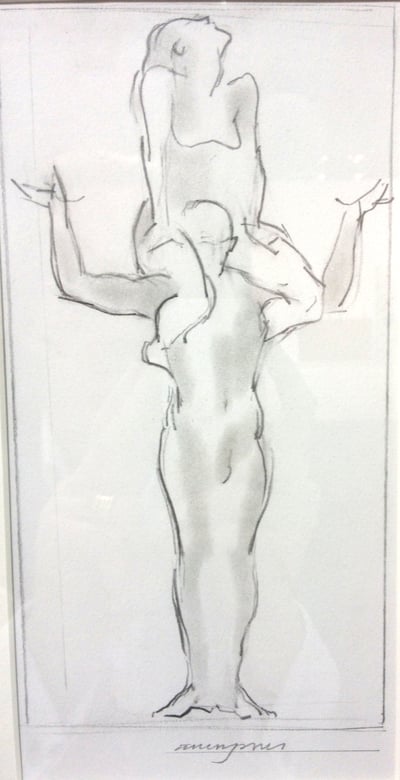
Allen Jones
Cascade, 1999
Drawing / Watercolor
Pencil
EUR 8,500

Marcel Dzama
A Blind Man’s Scrap Book (Skull), 2018
Drawing / Watercolor
Coloured pencil
EUR 1,600

Marcel Dzama
A Blind Man’s Scrap Book (Skeletal Serenade), 2018
Drawing / Watercolor
Coloured pencil
EUR 1,600

Marcel Dzama
A Blind Man’s Scrap Book (Radiant Bat), 2018
Drawing / Watercolor
Coloured pencil
EUR 1,600

Giulio Paolini
Senza titolo, 1973
Drawing / Watercolor
Collage
EUR 23,680

Roberto Matta
Les cadeaux de la mère Noël et du père Noël, 1968–1969
Drawing / Watercolor
Mixed Media
USD 13,000 - 15,000
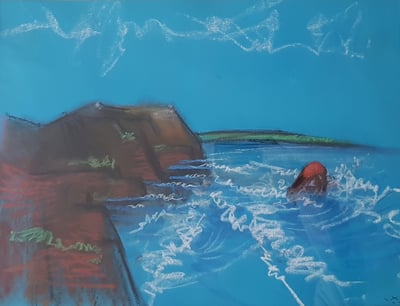
Roberto Matta
Homenaje aux Pyrenees, 1976
Drawing / Watercolor
Pastel
Make Your Offer

Thomas Lange
Tatowiert II (red), 1984
Drawing / Watercolor
Mixed Media
EUR 2,000
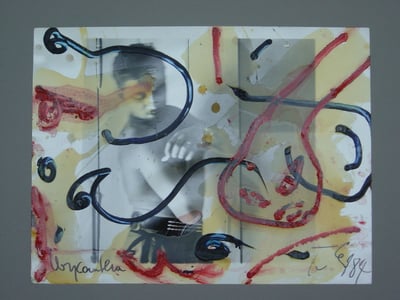
Thomas Lange
Tatowiert II (cream), 1984
Drawing / Watercolor
Mixed Media
EUR 2,000
Related Articles


The Light and Space Movement refers to loosely affiliated art movements connected to minimalism, geometric abstraction, and op art that originated in Southern California in the 1960s. Greatly influenced by artist John McLaughlin, these artists focused on sensory phenomena such as light, perception, and space as central elements of their work. They also incorporated cutting-edge technologies from the aerospace and engineering industries to develop light-filled and sensuous objects, creating immersive experiences that emphasize the viewer's perception.

A plate is a broad, primarily flat vessel used for serving food, but it can also serve ceremonial or decorative purposes. Plates are typically circular, though they can be any shape and made from various water-resistant materials. Most plates have raised edges, either by curving upward or featuring a wider lip. Vessels without a raised edge or with a more rounded profile are often considered bowls or dishes, while very large, plate-shaped vessels might also be classified as dishes.

Animation is the process of displaying a sequence of static images in rapid succession to create the illusion of movement. Each image, or frame, is slightly altered from the previous one, particularly in the moving parts, so when shown together, they form a continuous motion. Traditionally, illustrators drew each frame by hand to produce this effect.
Can't find your Answer?
Thank you! Your question has been sent — we'll get back to you shortly.
