

What is avant-garde?
- Show All
- Established
- Discoveries
- Show All
Artworks Related to Avant-garde

Hermann Nitsch
96 Aktion – Giardini San Martino, Napoli, A, 1996
Photography
Photograph
EUR 1,830

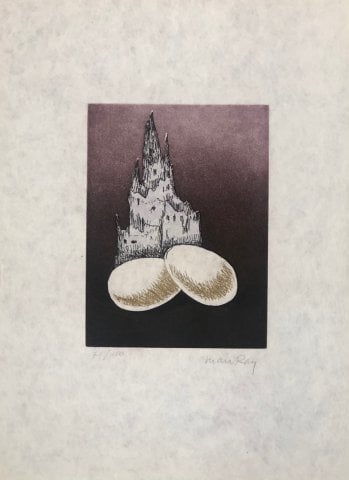
Man Ray
Seria Electro Magie II, 1969
Limited Edition Print
Etching and Aquatint
EUR 1,350
Man Ray
Seria Electro Magie I, 1969
Limited Edition Print
Etching and Aquatint
EUR 1,350

Joseph Beuys
Beuys for Lothar, 1973
Photography
Photograph
EUR 5,500

Piero Manzoni
Impronta del pollice sinistro, 1960
Limited Edition Print
Lithograph
Currently Not Available

Andy Warhol
Marilyn Monroe Lips (One Cent Life) FS. 11.5, 1964
Limited Edition Print
Lithograph
USD 1,550

Man Ray
Queen of Spades, 1970
Limited Edition Print
Etching
USD 1,450

Joan Brossa
Poema visual 32, 1989
Limited Edition Print
Lithograph
EUR 1,000

Joan Brossa
Miami beach, 1989
Limited Edition Print
Lithograph
EUR 1,000

Joan Brossa
Rails, 1989
Limited Edition Print
Lithograph
EUR 1,000

Joan Brossa
Poema visual 20, 1989
Limited Edition Print
Lithograph
EUR 1,000

Joan Brossa
Poema visual 19, 1989
Limited Edition Print
Lithograph
EUR 1,000

Joan Brossa
Signes 12, 1989
Limited Edition Print
Lithograph
EUR 1,000
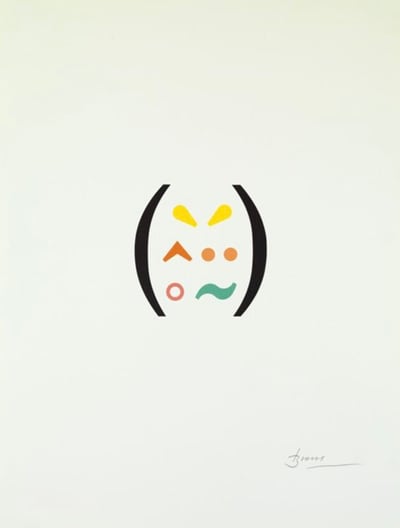
Joan Brossa
Signes 11, 1989
Limited Edition Print
Lithograph
EUR 1,000

Joan Brossa
Poema visual 6, 1989
Limited Edition Print
Lithograph
EUR 1,000

Hermann Nitsch
Ubermalte Bild - Lithographien, Domus Jani, 1991
Limited Edition Print
Lithograph
Currently Not Available
Related Articles
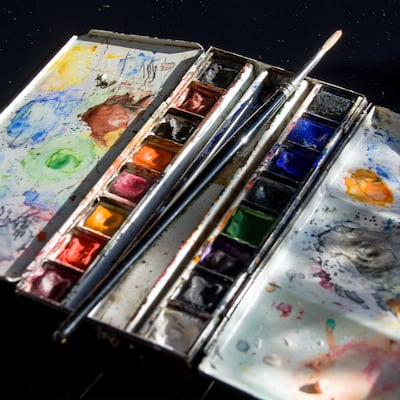
Watercolor refers to both the medium and the resulting artwork created using pigments suspended in a water-soluble vehicle. Watercolors are known for their luminous, transparent appearance because the pigments are applied in pure form with minimal fillers. By adding Chinese white, the watercolor can become opaque, resembling gouache.

Engraving is a printmaking technique where a metal plate or surface is directly cut using a sharp engraving tool called a burin. The tool creates deep lines or grooves, which are then filled with ink. The plate is pressed onto paper with heavy pressure, transferring the inked image. This process results in a clear and precise print.
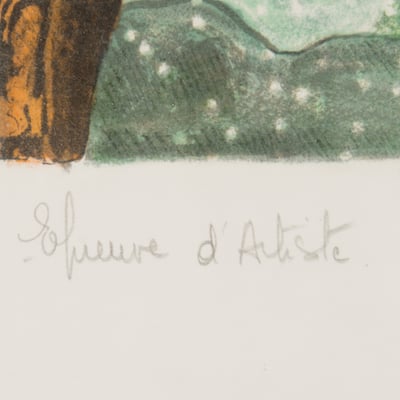
Épreuve d'Artist refers to the artist's proofs in a limited edition of prints. These are a small number of prints reserved by the artist for personal use and are typically marked with the abbreviation E.A. (épreuve d'artist) or AP (artist's proof). Artist’s proofs are usually identical to the regular edition but are often considered more valuable due to their limited quantity.
Can't find your Answer?
Thank you! Your question has been sent — we'll get back to you shortly.
