
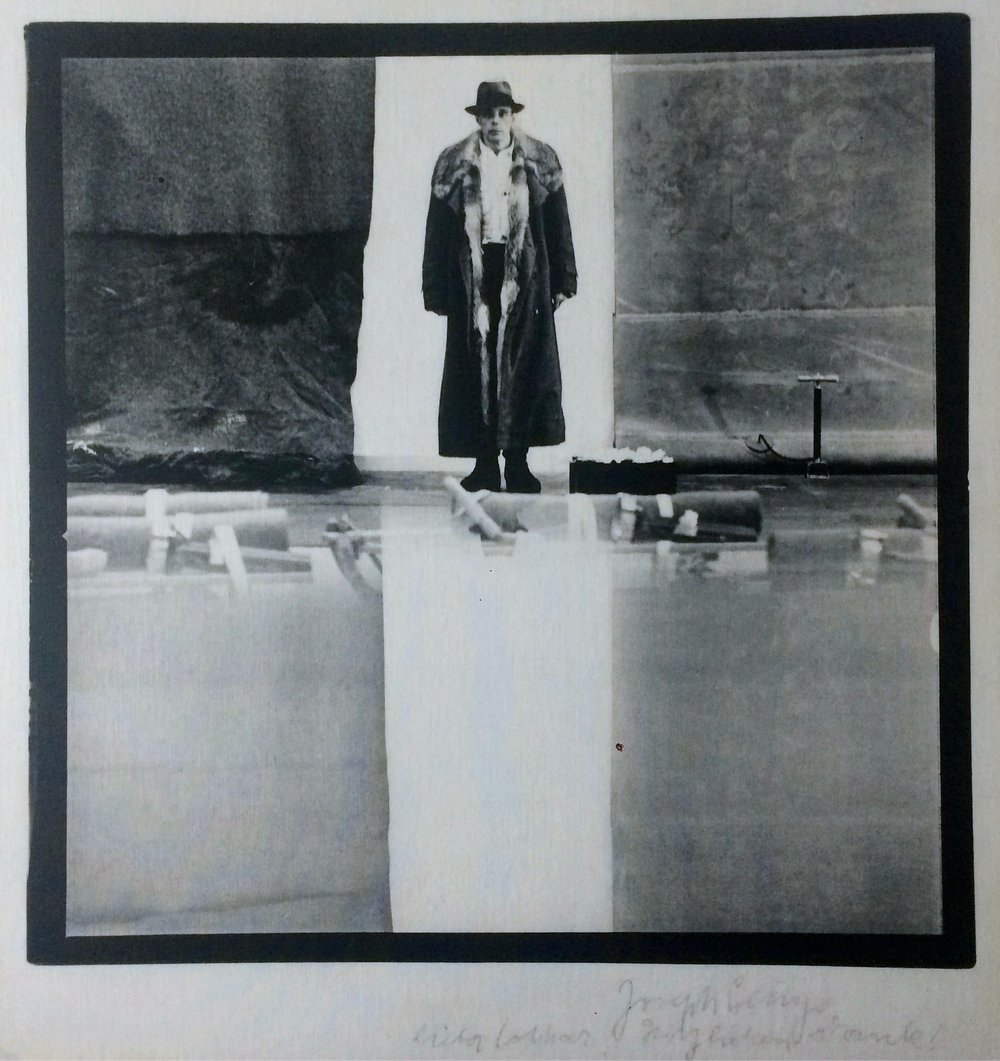
Unique work - photographic linnen with a developed photographic image and photo fixation.
- Dedicated to Lothar Wolleh (the photographer of the motifs for the UNTERWASSERBUCH )
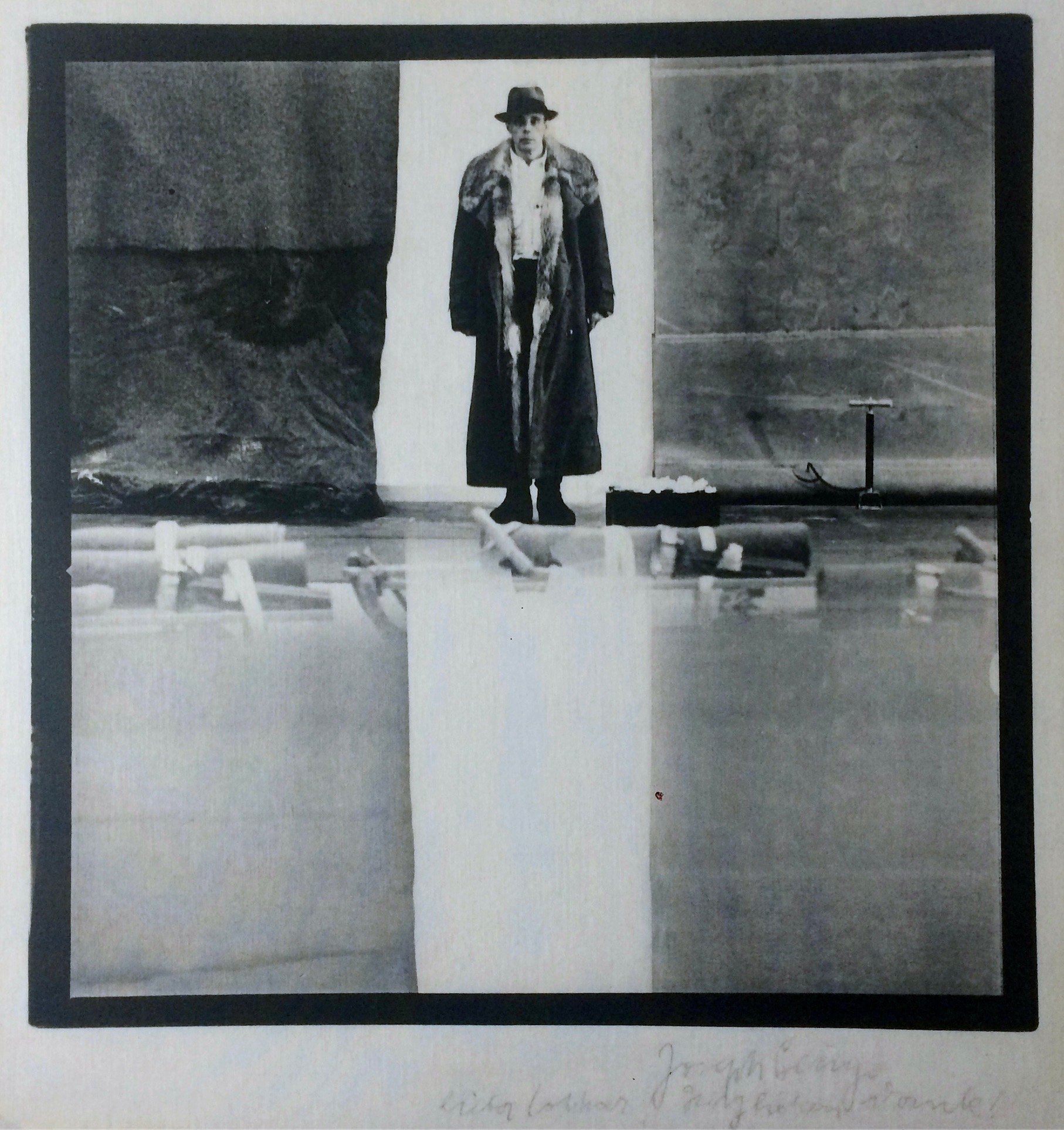
Beuys for Lothar by Joseph Beuys is a unique photographic work from 1973, created on linen with a developed photographic image and photo fixation. This monochromatic piece captures Beuys standing in his iconic coat and hat, centered against a stark vertical white strip, flanked by dark, textured areas. The reflection of his figure appears below, adding a layered, almost surreal effect to the composition. Dedicated to photographer Lothar Wolleh, this work resonates with themes of identity and presence, hallmarks of Beuys's oeuvre. The raw texture and solemn tone underscore the artist's connection to performance and ritual, encapsulating his influence on contemporary art.
Artwork Copyright © Joseph BeuysJoseph Beuys (Germany, 1921–1986) was a groundbreaking German conceptual artist, sculptor, and performance artist. Known for his use of unconventional materials such as felt and fat, Beuys explored themes of humanism, ecology, and social change. His famous mantra, 'Everyone is an artist,' emphasized creativity as a universal force. A leader in Fluxus, his works remain profoundly influential.
Artwork Copyright © Joseph BeuysBeuys for Lothar, 1973
Form
Medium
Size
- Inches
- Centimeters
Edition
Price
- USD
- EUR
- GBP
- CHF
- Authenticity Guaranteed
- Insured Shipping
- Online Since 2005
●Inventory 7030
●Signed
●Comes with gallery invoice and certificate
●Sell Us a Similar Artwork. Learn more.
Unique work - photographic linnen with a developed photographic image and photo fixation.
- Dedicated to Lothar Wolleh (the photographer of the motifs for the UNTERWASSERBUCH )
Beuys for Lothar by Joseph Beuys is a unique photographic work from 1973, created on linen with a developed photographic image and photo fixation. This monochromatic piece captures Beuys standing in his iconic coat and hat, centered against a stark vertical white strip, flanked by dark, textured areas. The reflection of his figure appears below, adding a layered, almost surreal effect to the composition. Dedicated to photographer Lothar Wolleh, this work resonates with themes of identity and presence, hallmarks of Beuys's oeuvre. The raw texture and solemn tone underscore the artist's connection to performance and ritual, encapsulating his influence on contemporary art.
Artwork Copyright © Joseph BeuysJoseph Beuys (Germany, 1921–1986) was a groundbreaking German conceptual artist, sculptor, and performance artist. Known for his use of unconventional materials such as felt and fat, Beuys explored themes of humanism, ecology, and social change. His famous mantra, 'Everyone is an artist,' emphasized creativity as a universal force. A leader in Fluxus, his works remain profoundly influential.
Artwork Copyright © Joseph BeuysAvailability
Size
Form
Medium
SORT BY
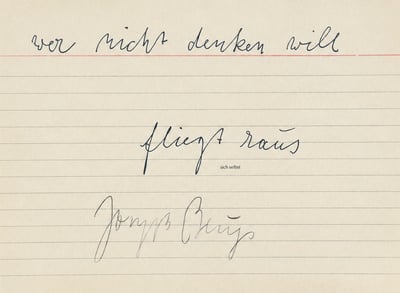
Joseph Beuys
Sich selbst (wer nicht denken will fliegt raus), 1977
Drawing / Watercolor
Mixed Media
EUR 700

Joseph Beuys
Eine Rose für direkte Demokratie, 1968
Sculpture / Object
Mixed Media
EUR 2,800

Joseph Beuys
Ja Ja Ja Ja Nee Nee Nee, 1970
Sculpture / Object
Mixed Media
EUR 2,500

Joseph Beuys
Beuys for Lothar, 1973
Photography
Photograph
EUR 5,500

Joseph Beuys
Wirtschaftspaket, 1984
Sculpture / Object
Mixed Media
EUR 16,600
Related Artists


Artwork by John Baldessari
What is conceptual art?
Sometimes referred to as Conceptualism, this is an art form where the idea(s) or concept(s) behind the work take precedence over material concerns and traditional aesthetics. Many conceptual artworks can be created by anyone simply by following written instructions. The concept or idea is the most essential aspect of the artwork.

Joseph Beuys
Beuys for Lothar, 1973
49 x 46 cm


