
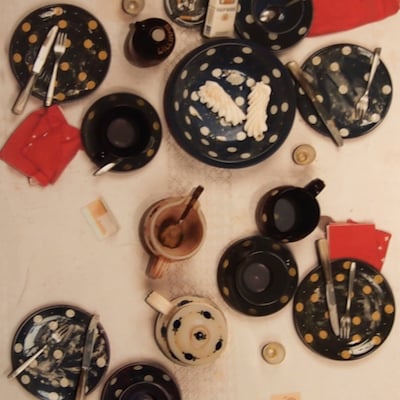
What is Nouveau Realism?
- Show All
- Established
- Discoveries
- Show All
Artworks Related to Nouveau Realism
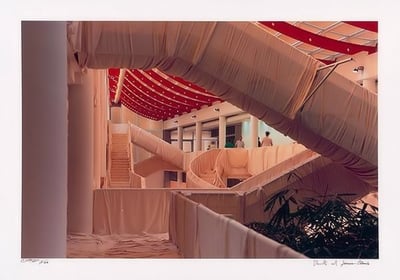
Javacheff Christo
Museum Würth Wrapped Stairs, 1995
Limited Edition Print
Photograph
EUR 6,900

Javacheff Christo
Museum Würth Wrapped Chairs, 1995
Limited Edition Print
Photograph
EUR 6,900
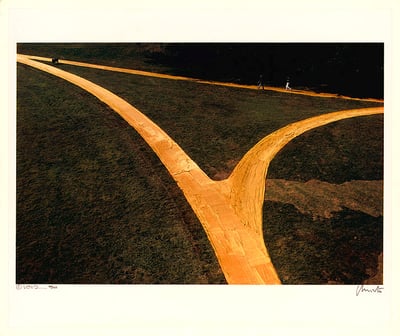
Javacheff Christo
Wrapped Walk Ways, 1978
Limited Edition Print
Photograph
EUR 5,900
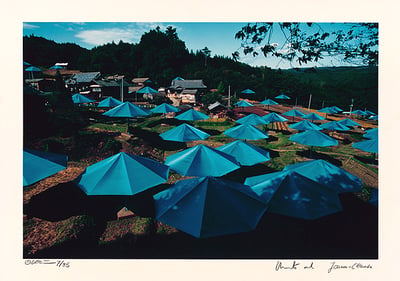
Javacheff Christo
Umbrellas Jinba Blue
Limited Edition Print
Photograph
EUR 6,900

Javacheff Christo
The Gates Rondell, 2005
Photography
Photograph
EUR 19,000
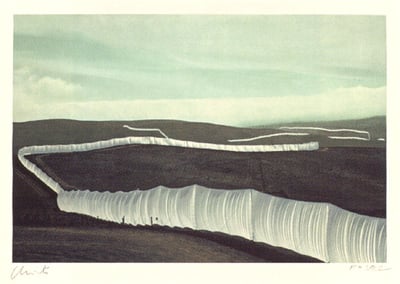
Javacheff Christo
Running Fence, California, 1976
Photography
Screen-print
EUR 3,900
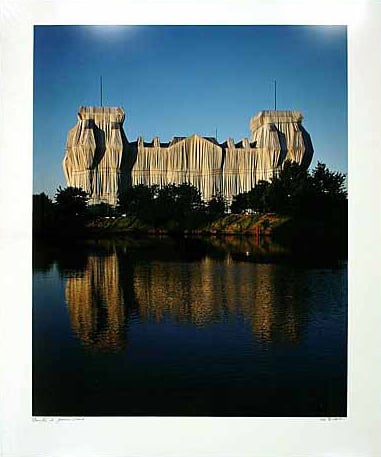
Javacheff Christo
Reichstag/Berlin II Wrapped, 1995
Limited Edition Print
Photograph
EUR 12,000
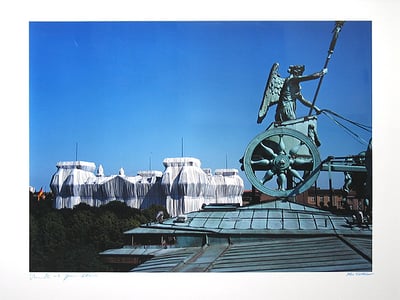
Javacheff Christo
Reichstag/Berlin I Wrapped, 1995
Limited Edition Print
Photograph
EUR 18,000
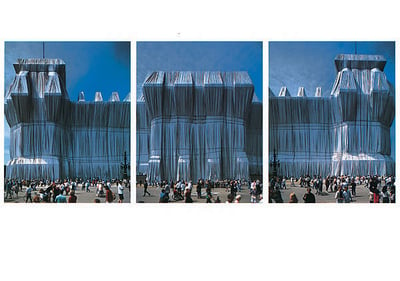
Javacheff Christo
Reichstag Westfassade Triptychon
Limited Edition Print
Photograph
EUR 28,000
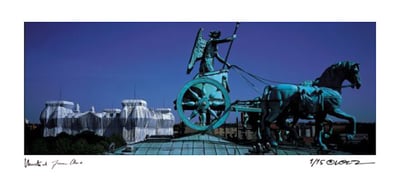
Javacheff Christo
Reichstag Quadriga, 1995
Limited Edition Print
Photograph
EUR 25,000
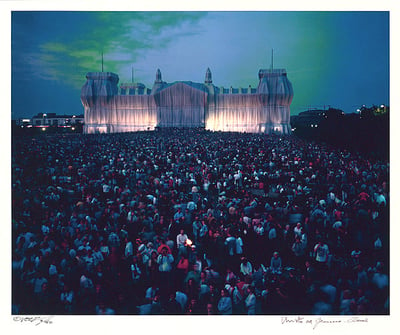
Javacheff Christo
Reichstag Mappe II, Westen, 1995
Photography
Photograph
EUR 4,800
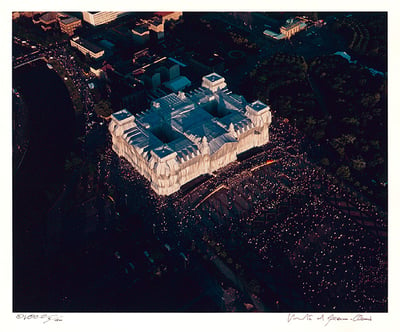
Javacheff Christo
Reichstag Mappe II, Platz, 1995
Photography
Photograph
EUR 4,800
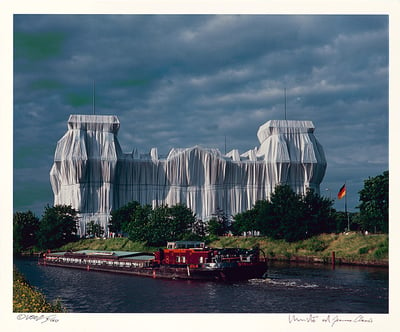
Javacheff Christo
Reichstag Mappe II, Nordfassade, 1995
Photography
Photograph
EUR 4,800
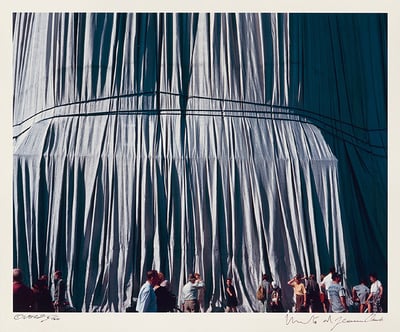
Javacheff Christo
Reichstag Mappe II, Faltenwurf, 1995
Photography
Photograph
EUR 4,800
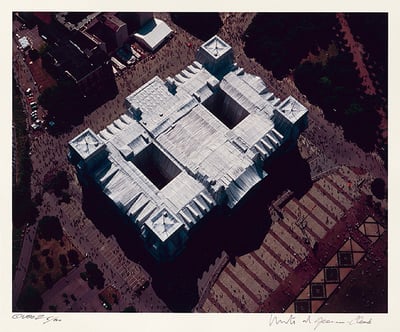
Javacheff Christo
Reichstag Mappe II, Dach, 1995
Photography
Photograph
EUR 4,800

Javacheff Christo
Reichstag Mappe II, 6 Blatt, 1990–2000
Limited Edition Print
Photograph
EUR 24,000
Related Articles


The Light and Space Movement refers to loosely affiliated art movements connected to minimalism, geometric abstraction, and op art that originated in Southern California in the 1960s. Greatly influenced by artist John McLaughlin, these artists focused on sensory phenomena such as light, perception, and space as central elements of their work. They also incorporated cutting-edge technologies from the aerospace and engineering industries to develop light-filled and sensuous objects, creating immersive experiences that emphasize the viewer's perception.
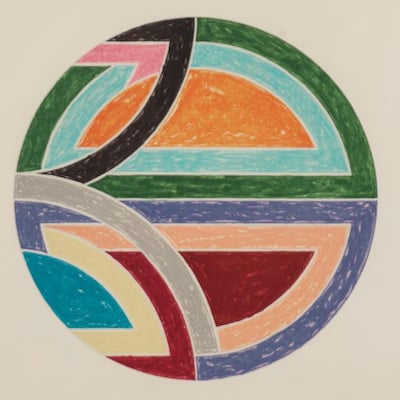
American Abstract Artists (AAA) is an organization founded in New York City in 1936 to promote abstract art and its appreciation in the United States. At a time when abstract art faced strong opposition from critics, the AAA provided crucial exhibition opportunities for abstract artists, helping to foster the growth and acceptance of the movement.

Colored pencils consist of a core made from various colored pigments mixed with a binder, encased in wood. They can also be found as solid pigment sticks without the wooden casing. When drawing, the pigment is transferred to a surface, allowing for lines and shading in different thicknesses.
Can't find your Answer?
Thank you! Your question has been sent — we'll get back to you shortly.
