

What is Offset printing?
- Show All
- Established
- Discoveries
- Show All
Artworks Related to Offset Print

Andy Warhol
Liz, II.7, 1967
Limited Edition Print
Offset Print
Currently Not Available

Roy Lichtenstein
Foot and Hand, 1964
Limited Edition Print
Offset Print
Inquire For Price
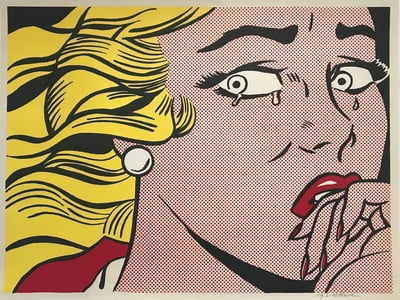
Roy Lichtenstein
Crying Girl, 1963
Limited Edition Print
Offset Print
Currently Not Available
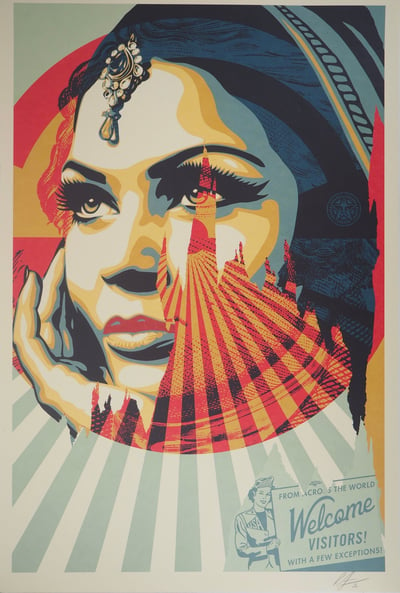
Shepard Fairey
Obey, 1970
Limited Edition Print
Offset Print
EUR 1,000

Andy Warhol
Wild Raspberries IV.143A, 1959
Limited Edition Print
Offset Print
Inquire For Price

Andy Warhol
Wild Raspberries IV.140A, 1959
Limited Edition Print
Offset Print
USD 8,350

Andy Warhol
Wild Raspberries IV.141A, 1959
Limited Edition Print
Offset Print
USD 4,850

Andy Warhol
Wild Raspberries IV.134A, 1959
Limited Edition Print
Offset Print
USD 50,000 - 60,000

Andy Warhol
Wild Raspberries IV.142A, 1959
Limited Edition Print
Offset Print
USD 8,900

Andy Warhol
Wild Raspberries IV.137A, 1959
Limited Edition Print
Offset Print
USD 8,900

Andy Warhol
Wild Raspberries IV.135A, 1959
Limited Edition Print
Offset Print
Inquire For Price

Andy Warhol
Wild Raspberries IV.138A, 1959
Limited Edition Print
Offset Print
USD 4,850

Andy Warhol
Wild Raspberries IV.139A, 1959
Limited Edition Print
Offset Print
USD 8,400

Takashi Murakami
Flower Ball (3-D) Autumn 2004, 2013
Limited Edition Print
Offset Print
USD 3,800
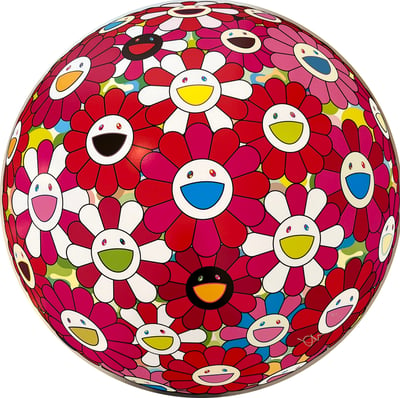
Takashi Murakami
Flowerball (3D) - Papyrus, 2013
Limited Edition Print
Offset Print
USD 4,250

Takashi Murakami
My Arms & Legs Rot off and through my blood rushes forth, the tranquility of my heart shall be prized above, 2007
Limited Edition Print
Offset Print
USD 3,200
Related Articles



Attribute can function as both a noun and a verb. As a noun, it refers to an object, symbol, or animal commonly associated with a specific person, often used in art to identify figures, such as a lion with St. Mark. As a verb, it means to assign a work of art to a particular artist, usually based on stylistic analysis or other evidence, such as attributing a painting to an artist based on its technique and composition.

Montage is a film editing technique where a series of shots are edited into a sequence to condense time, convey information, and manage space within the narrative. While it primarily refers to this method in film, the term can also be used in various other contexts to describe the assembly of disparate elements into a cohesive whole.

Textile refers to a flexible material made by weaving, felting, crocheting, knitting, or knotting long strands of natural or synthetic yarn or thread. Textile artists often create their own materials or use selected textiles in fabric art compositions, incorporating a wide range of textures and patterns.
Can't find your Answer?
Thank you! Your question has been sent — we'll get back to you shortly.
