

What is Offset printing?
- Show All
- Established
- Discoveries
- Show All
Artworks Related to Offset Print
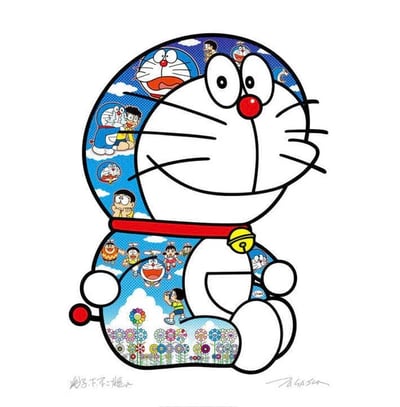
Takashi Murakami
Doraemon: Sitting Up: Weeping Some, Laughing Some, 2020
Limited Edition Print
Offset Print
GBP 1,600

Takashi Murakami
Doraemon Sitting Up: A Pleasant Day Under The Blue Sky, 2020
Limited Edition Print
Offset Print
GBP 1,500

Takashi Murakami
An Homage to Monopink 1960 C, 2012
Limited Edition Print
Offset Print
GBP 3,000

Takashi Murakami
An Homage to Monopink 1960 D, 2012
Limited Edition Print
Offset Print
GBP 3,000

Gerhard Richter
Küchenstuhl, 1965/2022
Limited Edition Print
Offset Print
GBP 2,100

Gerhard Richter
Seestucke (Sea View), 2021
Limited Edition Print
Offset Print
GBP 3,700

Gerhard Richter
Wolke (Cloud), 2021
Limited Edition Print
Offset Print
EUR 2,800

Cindy Sherman
Untitled #114, 1999
Photography
Offset Print
GBP 4,800

Cindy Sherman
Untitled - Marilyn, 1981/1989
Photography
Offset Print
GBP 4,750

Yoshitomo Nara
Cosmic Girl, 2008
Limited Edition Print
Offset Print
GBP 15,900

Eduardo Paolozzi
Untitled 2 (Moonstrips), 1967
Limited Edition Print
Offset Print
GBP 2,050

Eduardo Paolozzi
Untitled (Moonstrips), 1967
Limited Edition Print
Offset Print
GBP 2,050

Eduardo Paolozzi
Untitled (Elephant and Real Estate), 1970
Limited Edition Print
Offset Print
GBP 2,750

Takashi Murakami
Multiverse, Flowers, 2023
Limited Edition Print
Offset Print
GBP 2,700

Larry Rivers
For Adults Only, 1971
Limited Edition Print
Offset Print
USD 7,200
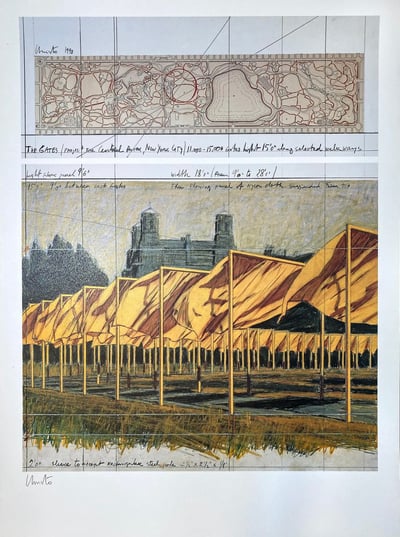
Javacheff Christo
The Gates Project for Central Park (III), 1990
Limited Edition Print
Offset Print
Currently Not Available
Related Articles


Monotype is a printmaking technique where an image is painted or drawn on a nonabsorbent, smooth surface, traditionally an etching plate of copper, but now also acrylic, zinc, or glass. The image is then transferred to paper using a printing press, creating a unique print. The first pressing removes most of the ink, making it difficult to produce additional prints with the same richness, resulting in a one-of-a-kind artwork.

Painting is the process of applying media to a surface, using a tool such as a brush. The term refers to both the action and the resulting object. Artists use many tools to paint, such as brushes, airbrushes, palette knives, sponges or fingers and hands.
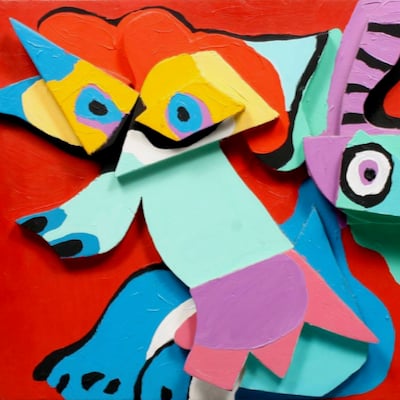
CoBrA stands for Copenhagen, Brussels, and Amsterdam; the group was formed with a desire to break away from the existing art movements of the time. Their critique of Western society led them to experiment and evolve into a significant international movement. CoBrA was founded on November 8, 1948, at the Notre Dame Café in Paris, where its manifesto was signed by Karel Appel, Joseph Noiret, Corneille, Christian Dotremont, Constant, and Asger Jorn. The group was united by a shared commitment to freedom in both form and color, and their work emphasized experimentation and spontaneity.
Can't find your Answer?
Thank you! Your question has been sent — we'll get back to you shortly.
