
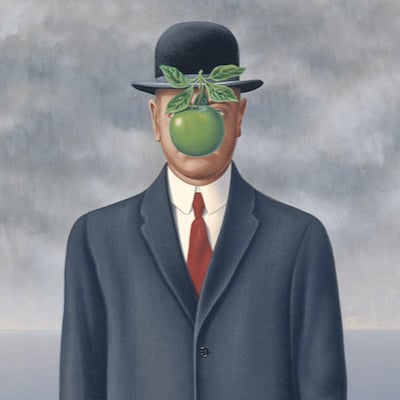
What is Surrealism?
- Show All
- Established
- Discoveries
- Show All
Artworks Related to Surrealism

Zhang Xiaogang
Big Family No.3 (from Bloodline portfolio), 2006
Limited Edition Print
Lithograph
GBP 5,000 - 7,000
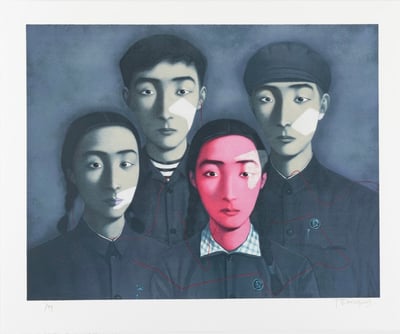
Zhang Xiaogang
The Big Family (from Bloodline portfolio), 2006
Limited Edition Print
Lithograph
GBP 4,000 - 6,000
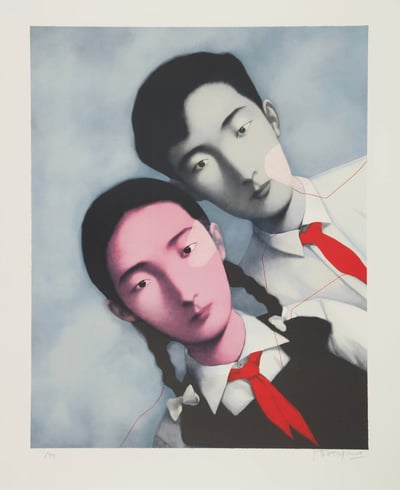
Zhang Xiaogang
Brother and Sister (from Bloodline portfolio), 2006
Limited Edition Print
Lithograph
GBP 3,300

Antonio Saura
El perro de Goya II, 1988
Drawing / Watercolor
Mixed Media
Inquire For Price

Antonio Saura
Crucifixión, 1981
Drawing / Watercolor
Mixed Media
EUR 22,500

Antonio Saura
Personaje, 1998
Drawing / Watercolor
Mixed Media
EUR 23,500

Antonio Saura
El perro de Goya I, 1988
Drawing / Watercolor
Mixed Media
Inquire For Price

Antonio Saura
Serie Abierta (Vibrant Eyes and Abstract Shapes, 1989
Limited Edition Print
Lithograph
EUR 2,950

Antonio Saura
Serie Abierta (Crowded Faces), 1989
Limited Edition Print
Lithograph
EUR 2,950

Henry Moore
Elephant skull (Plate A), 1969
Limited Edition Print
Etching and Aquatint
EUR 1,550

Joan Miró
Personnage, 1980
Drawing / Watercolor
Pencil
Inquire For Price
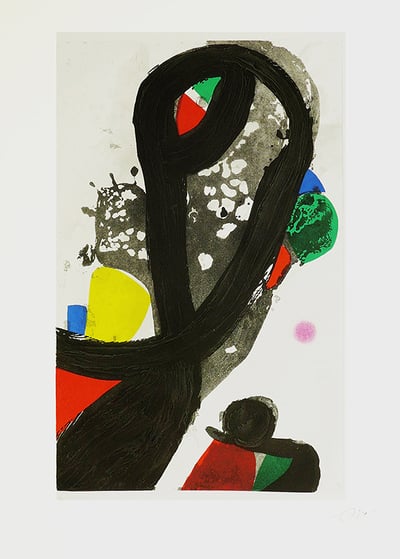
Joan Miró
La veuve du corsaire, 1981
Limited Edition Print
Etching and Aquatint
EUR 9,500
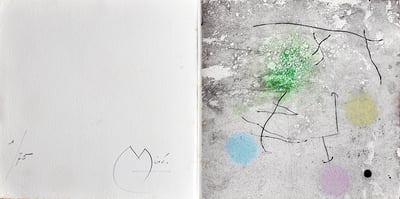
Joan Miró
Création Miró MCMLXI, 1962
Limited Edition Print
Etching and Aquatint
EUR 3,350

Cristina Iglesias
Habitación XI (b&w), 2002
Limited Edition Print
Silkscreen
EUR 3,950

Cristina Iglesias
Habitación XII, 2002
Limited Edition Print
Silkscreen
EUR 3,950
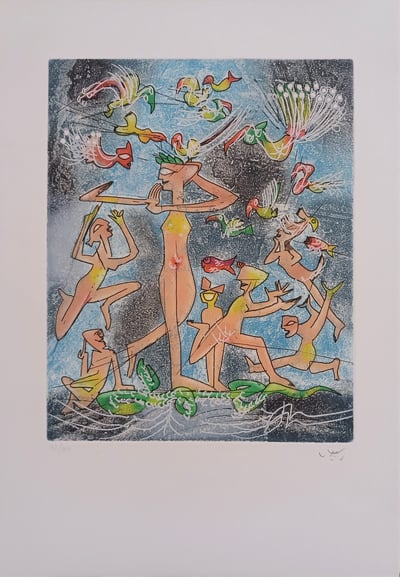
Roberto Matta
Demoiselles
Limited Edition Print
Etching and Aquatint
EUR 850
Related Articles



New Topographics is a term coined in 1975 by curator William Jenkins to describe a group of photographers whose work focused on formal black-and-white images of urban and industrial landscapes. Jenkins initially described their aesthetic as banal, but the photographers themselves argued that their compositions were as significant as those of natural landscapes, emphasizing the beauty in everyday, man-made environments.

Screen printing is a technique where ink is transferred through a mesh onto a substrate, with areas blocked by a stencil to prevent ink from passing through. This method, also known as serigraphy or silkscreen printing, is commonly used to produce prints on posters, T-shirts, vinyl, stickers, wood, and other materials. The process is a type of stencil printing, allowing for vibrant, detailed designs on various surfaces.

New British Sculpture is the name referring to the work produced by a group of sculptors, installation artists, and other creators who exhibited together in London during the 1980s. This group included artists like Richard Deacon, Richard Wentworth, and Tony Cragg. Tim Woods helped define this movement by identifying four major themes: the blending of kitsch and pop culture, the use of UK urban waste in a bricolage style, the assignment of new meanings to everyday objects, and a playful approach using wit and humor.
Can't find your Answer?
Thank you! Your question has been sent — we'll get back to you shortly.
