

Van de Loo 414 - Color woodcut - Published by Atelier Clot, Paris.
Artwork Copyright © Asger JornAsger Jorn (Denmark, 1914–1973) was a Danish painter, sculptor, and ceramicist, co-founding the avant-garde movement COBRA and the Situationist International. His dynamic, expressive works often combined abstract forms with vibrant colors, reflecting his interest in spontaneous creation and critique of contemporary society. Jorn's legacy includes a significant influence on European post-war art.
Artwork Copyright © Asger JornL’enfer des jeux clos, 1972
Form
Medium
Size
- Inches
- Centimeters
Edition
Price
Available works →
- Authenticity Guaranteed
- Insured Shipping
- Online Since 2005
●
●Inventory 6526
●Signed
●Comes with gallery invoice and certificate
●Sell Us a Similar Artwork. Learn more.
Van de Loo 414 - Color woodcut - Published by Atelier Clot, Paris.
Artwork Copyright © Asger JornAsger Jorn (Denmark, 1914–1973) was a Danish painter, sculptor, and ceramicist, co-founding the avant-garde movement COBRA and the Situationist International. His dynamic, expressive works often combined abstract forms with vibrant colors, reflecting his interest in spontaneous creation and critique of contemporary society. Jorn's legacy includes a significant influence on European post-war art.
Artwork Copyright © Asger Jorn- Recently Added
- Price (Low-High)
- Price (High-Low)
- Year (Low-High)
- Year (High-Low)

Asger Jorn
Sans titre, 1967
Limited Edition Print
Lithograph
EUR 2,550
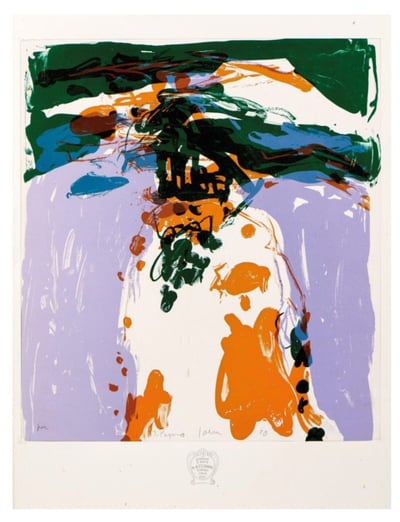
Asger Jorn
Lithographie couleur, 1970
Limited Edition Print
Lithograph
EUR 1,200

Asger Jorn
L’oubli, 1960/61
Limited Edition Print
Lithograph
USD 3,000

Asger Jorn
Dans le Sillage d’if-Aube, 1971
Limited Edition Print
Woodcut
Currently Not Available
Available works by Asger Jorn
See all →Asger Jorn
Sans titre, 1967
Limited Edition Print
Lithograph
EUR 2,550
Asger Jorn
Lithographie couleur, 1970
Limited Edition Print
Lithograph
EUR 1,200
Asger Jorn
L’oubli, 1960/61
Limited Edition Print
Lithograph
USD 3,000
Related Artists

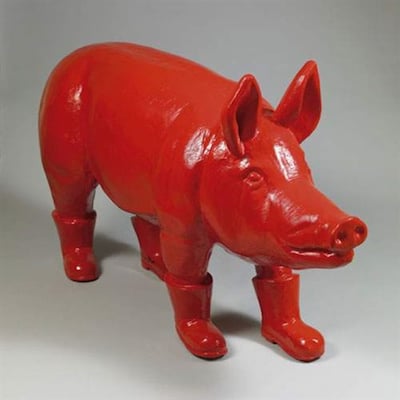
Artwork by William Sweetlove
What is Kitsch?
Kitsch is a term used to describe cheap, commercial, sentimental, or vulgar art and objects commonly associated with popular culture. The word is borrowed from German, where it originally means trash. Since the 1920s, kitsch has been used to denote the opposite of high art, often implying that the work lacks sophistication or artistic merit.


