Claisse, Geneviève | Linear sculpture, 1982 — available on Composition Gallery
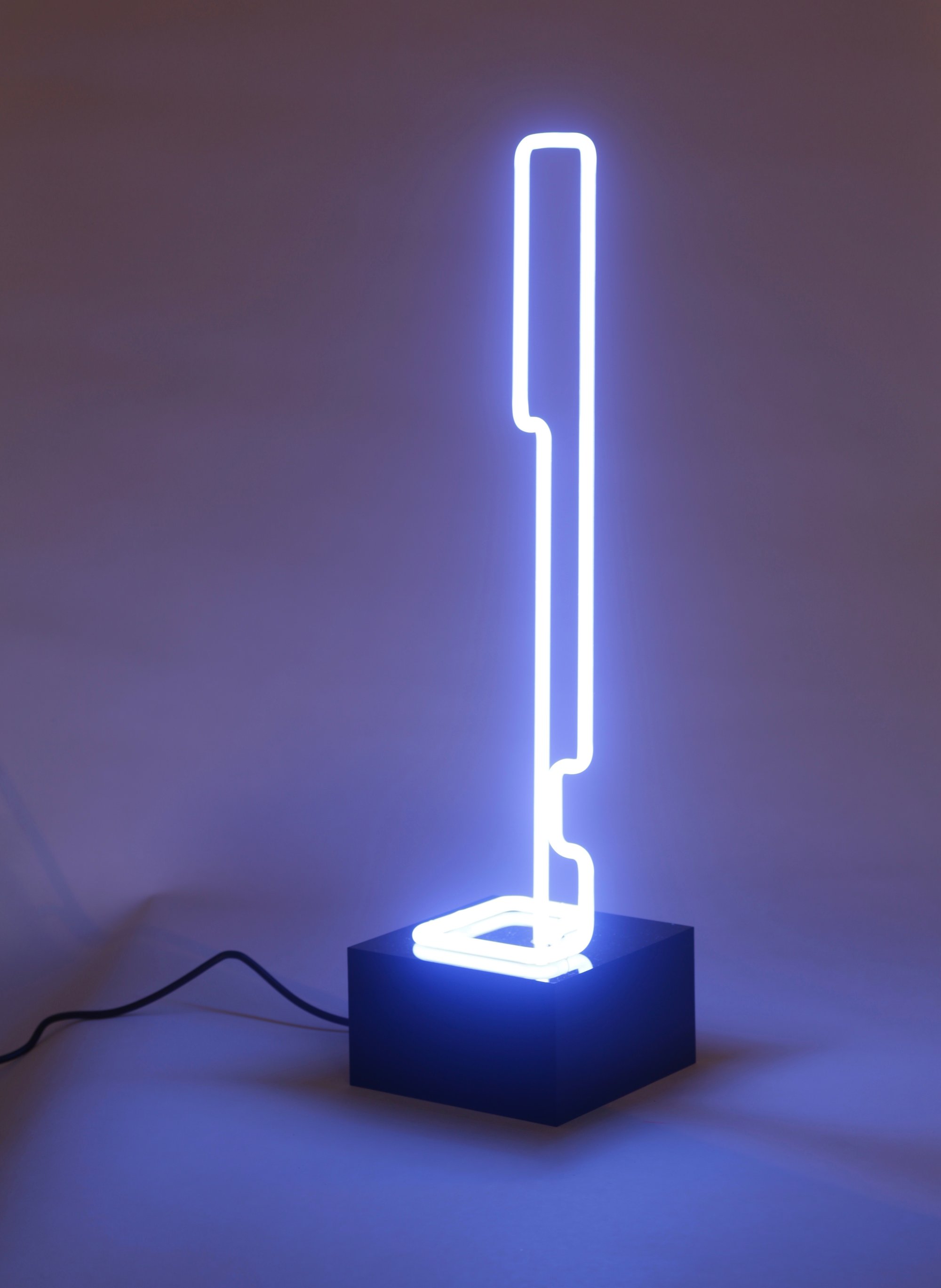
Neon sculpture on plexi foot - Hand signed and numbered at the back by the artist.
Linear Sculpture by Geneviève Claisse, created in 1982, is a minimalist neon sculpture that exemplifies Claisse’s exploration of line and form. This work consists of a glowing, geometric neon light in a continuous line, mounted on a black plexiglass base. The sharp, linear form, illuminated in a cool white-blue hue, conveys both simplicity and elegance, embodying Claisse’s commitment to abstraction and geometric precision. The clean, vertical structure draws attention to the beauty of line itself, transforming a basic shape into a radiant, almost ethereal presence. The use of neon adds a modern, industrial touch, bridging the gap between sculpture and light art.
Artwork Copyright © Geneviève Claisse
Geneviève Claisse (France, 1935–2018) was a prominent geometric abstract painter. Influenced by her great-uncle, Auguste Herbin, she developed a style characterized by pure forms and vibrant colors. Claisse's work is celebrated for its formal purity and meticulous execution, contributing significantly to the geometric abstraction movement.
Artwork Copyright © Geneviève Claisse

Linear sculpture, 1982

Form

Medium

Edition

  • Authenticity Guaranteed
  • Insured Shipping
  • Online Since 2005
Inventory 6280
Signed
Comes with gallery invoice and certificate
Any questions?
Neon sculpture on plexi foot - Hand signed and numbered at the back by the artist.
Linear Sculpture by Geneviève Claisse, created in 1982, is a minimalist neon sculpture that exemplifies Claisse’s exploration of line and form. This work consists of a glowing, geometric neon light in a continuous line, mounted on a black plexiglass base. The sharp, linear form, illuminated in a cool white-blue hue, conveys both simplicity and elegance, embodying Claisse’s commitment to abstraction and geometric precision. The clean, vertical structure draws attention to the beauty of line itself, transforming a basic shape into a radiant, almost ethereal presence. The use of neon adds a modern, industrial touch, bridging the gap between sculpture and light art.
Artwork Copyright © Geneviève Claisse
Geneviève Claisse (France, 1935–2018) was a prominent geometric abstract painter. Influenced by her great-uncle, Auguste Herbin, she developed a style characterized by pure forms and vibrant colors. Claisse's work is celebrated for its formal purity and meticulous execution, contributing significantly to the geometric abstraction movement.
Artwork Copyright © Geneviève Claisse
Lignes

Geneviève Claisse

Lignes, 2000

Painting

Acrylic on canvas

EUR 3,500

Cercle Noir et Vert

Geneviève Claisse

Cercle Noir et Vert, 2016

Sculpture / Object

Mixed Media

EUR 2,500

 Cercle Rouge et Noir

Geneviève Claisse

Cercle Rouge et Noir, 1968-1972

Sculpture / Object

Mixed Media

EUR 2,500

Cercle Blanc et Bleu

Geneviève Claisse

Cercle Blanc et Bleu, 1968-1972

Sculpture / Object

Mixed Media

EUR 2,500

Cercles Blancs

Geneviève Claisse

Cercles Blancs, 1968/2014

Sculpture / Object

Mixed Media

EUR 2,000

Linear sculpture

Geneviève Claisse

Linear sculpture, 1982

Sculpture / Object

Mixed Media

EUR 3,000
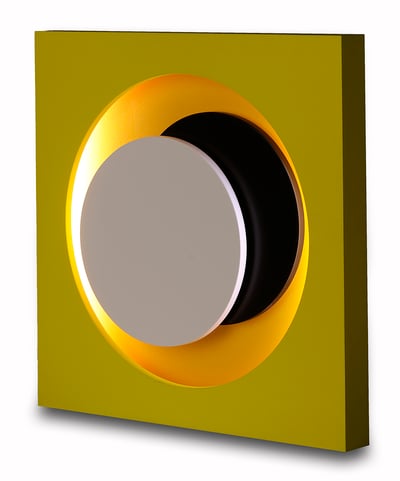
Cercles jaune

Geneviève Claisse

Cercles jaune, 1968-2014

Sculpture / Object

Mixed Media

EUR 2,500

Cercles vert

Geneviève Claisse

Cercles vert, 1968-2014

Sculpture / Object

Mixed Media

EUR 2,500
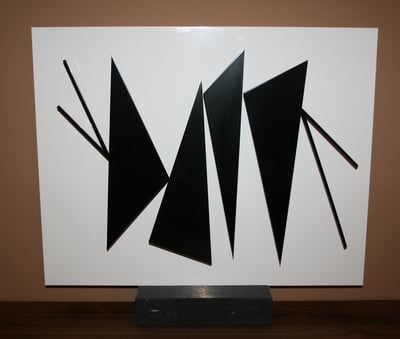
Ryph

Geneviève Claisse

Ryph, 1966

Sculpture / Object

Mixed Media

EUR 2,500

Jazz

Geneviève Claisse

Jazz, 1966

Sculpture / Object

Mixed Media

EUR 2,500

Cercle rouge

Geneviève Claisse

Cercle rouge, 1968-2014

Sculpture / Object

Mixed Media

Currently Not Available

ADN jaune

Geneviève Claisse

ADN jaune, 1972-2016

Sculpture / Object

Wood

Currently Not Available

Stay Updated on Geneviève Claisse

Subscribe to receive updates on new artworks, exhibitions and news about Geneviève Claisse.

We respect your privacy and protect your information.
What is Op Art?

What is Op Art?

Op Art is a visual art style that uses optical illusions to create the impression of movement, vibrating patterns, flashing, or hidden images. The works are typically abstract, with many well-known pieces in black and white. The roots of Op Art can be traced back to earlier movements like Futurism, Constructivism, Dada, and Neo-Impressionism, particularly in their use of color effects and graphic design.

Est. 2005 — twenty years of collecting, online.