

PVC sculpture, in plexi crate
Artwork Copyright © Lucio FontanaLucio Fontana (Argentina/Italy, 1899–1968) was a groundbreaking artist and founder of Spatialism. Known for his iconic Concetto Spaziale works, he pierced and slashed canvases to explore space, light, and materiality, revolutionizing the concept of painting as a medium.
Artwork Copyright © Lucio FontanaConcetto Spaziale (Roso), 1968
Form
Medium
Size
- Inches
- Centimeters
Price
Available works →
- Authenticity Guaranteed
- Insured Shipping
- Online Since 2005
●
●Inventory 5516
●No, as published
●Comes with gallery invoice and certificate
●Sell Us a Similar Artwork. Learn more.
PVC sculpture, in plexi crate
Artwork Copyright © Lucio FontanaLucio Fontana (Argentina/Italy, 1899–1968) was a groundbreaking artist and founder of Spatialism. Known for his iconic Concetto Spaziale works, he pierced and slashed canvases to explore space, light, and materiality, revolutionizing the concept of painting as a medium.
Artwork Copyright © Lucio Fontana- Recently Added
- Price (Low-High)
- Price (High-Low)
- Year (Low-High)
- Year (High-Low)

Lucio Fontana
Untitled from The International Avant-Garde (volume I), 1962
Limited Edition Print
Mixed Media
USD 8,150

Lucio Fontana
Nudo rosa, 1967
Limited Edition Print
Mixed Media
USD 10,500

Lucio Fontana
Concetto Spaziale, 1975
Limited Edition Print
Lithograph
Currently Not Available

Lucio Fontana
Portrait D'antonin Artaud, 1968
Sculpture / Object
Mixed Media
Currently Not Available
Available works by Lucio Fontana
See all →Lucio Fontana
Untitled from The International Avant-Garde (volume I), 1962
Limited Edition Print
Mixed Media
USD 8,150
Lucio Fontana
Nudo rosa, 1967
Limited Edition Print
Mixed Media
USD 10,500
Related Artists

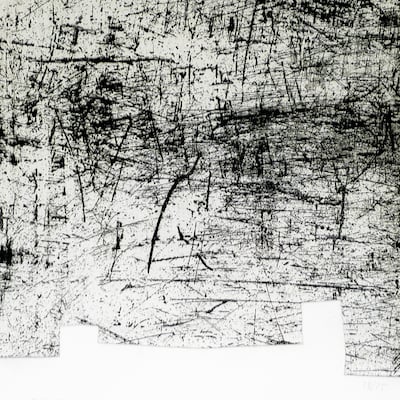
Artwork by Eduardo Chillida
What is abstract art?
Abstract art uses form, shape, line, and color to create a visual experience without attempting to represent external reality. The composition exists independently of the world's visual references, focusing on expressing ideas and emotions through non-representational means.


