Note: This piece originally included additional die-cut copper and steel plates, which are missing from this set. There are minor scratches on the lacquer of the object. Please contact us for a detailed condition report and extra pictures.
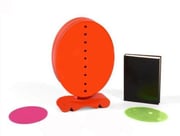
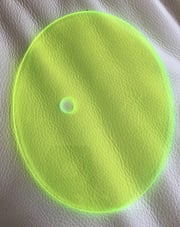
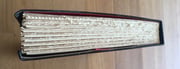
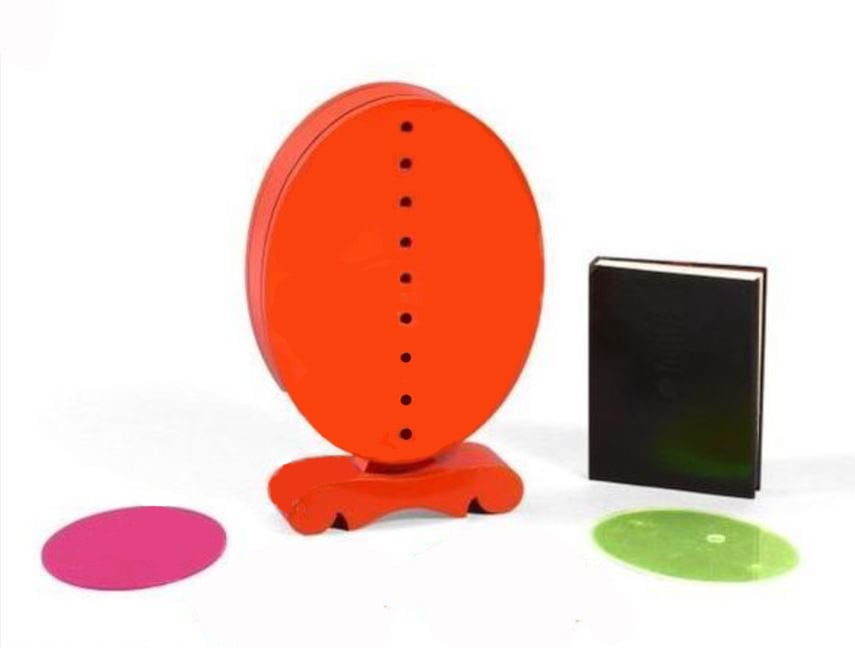
Portrait D'Antonin Artaud by Lucio Fontana, created in 1968, is a unique mixed-media work blending sculpture and literature to honor the influential artist and writer Antonin Artaud. This piece, from an edition of 80, features a vibrant orange, enamel-coated 'book-sculpture' made of wood, containing two die-cut Plexiglas plates—one opaque and one translucent—as well as an artist's book by Otto Hahn, with a cover illustration by Fontana. The minimal, abstract form and bold color encapsulate Fontana's avant-garde aesthetic while celebrating Artaud's radical, expressive legacy. Originally including additional copper and steel die-cut plates, the conceptual layering of this work reflects a synthesis of Fontana's spatial concerns with Artaud's explorative spirit. Published by Le Soleil Noir, Paris, this piece is numbered on the base of the book-sculpture and inside the front cover of the artist's book, marking its place within the deluxe edition.
Lucio Fontana (Argentina/Italy, 1899–1968) was a groundbreaking artist and founder of Spatialism. Known for his iconic Concetto Spaziale works, he pierced and slashed canvases to explore space, light, and materiality, revolutionizing the concept of painting as a medium.
Mixed mediaMixed media refers to artwork that incorporates more than one medium within a single piece. Unlike multimedia art, which combines distinct forms of visual art and often includes elements like sound, video, or digital media, mixed media focuses on combining traditional art materials, such as paint, ink, and collage. Mixed media art allows artists to achieve a wide range of effects and textures by layering and blending different materials.
Note: This piece originally included additional die-cut copper and steel plates, which are missing from this set. There are minor scratches on the lacquer of the object. Please contact us for a detailed condition report and extra pictures.
Portrait D'Antonin Artaud by Lucio Fontana, created in 1968, is a unique mixed-media work blending sculpture and literature to honor the influential artist and writer Antonin Artaud. This piece, from an edition of 80, features a vibrant orange, enamel-coated 'book-sculpture' made of wood, containing two die-cut Plexiglas plates—one opaque and one translucent—as well as an artist's book by Otto Hahn, with a cover illustration by Fontana. The minimal, abstract form and bold color encapsulate Fontana's avant-garde aesthetic while celebrating Artaud's radical, expressive legacy. Originally including additional copper and steel die-cut plates, the conceptual layering of this work reflects a synthesis of Fontana's spatial concerns with Artaud's explorative spirit. Published by Le Soleil Noir, Paris, this piece is numbered on the base of the book-sculpture and inside the front cover of the artist's book, marking its place within the deluxe edition.
Lucio Fontana (Argentina/Italy, 1899–1968) was a groundbreaking artist and founder of Spatialism. Known for his iconic Concetto Spaziale works, he pierced and slashed canvases to explore space, light, and materiality, revolutionizing the concept of painting as a medium.
I do not want to make a painting; I want to open up space, create a new dimension, tie in the cosmos, as it endlessly expands beyond the confining plane of the picture.
- Lucio Fontana
Recognised as the founder of Spatialism, Lucio Fontana was a prolific artist who was driven by a desire to highlight and explore the relationship between surface and dimensionality. Fontana’s techniques included slicing through canvas and punching holes in the surface of his work – Spatial Concept is a series of works that exemplify this particular technique and Fontana would often line the reverse of his canvas with black gauze; the darkness would then shimmer through the holes he had created and further add to the illusory and mysterious effect. Fontana was also acclaimed for his use of a wide-range of materials; for a series of paintings created for the ‘Art and Contemplation’ exhibition, he manipulated the surface paint with his fingers and Murano glass. Inspired by his visit to New York City, Fontana also worked extensively with metal for several years – he used shiny copper sheets to scratch and gouge holes into the metal and the final results alluded to the burgeoning architecture of the city. (Artist website)
Concrete Art is an art movement founded by the Dutch artist Theo van Doesburg in the 1930s. The movement emphasizes pure abstraction, focusing on geometric shapes and colors without any reference to the natural world or symbolic meaning. Unlike other forms of abstract art, Concrete Art is entirely non-representational and is based on mathematical principles and precise execution. It aims to create universal, timeless works by using simple, clear forms that emphasize objectivity and clarity.