

Hand-signed and numbered. I. 14.5 × 11.1 cm (5¾ × 4? in.) S. 26.2 × 19.0 cm (10? × 7½ in.)
Published by Galleria Schwartz, Milano.
Lucio Fontana's Untitled from The International Avant-Garde, volume I (1962) belongs to a landmark collaborative publication that brought together some of the most radical voices in postwar art. Fontana's contribution distils the essence of Spatialism -- the movement he founded -- into a single graphic act: marks, perforations, or gestures that interrogate the surface as simultaneously material and concept. Published by Galleria Schwartz in Milan, this edition situates Fontana's practice at the centre of the international avant-garde network of its time. Hand-signed and numbered, it represents both an intimate expression of his artistic philosophy and a collector's document of a pivotal moment in European modernism -- a moment when art began to understand the canvas not as a surface to be painted, but as a space to be opened.
Artwork Copyright © Lucio FontanaLucio Fontana (Argentina/Italy, 1899–1968) was a groundbreaking artist and founder of Spatialism. Known for his iconic Concetto Spaziale works, he pierced and slashed canvases to explore space, light, and materiality, revolutionizing the concept of painting as a medium.
Artwork Copyright © Lucio FontanaUntitled from The International Avant-Garde (volume I), 1962
Form
Medium
Size
- Inches
- Centimeters
Edition
Price
- USD
- EUR
- GBP
- CHF
- Authenticity Guaranteed
- Insured Shipping
- Online Since 2005
●Inventory 16819
●Signed
●Comes with gallery invoice and certificate
●Sell Us a Similar Artwork. Learn more.
Hand-signed and numbered. I. 14.5 × 11.1 cm (5¾ × 4? in.) S. 26.2 × 19.0 cm (10? × 7½ in.)
Published by Galleria Schwartz, Milano.
Lucio Fontana's Untitled from The International Avant-Garde, volume I (1962) belongs to a landmark collaborative publication that brought together some of the most radical voices in postwar art. Fontana's contribution distils the essence of Spatialism -- the movement he founded -- into a single graphic act: marks, perforations, or gestures that interrogate the surface as simultaneously material and concept. Published by Galleria Schwartz in Milan, this edition situates Fontana's practice at the centre of the international avant-garde network of its time. Hand-signed and numbered, it represents both an intimate expression of his artistic philosophy and a collector's document of a pivotal moment in European modernism -- a moment when art began to understand the canvas not as a surface to be painted, but as a space to be opened.
Artwork Copyright © Lucio FontanaLucio Fontana (Argentina/Italy, 1899–1968) was a groundbreaking artist and founder of Spatialism. Known for his iconic Concetto Spaziale works, he pierced and slashed canvases to explore space, light, and materiality, revolutionizing the concept of painting as a medium.
Artwork Copyright © Lucio Fontana- Recently Added
- Price (Low-High)
- Price (High-Low)
- Year (Low-High)
- Year (High-Low)

Lucio Fontana
Untitled from The International Avant-Garde (volume I), 1962
Limited Edition Print
Mixed Media
USD 8,150

Lucio Fontana
Nudo rosa, 1967
Limited Edition Print
Mixed Media
USD 10,500

Lucio Fontana
Concetto Spaziale, 1975
Limited Edition Print
Lithograph
Currently Not Available

Lucio Fontana
Portrait D'antonin Artaud, 1968
Sculpture / Object
Mixed Media
Currently Not Available
Related Artists


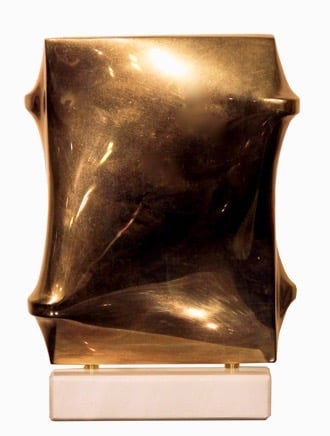
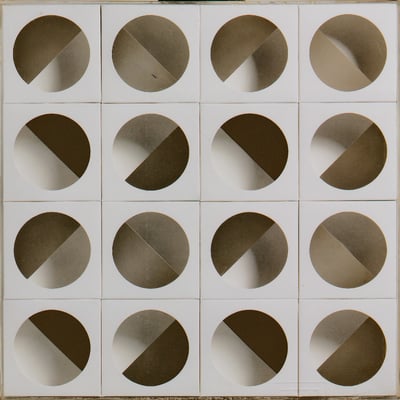

Artwork by Carlos Cruz-Diez
What is Latin American art?
Latin American Art is a style which takes inspiration from its culture, society, politics, native traditions, religions and landscape. Op-Art and Kinetic Art figure prominently in Latin artworks. Colors in Latin American compositions are often bold. Latin American artists work in all media and movements.


Lucio Fontana
Untitled from The International Avant-Garde (volume I), 1962
26 x 19 cm


