Jim Dine's Chartres - Second Version (2015) is a limited edition print executed with a combination of woodcut, lithograph, and collage on BFK Rives paper. This vibrant piece features eight large red hearts arranged in two rows against a dark background with streaks of yellow and black, evoking a sense of contrast and emotional depth. Each heart, while similar in shape, contains subtle variations in texture, with some having areas of abstraction in vibrant colors like blue and yellow. The layering of mixed media adds dynamic energy, echoing Dine's signature motifs of repetition and his long fascination with the heart symbol as a form of personal expression. The print blends modern pop art aesthetics with a raw, textured finish.
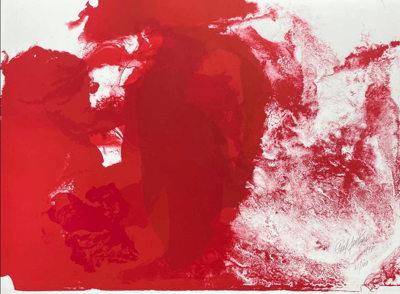
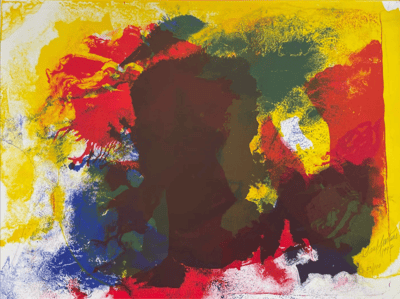
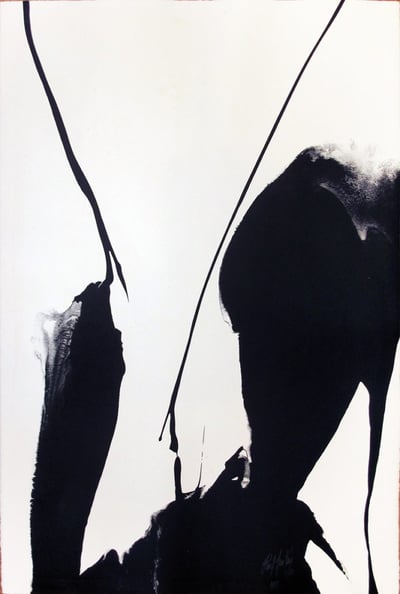
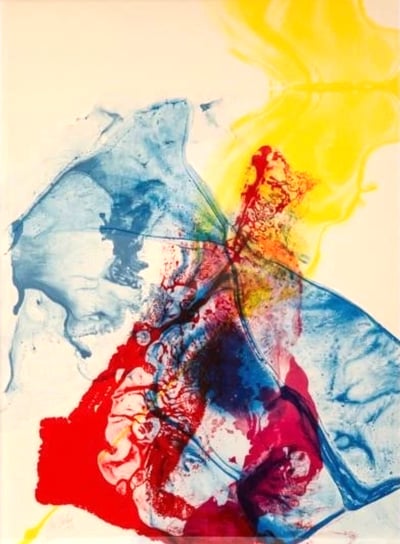
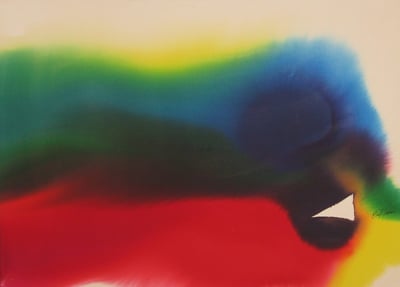
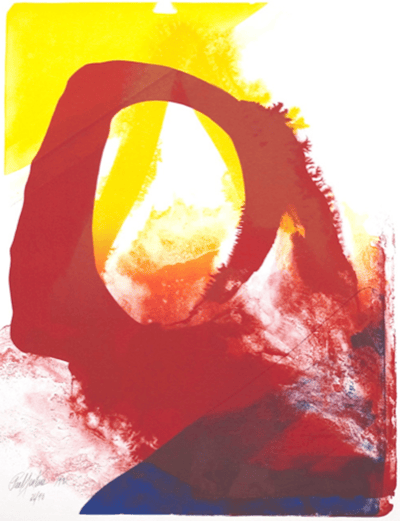
Paul Jenkins (United States, 1923–2012) was an American abstract expressionist painter renowned for his vibrant, fluid paintings created through a unique paint-pouring technique. His 'Phenomena' series exemplifies his exploration of color and form, contributing significantly to post-war American abstraction.
Lithograph Lithography is a printing method based on the principle that water and oil do not mix. It can be used to print artwork or text onto paper or other suitable materials. Traditionally, an image was drawn with wax, fat, or oil onto a lithographic limestone surface or plate. Today, metal plates and other surfaces are also used in lithographic printing.
Jim Dine's Chartres - Second Version (2015) is a limited edition print executed with a combination of woodcut, lithograph, and collage on BFK Rives paper. This vibrant piece features eight large red hearts arranged in two rows against a dark background with streaks of yellow and black, evoking a sense of contrast and emotional depth. Each heart, while similar in shape, contains subtle variations in texture, with some having areas of abstraction in vibrant colors like blue and yellow. The layering of mixed media adds dynamic energy, echoing Dine's signature motifs of repetition and his long fascination with the heart symbol as a form of personal expression. The print blends modern pop art aesthetics with a raw, textured finish.
Paul Jenkins (United States, 1923–2012) was an American abstract expressionist painter renowned for his vibrant, fluid paintings created through a unique paint-pouring technique. His 'Phenomena' series exemplifies his exploration of color and form, contributing significantly to post-war American abstraction.
I try to paint like a crapshooter throwing dice, utilizing past experience and my knowledge of the odds.
- Paul Jenkins
A painter of the abstract expressionist vein, Paul Jenkins is renowned for his unorthodox approach to paint application and control upon the canvas – he eventually ceased to use a paintbrush, and would instead manipulate his paint with the use of an ivory knife. Jenkins was initially inspired by the works of Jackson Pollock and Mark Tobey and took a great interest in eastern mysticism – a theme that permeated his work: always open to interpretation, rarely easy to make sweeping generalisations about. One of Jenkins most famous works, Phenomena Anderson, serves as a prime example of his ability to manipulate the outcome of the paint; his choice to abandon the paintbrush allowed him to coerce the paint into pooling or rolling across the canvas, creating fields of abstract colour. Jenkins began his working life in a ceramics factory, a job that always stayed with him and provided the inspiration for his substantial means of painting. (Artist website)
Lyrical abstraction is a descriptive term characterizing a type of abstract painting closely related to Abstract Expressionism, in use from the 1940s to the present. The term can also describe two distinct but related trends in post-World War II modernist painting. This art movement originated in Paris, France, after the war, emphasizing personal expression, spontaneity, and the emotional use of color and form.