

Signed and titled 'Walter Leblanc "TORSIONS. P.F. 657."' (on the reverse)
White polyvinyl strip on painted panel in an artist's box
Framed size 40 x 40 cm. (15.75 x 15.75 in.)
Image 28 x 28 cm. / 11 x 11 in.)
Executed circa 1963-1971.
Literature: N. Leblanc, D. Everarts de Velp-Seynaeve, Walter Leblanc, Catalogue raisonné, Brussels, 1997, No. 564, p. 201.
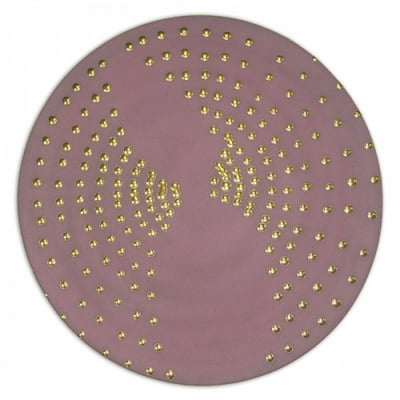
PF 657 by Walter Leblanc, created around 1963–1971, is a mixed media artwork featuring white polyvinyl tape meticulously arranged on a painted panel. This piece exemplifies Leblanc's commitment to kinetic and optical art, where the interplay of light and shadow creates a dynamic, pulsating visual effect. The arrangement of the white strips forms a series of narrow, elongated diamond shapes that appear to shift as the viewer changes perspective. By using simple materials and a monochromatic palette, Leblanc achieves a sense of movement and depth, challenging perceptions of space and form. This work invites viewers to engage with its optical illusion, exploring how minimalistic elements can produce complex, engaging visual experiences.
Artwork Copyright © Walter LeblancWalter Leblanc (Belgium, 1932–1986) was a pivotal figure in European post-war art, renowned for his contributions to kinetic and optical art. A founding member of the Antwerp avant-garde group G58, he introduced the 'torsion' technique, twisting materials like cotton threads and metal to create dynamic works that engage light and movement. Leblanc's innovative approach earned him international recognition, with his works featured in major exhibitions and collections worldwide.
Artwork Copyright © Walter LeblancPF 657, ca. 1963–1971
Form
Medium
Size
- Inches
- Centimeters
Edition
Price
Available works →
- Authenticity Guaranteed
- Insured Shipping
- Online Since 2005
●
●Inventory 5611
●Signed
●Comes with gallery invoice and certificate
●Sell Us a Similar Artwork. Learn more.
Signed and titled 'Walter Leblanc "TORSIONS. P.F. 657."' (on the reverse)
White polyvinyl strip on painted panel in an artist's box
Framed size 40 x 40 cm. (15.75 x 15.75 in.)
Image 28 x 28 cm. / 11 x 11 in.)
Executed circa 1963-1971.
Literature: N. Leblanc, D. Everarts de Velp-Seynaeve, Walter Leblanc, Catalogue raisonné, Brussels, 1997, No. 564, p. 201.
PF 657 by Walter Leblanc, created around 1963–1971, is a mixed media artwork featuring white polyvinyl tape meticulously arranged on a painted panel. This piece exemplifies Leblanc's commitment to kinetic and optical art, where the interplay of light and shadow creates a dynamic, pulsating visual effect. The arrangement of the white strips forms a series of narrow, elongated diamond shapes that appear to shift as the viewer changes perspective. By using simple materials and a monochromatic palette, Leblanc achieves a sense of movement and depth, challenging perceptions of space and form. This work invites viewers to engage with its optical illusion, exploring how minimalistic elements can produce complex, engaging visual experiences.
Artwork Copyright © Walter LeblancWalter Leblanc (Belgium, 1932–1986) was a pivotal figure in European post-war art, renowned for his contributions to kinetic and optical art. A founding member of the Antwerp avant-garde group G58, he introduced the 'torsion' technique, twisting materials like cotton threads and metal to create dynamic works that engage light and movement. Leblanc's innovative approach earned him international recognition, with his works featured in major exhibitions and collections worldwide.
Artwork Copyright © Walter Leblanc- Recently Added
- Price (Low-High)
- Price (High-Low)
- Year (Low-High)
- Year (High-Low)
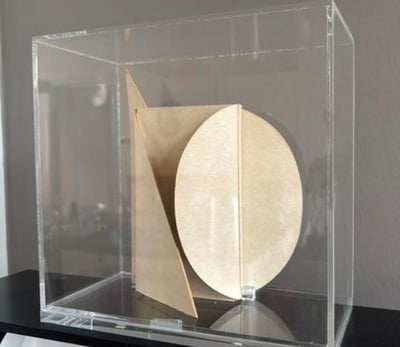
Walter Leblanc
Archetypes, 1985
Sculpture / Object
Mixed Media
EUR 15,000
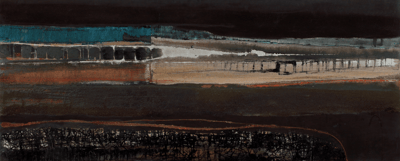
Walter Leblanc
Antwerp, 1958
Painting
Mixed Media
Inquire For Price
Available works by Walter Leblanc
See all →Walter Leblanc
Archetypes, 1985
Sculpture / Object
Mixed Media
EUR 15,000
Walter Leblanc
Antwerp, 1958
Painting
Mixed Media
Inquire For Price
Related Artists

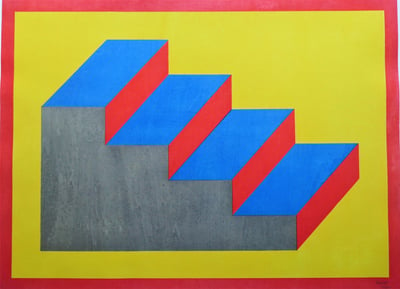
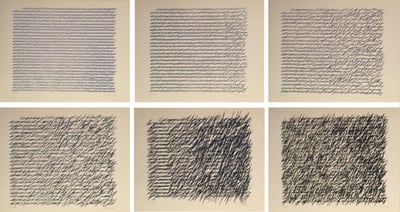

Artwork by Gunther Uecker
What is the Zero Movement?
ZERO was an art movement founded by Otto Piene and Heinz Mack, aiming to develop into a large international and cross-border movement. The name ZERO originated from a magazine founded by Heinz Mack in 1957, which became a platform for the group's ideas. The magazine was published for several years before ceasing in 1967. The ZERO movement sought to create a new beginning in art, emphasizing light, space, and movement, and became influential in post-war European art.


