

Etching, aquatint and spite bite
Su Xiaobai's Kuanhou-Summer (2015) captures a profound simplicity through an etching layered with aquatint and spit bite techniques. This limited edition print, with its warm red and orange hues concentrated within a central square, exudes a quiet, radiant intensity reminiscent of the summer heat. The textured and subtly graduated color tones evoke depth and invite meditation, while the square form provides a sense of grounded balance. Xiaobai’s minimalist approach, combined with his meticulous layering techniques, emphasizes the tactile quality of the print, making the abstract composition a meditative experience on the vibrancy of color and form.
Artwork Copyright © Xiaobai SuSu Xiaobai (China, 1949) is a contemporary artist known for his abstract works that explore color, texture, and form. After studying at the Kunstakademie Düsseldorf, he developed a unique style incorporating traditional Chinese lacquer techniques with modern abstraction. Su's art often reflects themes of existence and perception, bridging Eastern and Western artistic philosophies.
Artwork Copyright © Xiaobai SuKuanhou-Summer , 2015
Form
Medium
Size
- Inches
- Centimeters
Edition
Price
Available works →
- Authenticity Guaranteed
- Insured Shipping
- Online Since 2005
●
●Inventory 2832
●Signed
●Comes with gallery invoice and certificate
●Sell Us a Similar Artwork. Learn more.
Etching, aquatint and spite bite
Su Xiaobai's Kuanhou-Summer (2015) captures a profound simplicity through an etching layered with aquatint and spit bite techniques. This limited edition print, with its warm red and orange hues concentrated within a central square, exudes a quiet, radiant intensity reminiscent of the summer heat. The textured and subtly graduated color tones evoke depth and invite meditation, while the square form provides a sense of grounded balance. Xiaobai’s minimalist approach, combined with his meticulous layering techniques, emphasizes the tactile quality of the print, making the abstract composition a meditative experience on the vibrancy of color and form.
Artwork Copyright © Xiaobai SuSu Xiaobai (China, 1949) is a contemporary artist known for his abstract works that explore color, texture, and form. After studying at the Kunstakademie Düsseldorf, he developed a unique style incorporating traditional Chinese lacquer techniques with modern abstraction. Su's art often reflects themes of existence and perception, bridging Eastern and Western artistic philosophies.
Artwork Copyright © Xiaobai Su- Recently Added
- Price (Low-High)
- Price (High-Low)
- Year (Low-High)
- Year (High-Low)

Xiaobai Su
Big Inkstone 1, 2016
Limited Edition Print
Etching
Currently Not Available

Xiaobai Su
Intellectual Aristocracy , 2013
Limited Edition Print
Etching
Currently Not Available
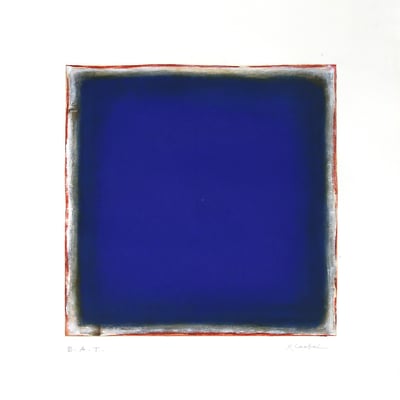
Xiaobai Su
Moonlight Halo , 2015
Limited Edition Print
Etching
Currently Not Available

Xiaobai Su
Intactness E, 2015
Limited Edition Print
Etching
Currently Not Available
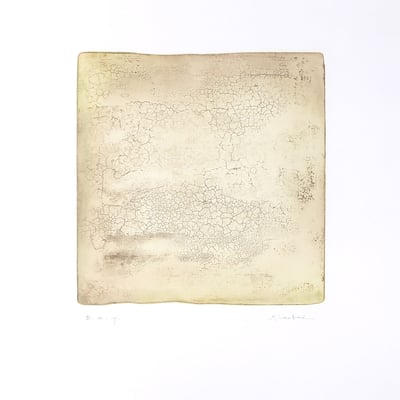
Xiaobai Su
Intactness B , 2015
Limited Edition Print
Etching
Currently Not Available
Related Artists
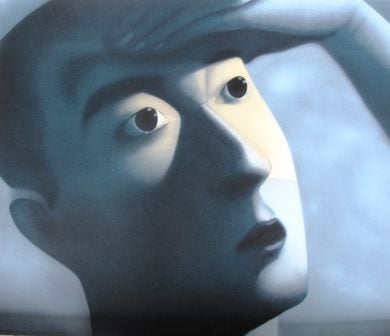
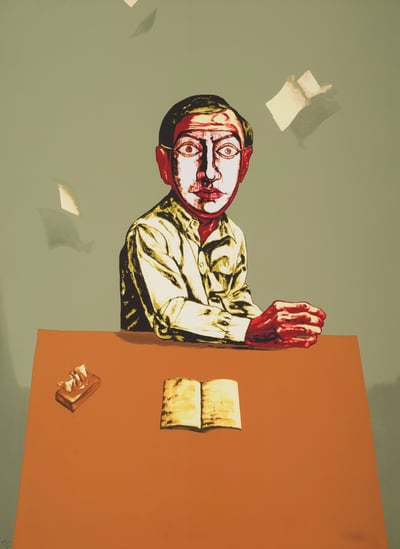


Artwork by Ellsworth Kelly
What is Colour Field Painting?
Colour Field Painting is an abstract style characterized by large areas of a single color or simple, solid colors. The term was first used in the 1950s to describe the work of three American Abstract Expressionist painters—Barnett Newman, Mark Rothko, and Clyfford Still. Their work emphasized the emotional power of color and the creation of vast, meditative spaces through expansive color fields.


