

Etching, aquatint, carborundum and collagraph
Imperial Academy 1 by Su Xiaobai is a limited edition print created through a complex mix of etching, aquatint, carborundum, and collagraph techniques. This 2018 piece exudes a meditative quality, dominated by a vertical textured field in earthy tones. The central section appears almost weathered, suggesting the passage of time or layers worn down by nature. The side borders are a stark, deep black, framing the textured center and creating a contrast that emphasizes the tactile surface of the central section. Su Xiaobai’s work often merges traditional Chinese aesthetics with modern abstraction, and here, the rugged, textural quality evokes a feeling of historical depth, akin to aged, worn walls or scrolls. This composition, measuring 64 cm by 59.5 cm, invites viewers to explore its layered surfaces and the intersection of tradition with contemporary art forms.
Artwork Copyright © Xiaobai SuSu Xiaobai (China, 1949) is a contemporary artist known for his abstract works that explore color, texture, and form. After studying at the Kunstakademie Düsseldorf, he developed a unique style incorporating traditional Chinese lacquer techniques with modern abstraction. Su's art often reflects themes of existence and perception, bridging Eastern and Western artistic philosophies.
Artwork Copyright © Xiaobai SuImperial Academy 1, 2018
Form
Medium
Size
- Inches
- Centimeters
Edition
Price
Available works →
- Authenticity Guaranteed
- Insured Shipping
- Online Since 2005
●
●Inventory 6689
●Signed
●Comes with gallery invoice and certificate
●Sell Us a Similar Artwork. Learn more.
Etching, aquatint, carborundum and collagraph
Imperial Academy 1 by Su Xiaobai is a limited edition print created through a complex mix of etching, aquatint, carborundum, and collagraph techniques. This 2018 piece exudes a meditative quality, dominated by a vertical textured field in earthy tones. The central section appears almost weathered, suggesting the passage of time or layers worn down by nature. The side borders are a stark, deep black, framing the textured center and creating a contrast that emphasizes the tactile surface of the central section. Su Xiaobai’s work often merges traditional Chinese aesthetics with modern abstraction, and here, the rugged, textural quality evokes a feeling of historical depth, akin to aged, worn walls or scrolls. This composition, measuring 64 cm by 59.5 cm, invites viewers to explore its layered surfaces and the intersection of tradition with contemporary art forms.
Artwork Copyright © Xiaobai SuSu Xiaobai (China, 1949) is a contemporary artist known for his abstract works that explore color, texture, and form. After studying at the Kunstakademie Düsseldorf, he developed a unique style incorporating traditional Chinese lacquer techniques with modern abstraction. Su's art often reflects themes of existence and perception, bridging Eastern and Western artistic philosophies.
Artwork Copyright © Xiaobai Su- Recently Added
- Price (Low-High)
- Price (High-Low)
- Year (Low-High)
- Year (High-Low)

Xiaobai Su
Big Inkstone 1, 2016
Limited Edition Print
Etching
Currently Not Available

Xiaobai Su
Intellectual Aristocracy , 2013
Limited Edition Print
Etching
Currently Not Available
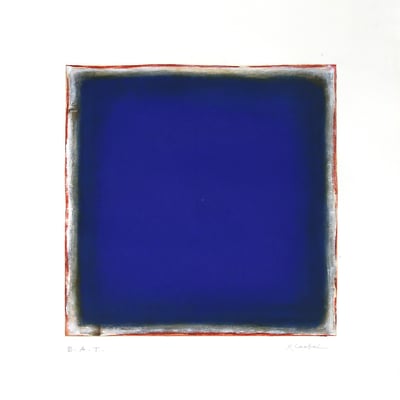
Xiaobai Su
Moonlight Halo , 2015
Limited Edition Print
Etching
Currently Not Available

Xiaobai Su
Intactness E, 2015
Limited Edition Print
Etching
Currently Not Available
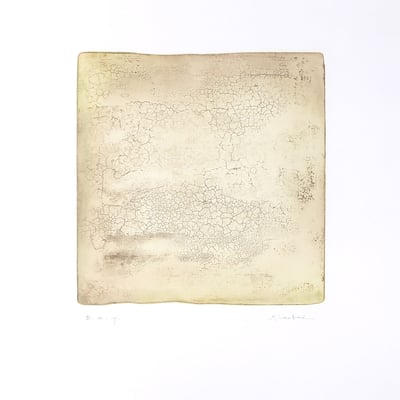
Xiaobai Su
Intactness B , 2015
Limited Edition Print
Etching
Currently Not Available
Related Artists


Artwork by Ellsworth Kelly
What is Colour Field Painting?
Colour Field Painting is an abstract style characterized by large areas of a single color or simple, solid colors. The term was first used in the 1950s to describe the work of three American Abstract Expressionist painters—Barnett Newman, Mark Rothko, and Clyfford Still. Their work emphasized the emotional power of color and the creation of vast, meditative spaces through expansive color fields.


