
Pol Bury
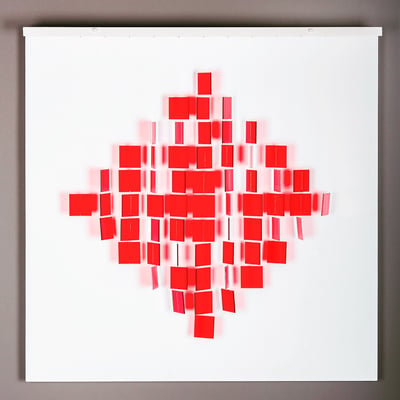
Pol Bury (Belgium, 1922–2005) was a sculptor and painter known for his kinetic art, blending motion and form to create meditative works. Influenced by surrealism and constructivism, he introduced slow-moving elements in his sculptures, inviting viewers to reflect on time and perception. His career also included jewelry and fountain designs.
© Pol Bury. All rights reserved.
Availability
Size
Medium
SORT BY

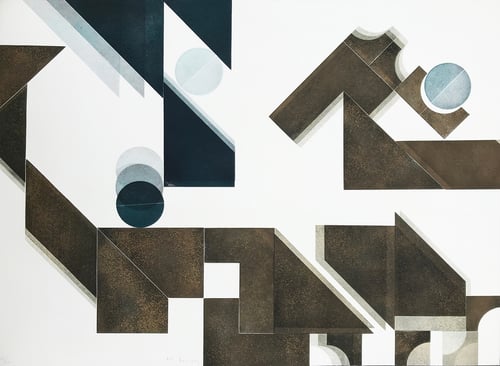
Pol Bury
Senza titolo, 1980
Limited Edition Print
Screen-print
EUR 1,950

Pol Bury
Tour Montparnasse, 1990
Limited Edition Print
Etching
EUR 650

Pol Bury
Des idées et des ombres 2, 1973
Limited Edition Print
Etching
EUR 1,250

Pol Bury
Presenza grafica, 1973
Limited Edition Print
Etching and Aquatint
Currently Not Available

Pol Bury
Des idées et des ombres 1, 1973
Limited Edition Print
Etching
Currently Not Available
I am searching for the point which exists between the moving and the non-moving.
- Pol Bury
- Pol Bury
Born in Belgium, Pol Bury began his artistic evolution as a Surrealist painter, but eventually became widely known for his kinetic sculptures. His most famous work is usually cited as L’Octagon, a fountain-sculpture situated in San Francisco, for which he employed water as a means of emphasizing this work. Pol Bury was initially involved in the Surrealist movement, drawn in by the artistic endeavours of Yves Tanguy and Rene Margritte. However, he soon branched out into other forms of art and was notably struck by the work of Alexander Calder - this is what sparked the turn to sculpting. Bury’s work as a sculptor was heavily based on cinétisation, or kinetic art. He initially adopted the use of panels, cutting them into different shapes and using lighting disks or balls in order to create differences in how his work would look, dependent on the angle from which a viewer was looking - a technique used in his first exhibition, Plans Mobiles. For a time, Bury also used photographs as a way of manipulating his final output - he would cut up pictures of New York skyscrapers and then reassemble them to create an image of a buckling skyline. He eventually returned to sculpting and chose metal as his primary material, with his works focusing on the idea of attraction and repulsion. Movement was key in Pol Bury's work, but a lot of this movement was so minute and so slow that it was hardly even visible. Bury noted, however, that "speed limits space; slowness creates it". (Artist website)
Related Artists



Related Articles

Art Movements - November 21, 2022
Botch, Blotch and Splotch: The Exuberant Maelstrom of the Cobra Art Movement.
Explore the CoBrA movement’s bold creativity, blending raw expression and experimentation. Discover its impact on post-war art and avant-garde traditions.Read More
News, Popular, Collecting, Artists - August 12, 2026
In Minor Keys: Finding Intimacy and Identity at the 61st Venice Biennale — and in Your Collection
Explore how Koyo Kouoh’s 61st Venice Biennale vision, In Minor Keys, is shifting contemporary collecting toward quiet introspection, memory, and personal identi…Read More
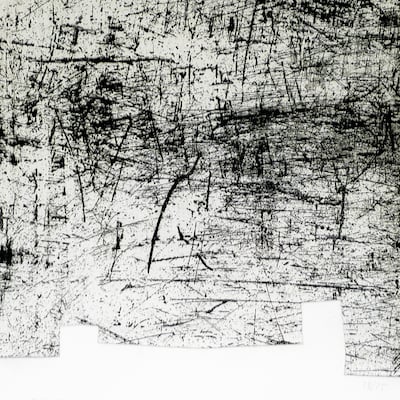 Artwork by Eduardo Chillida
What is abstract art?
Abstract art uses form, shape, line, and color to create a visual experience without attempting to represent external reality. The composition exists independently of the world's visual references, focusing on expressing ideas and emotions through non-representational means.
Explore »

