

What is appropriation?
- Show All
- Established
- Discoveries
- Show All
Artworks Related to Appropriation

Roy Lichtenstein
CRAK!, 1963-1965
Limited Edition Print
Lithograph
Currently Not Available
Roy Lichtenstein
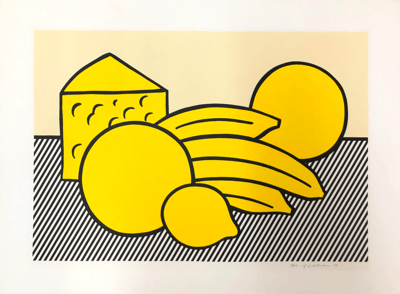
Yellow Still Life, 1974
Limited Edition Print
Mixed Media
USD 39,500

Roy Lichtenstein
Girl, 1964
Limited Edition Print
Lithograph
USD 3,000

James Rosenquist
Tide, 1979
Limited Edition Print
Etching and Aquatint
Inquire For Price
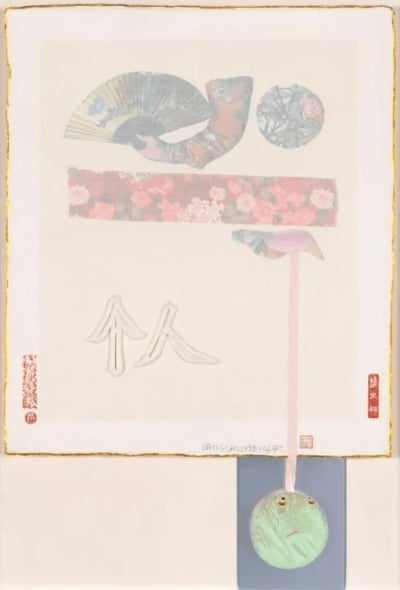
Robert Rauschenberg
Individual, 1982
Limited Edition Print
Collage
USD 8,500

Roy Lichtenstein
Litho/Litho, 1970
Limited Edition Print
Lithograph
USD 17,200

Andy Warhol
Shoe and Stocking, 1955
Limited Edition Print
Offset Print
USD 11,700
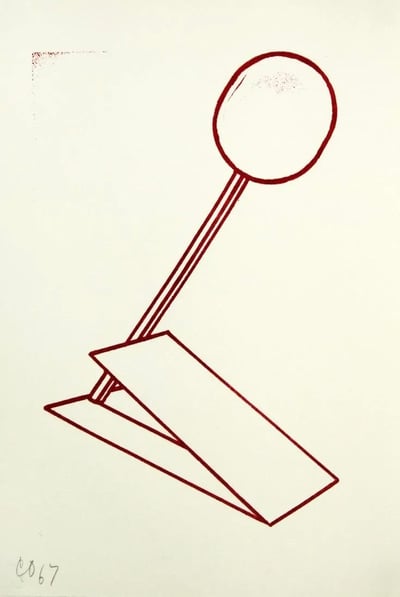
Claes Oldenburg
Untitled Rubber Stamp Print, 1967
Limited Edition Print
Mixed Media
USD 850

Marcel Duchamp
La Mariée (The bride), 1934
Limited Edition Print
Aquatint
Currently Not Available

Mr. Brainwash
Love is the Answer (Pink), 2022
Limited Edition Print
Screen-print
USD 2,810

Jorg Immendorf
Surrealistisches Tribunal, 1998
Limited Edition Print
Linocut
EUR 2,300
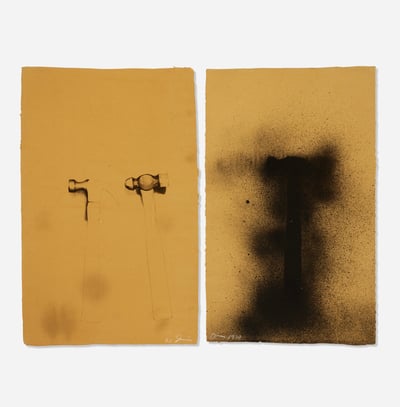
Jim Dine
Hammers diptych, 1970
Limited Edition Print
Lithograph
Inquire For Price

Mr. Brainwash
Rolls Royce, 2017
Limited Edition Print
Screen-print
Inquire For Price

Jim Dine
Tool Box II, 1966
Limited Edition Print
Screen-print
USD 1,350

Claes Oldenburg
Rolling Collar and Tie, 1991
Limited Edition Print
Lithograph
USD 1,550
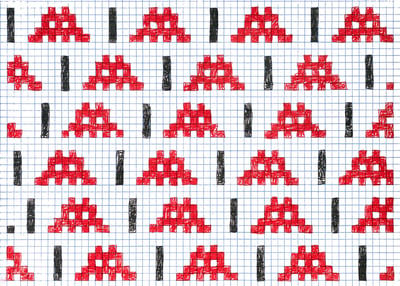
Invader
Homeworks, 2006
Limited Edition Print
Screen-print
USD 34,700
Related Articles



Arte Nucleare was the name of an artist group founded in Milan in 1951. The group aimed to create art that responded to the dangers and technologies of the nuclear age. Their works often utilized automatic techniques and depicted devastated landscapes and mushroom clouds, reflecting the anxieties of a world on the brink of nuclear catastrophe.

Décollage is an art technique involving the removal, cutting, or tearing away of parts of an original image. The term comes from the French word meaning to take off or to unstick. Artists use this method to challenge or replace existing values, often symbolically tearing away influences from media or conventional thinking.

A pigment is a material that changes the color of light by selectively absorbing certain wavelengths and reflecting others. Unlike phosphorescence or fluorescence, where materials emit light, pigments work by altering the light that passes through or is reflected from them. In art, pigments are chosen for their special properties, such as high tinting strength, making them ideal for coloring various materials.
Can't find your Answer?
Thank you! Your question has been sent — we'll get back to you shortly.
