

What is appropriation?
- Show All
- Established
- Discoveries
- Show All
Artworks Related to Appropriation
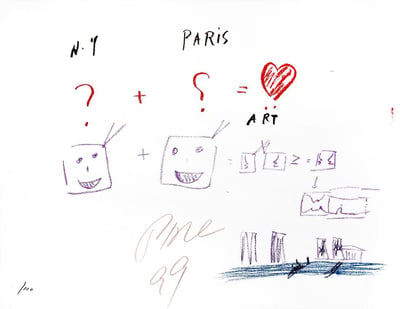
Nam June Paik
NY + Paris = Art, 1999
Limited Edition Print
Lithograph
Currently Not Available

James Rosenquist
Sunglass Lens - Landing Net - Triangle, 1974
Limited Edition Print
Etching
Inquire For Price

James Rosenquist
New York Says It, 1983
Limited Edition Print
Lithograph
USD 1,400

Laure Prouvost
Ideally here the roof be open to the sky, 2016
Limited Edition Print
Etching
EUR 1,000

Laure Prouvost
This print has traveled far to touch you, 2016
Limited Edition Print
Etching
EUR 1,000
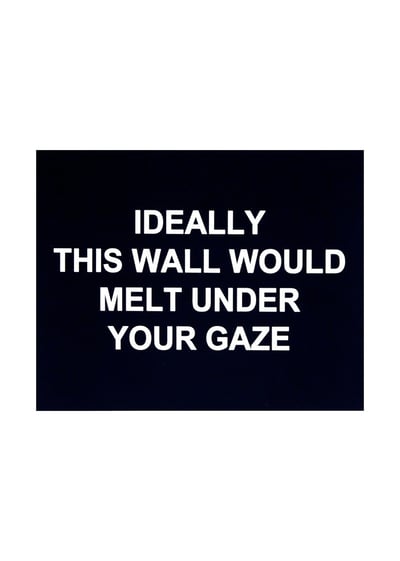
Laure Prouvost
Ideally this wall would melt under your gaze, 2016
Limited Edition Print
Etching
EUR 1,000

Laure Prouvost
This print wishes to be on the other side of this wall, 2016
Limited Edition Print
Etching
EUR 1,000

Laure Prouvost
Ideally this print would be hanged higher, 2016
Limited Edition Print
Etching
EUR 1,000

Louise Lawler
Discernible Difference, 2010
Limited Edition Print
Inkjet print
Currently Not Available

Allen Jones
Catwalk II, 1999
Limited Edition Print
Etching
EUR 2,500

Allen Jones
Catwalk IV, 1999
Limited Edition Print
Etching
EUR 2,500

Allen Jones
Dance, 1999
Limited Edition Print
Lithograph
EUR 2,000
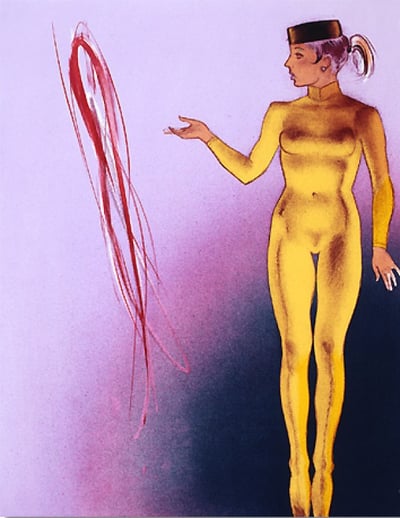
Allen Jones
Intro
Limited Edition Print
Lithograph
Currently Not Available

Allen Jones
Life Class VI, 1968
Limited Edition Print
Lithograph
Currently Not Available

Andy Warhol
Rats and Star Band Member #2 , 1983
Drawing / Watercolor
Pencil
EUR 32,000
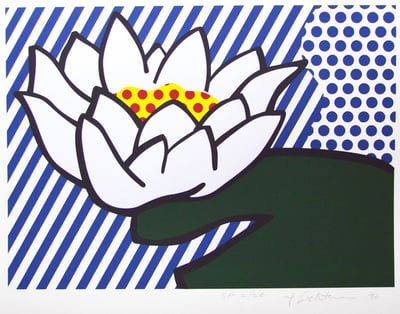
Roy Lichtenstein
Water Lily, 1993
Limited Edition Print
Screen-print
Currently Not Available
Related Articles


Photorealism is a genre of art or artistic movement that involves drawing, painting, and other graphic media in which the artist carefully studies a photograph and attempts to reproduce it as realistically as possible in another medium. While the term can broadly describe any artwork created in this manner, it specifically refers to a group of painters and paintings in the U.S. art movement that emerged in the late 1960s and early 1970s.

Bronze is a metal alloy made primarily of copper and tin, with a typical modern composition of 88% copper and 12% tin. Over time, bronze develops a patina, a surface color that often turns deep green due to oxidation. Large bronze objects, such as sculptures, are typically made in foundries. Bronze is valued for its durability and has been widely used throughout history for art, tools, and weapons.

Patina is the distinctive greenish surface that bronze develops over time due to exposure to air and humidity. Artists can also apply chemicals to bronze to artificially create patina. Alternatively, bronze can be polished to reveal its natural rich gold color. Patina is not exclusive to bronze; it can also occur on other metals like copper and even on wood and stone, enhancing the material's character over time.
Can't find your Answer?
Thank you! Your question has been sent — we'll get back to you shortly.
