

What is avant-garde?
- Show All
- Established
- Discoveries
- Show All
Artworks Related to Avant-garde

Andy Warhol
Flash - Orange Presidential Seal (T.P.), 1968
Limited Edition Print
Screen-print
USD 20,000 - 25,000

Andy Warhol
Flash - November 22, 1963 (F. S. II.35) (T.P.), 1968
Limited Edition Print
Screen-print
USD 13,900

Andy Warhol
Flash - November 22, 1963, II.39, 1968
Limited Edition Print
Screen-print
USD 10,800

Andy Warhol
Flash - November 22, 1963, II.37, 1968
Limited Edition Print
Screen-print
USD 9,600
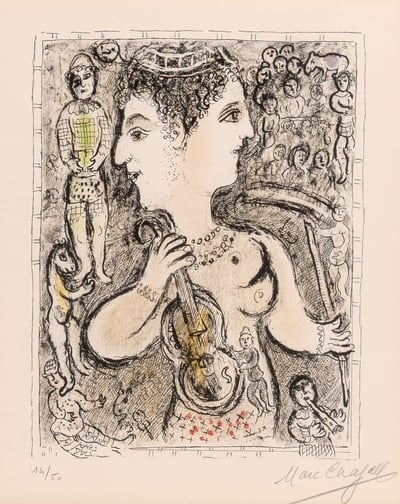
Marc Chagall
Double Visage, 1978
Limited Edition Print
Silkscreen
USD 5,310

Andy Warhol
The Witch (F. & S. II.261), 1981
Limited Edition Print
Screen-print
USD 50,000 - 60,000

Andy Warhol
Open this end (Paper dress), 1962-1964
Limited Edition Print
Mixed Media
Inquire For Price

Andy Warhol
Mick Jagger (F & S II.145), 1975
Limited Edition Print
Screen-print
Inquire For Price

Andy Warhol
Mao (F & S II.95), 1972
Limited Edition Print
Screen-print
Inquire For Price

James Ensor
Capture of a strange town, 1888
Limited Edition Print
Etching
EUR 15,350

James Ensor
Peste Dessous Peste Dessus Peste Partout!, 1904
Limited Edition Print
Etching
EUR 13,900

James Ensor
La Mare aux Peupliers, 1889
Limited Edition Print
Etching
EUR 3,650

James Ensor
Les Toits a Ostende, 1903
Limited Edition Print
Etching
Currently Not Available

James Ensor
La Cathédrale, 1896
Limited Edition Print
Etching
Currently Not Available

James Ensor
Chaumières, 1888
Limited Edition Print
Etching
EUR 1,495

Marina Abramovic
512 Hours (2014), 2021
Photography
C-Print
EUR 2,400
Related Articles
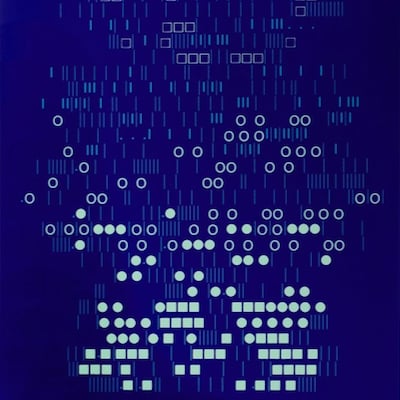
Computer art refers to any type of digital imagery or graphic artwork created using a computer. Art curators often classify art made with computers as either digital art or new media art. Artists creating computer art leverage technological advancements to produce complex compositions.
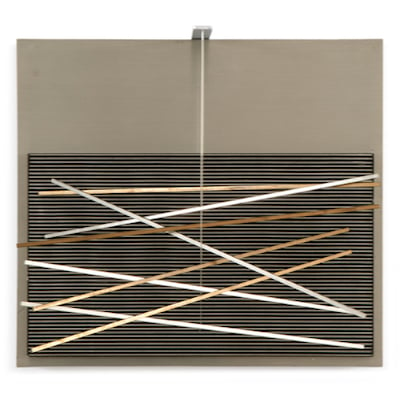
Kinetic art is an international movement that emerged in the 1920s and gained prominence in the 1960s, referring to art that involves both apparent and real motion. It encompasses any medium that includes movement, either relying on actual motion for its effect or being perceived as moving by the viewer. Early examples include canvas paintings designed to create optical illusions of movement. Today, kinetic art often refers to three-dimensional figures and sculptures, such as those operated by machines or those that move naturally. The movement covers a variety of styles and techniques that frequently overlap.
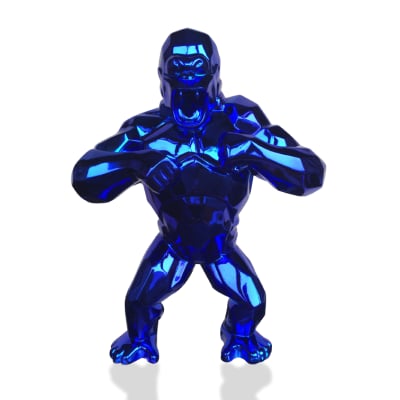
Resin can be derived from both natural sources, such as pine sap, and synthetic processes. Natural resin comes from tree sap, while synthetic resin is a type of dense, easily molded plastic. Resin is commonly used in sculpture, and it can also enhance the vibrancy of paint colors.
Can't find your Answer?
Thank you! Your question has been sent — we'll get back to you shortly.
