

What is avant-garde?
- Show All
- Established
- Discoveries
- Show All
Artworks Related to Avant-garde

Andy Warhol
American Indian (Black), 1976
Limited Edition Print
Offset Print
USD 2,400

Andy Warhol
Old Fashioned Vegetable from Campbell's Soup II (F.&S.54), 1969
Limited Edition Print
Screen-print
GBP 60,000 - 70,000

Andy Warhol
Happy Bug Day, 1955
Limited Edition Print
Lithograph
GBP 6,500 - 8,400

Andy Warhol
Untitled (Mao) from The New York Collection for Stockholm, 1973
Limited Edition Print
Mixed Media
GBP 20,000 - 26,000

Andy Warhol
Jessica Lange, 1979
Drawing / Watercolor
Mixed Media
EUR 15,000

Andy Warhol
Cow, II.12A, 1971
Limited Edition Print
Silkscreen
USD 9,350

Marc Chagall
Sacrifices Made to the Nymphs, from Daphnis and Chloe, 1961
Limited Edition Print
Lithograph
USD 4,400

Marc Chagall
Le repas chez Dryas, from Daphnis et Chloé, 1961
Limited Edition Print
Lithograph
USD 5,750

Marc Chagall
Le Peintre, from Songes (cf. C. books 112), 1981
Limited Edition Print
Etching and Aquatint
USD 6,000

Marc Chagall
Nature morte bleue, 1957
Limited Edition Print
Lithograph
USD 6,000

Marc Chagall
The Tribe of Gad CS19, 1964
Limited Edition Print
Lithograph
USD 10,700

Marc Chagall
The House in My Village, 1960
Limited Edition Print
Lithograph
USD 10,300
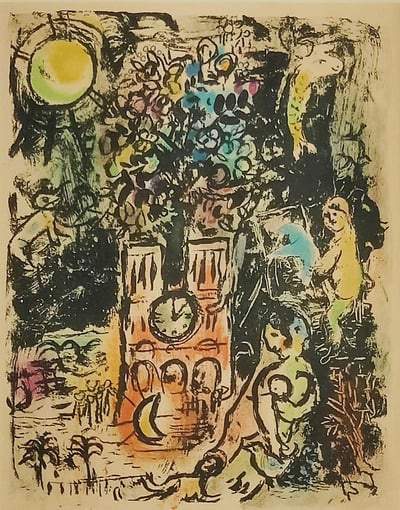
Marc Chagall
The Tree of Jesse (L'Arbre de Jessé), 1960
Limited Edition Print
Lithograph
USD 11,500

Marc Chagall
Der Engel (The Angel), 1960
Limited Edition Print
Lithograph
USD 11,500

Marc Chagall
The Bay of Angels (La Baie des Anges), 1962
Limited Edition Print
Lithograph
EUR 7,200

Andy Warhol
Kimiko, II.237, 1981
Limited Edition Print
Screen-print
Inquire For Price
Related Articles

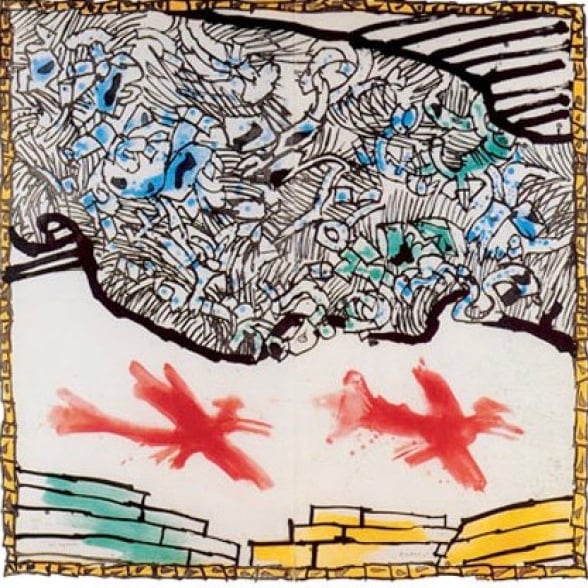

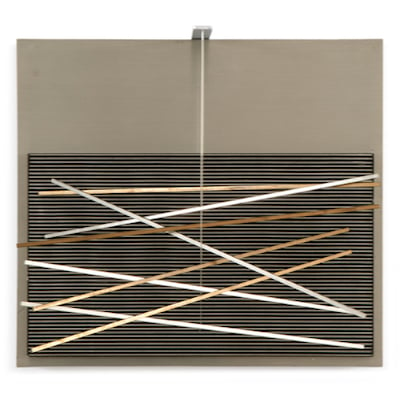
Kinetic art is an international movement that emerged in the 1920s and gained prominence in the 1960s, referring to art that involves both apparent and real motion. It encompasses any medium that includes movement, either relying on actual motion for its effect or being perceived as moving by the viewer. Early examples include canvas paintings designed to create optical illusions of movement. Today, kinetic art often refers to three-dimensional figures and sculptures, such as those operated by machines or those that move naturally. The movement covers a variety of styles and techniques that frequently overlap.
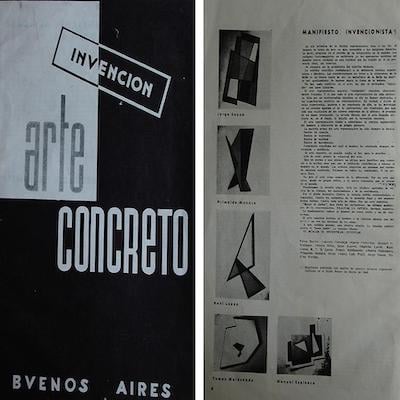
The Manifesto Invencionista was published in 1946, marking the beginning of the concrete art movement in Buenos Aires, Argentina. Written by artist Tomás Maldonado and published by the Asociación Arte Concreto-Invención, the manifesto announced the principles of Concrete Art. Concrete art is purely abstract, with no reference to visual reality, emphasizing geometric forms and the materiality of the artwork itself.

The Düsseldorf School of Photography refers to a group of photographers who studied under Bernd and Hilla Becher at the Kunstakademie Düsseldorf during the 1970s. This group was known for its devotion to the black-and-white industrial images characteristic of the German tradition known as New Objectivity. The photographers focused on precise, methodical documentation of industrial structures, often using a detached and objective approach.
Can't find your Answer?
Thank you! Your question has been sent — we'll get back to you shortly.
