
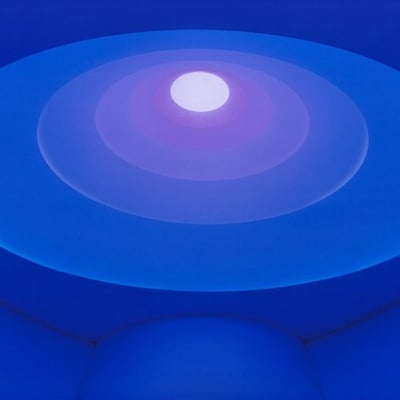
What is ‘light and space’?
- Show All
- Established
- Discoveries
- Show All
Artworks Related to Light and Space

Luis Tomasello
S/T 1 - Naranja , 2013
Limited Edition Print
Lithograph
EUR 3,000
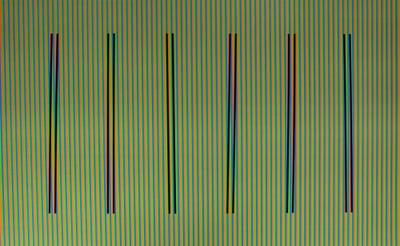
Carlos Cruz-Diez
Couleur à l'Espace Olot, 2014
Limited Edition Print
Lithograph
Currently Not Available

Massimo Bartolini
Dust Chaser 2, 2014
Limited Edition Print
Etching
EUR 1,300

Massimo Bartolini
Dust Chaser 1, 2014
Limited Edition Print
Etching
EUR 1,300

Massimo Bartolini
Dust Chaser, 2014
Limited Edition Print
Etching
EUR 1,800
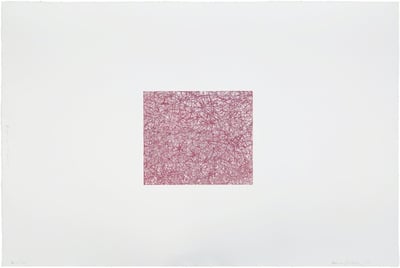
Massimo Bartolini
145 hours, 2014
Limited Edition Print
Etching
EUR 1,300
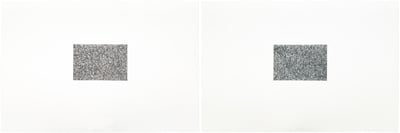
Massimo Bartolini
287 hours, 2014
Limited Edition Print
Etching
EUR 1,800

Antonio Asis
Vibration Carré Noir et Bleu, 2012
Sculpture / Object
Mixed Media
EUR 3,000

Miguel Chevalier
mini voxels light blue, 2015
Sculpture / Object
Mixed Media
EUR 4,500
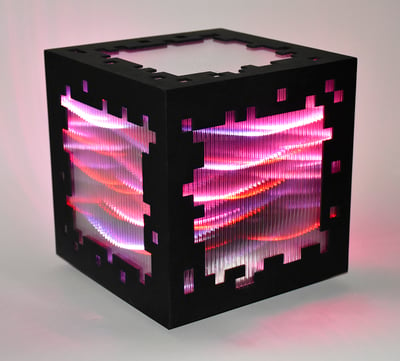
Miguel Chevalier
Mini voxels light red, 2015
Sculpture / Object
Mixed Media
EUR 4,500

Antonio Asis
vibration grand cercle, 2010
Sculpture / Object
Mixed Media
EUR 3,000

Antonio Asis
vibration bandes bleus et rouges, 2010
Sculpture / Object
Mixed Media
EUR 3,000
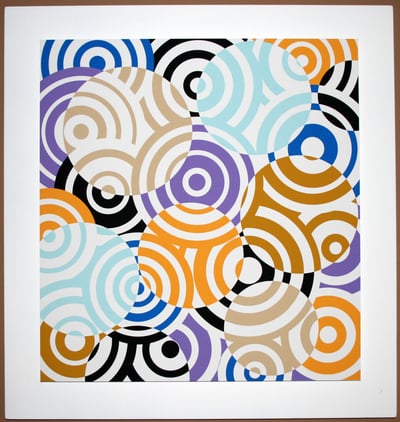
Antonio Asis
interferences cercles de couleurs, 2010
Limited Edition Print
Mixed Media
EUR 2,200
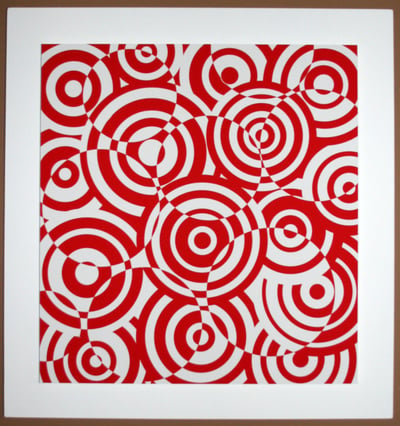
Antonio Asis
interferences cercles rouge et blanc, 2010
Limited Edition Print
Mixed Media
EUR 2,200
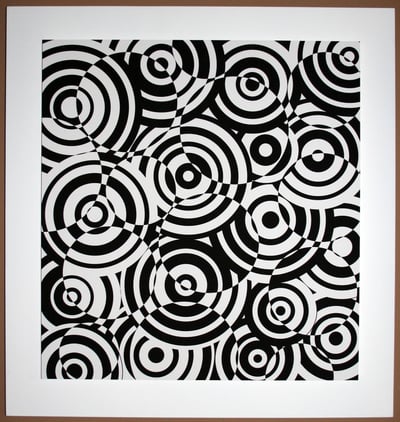
Antonio Asis
interferences cercles noir et blanc, 2010
Limited Edition Print
Mixed Media
EUR 2,200

Antonio Asis
vibration cercles noir et blanc, 2010
Sculpture / Object
Mixed Media
EUR 3,000
Related Articles

Dau Al Set was an artistic movement that sought to express both the conscious and unconscious mind through art. Initially an offshoot of Surrealism, it evolved into a distinct movement over time. Founded in Catalonia post-World War II, Dau Al Set was the first artistic movement in the region after the war. The name Dau Al Set translates to the seventh face of the dice in Catalan, symbolizing the movement's unique and unconventional character.

Video art is an art form that uses video and audio data, primarily featuring moving images. It emerged in the late 1960s and early 1970s with the advent of new technology and consumer video equipment that became accessible beyond corporate broadcasting. Video art can take many forms, including broadcast recordings, installations in museums or galleries, online streamed works, videotapes, and performances incorporating video monitors, television sets, or projections that display live or recorded sounds and images.

Mail Art is a populist art movement centered on the creation and exchange of small-scale artworks through the postal service. It developed out of the Fluxus movement in the 1950s and 1960s and has since evolved into a global art movement. Ray Johnson is recognized as the first mail artist, and his New York School is considered the first network of mail artists. Mail artists rely heavily on a network to exchange their works, often creating a community of artists connected through the postal system.
Can't find your Answer?
Thank you! Your question has been sent — we'll get back to you shortly.
