
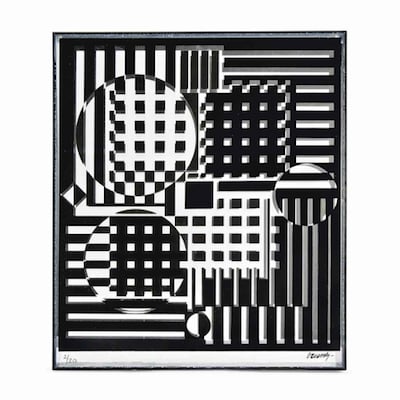
What is Op Art?
- Show All
- Established
- Discoveries
- Show All
Artworks Related to Op Art

Yaacov Agam
Megillat Esther, 1980
Limited Edition Print
Serigraph
USD 10,950
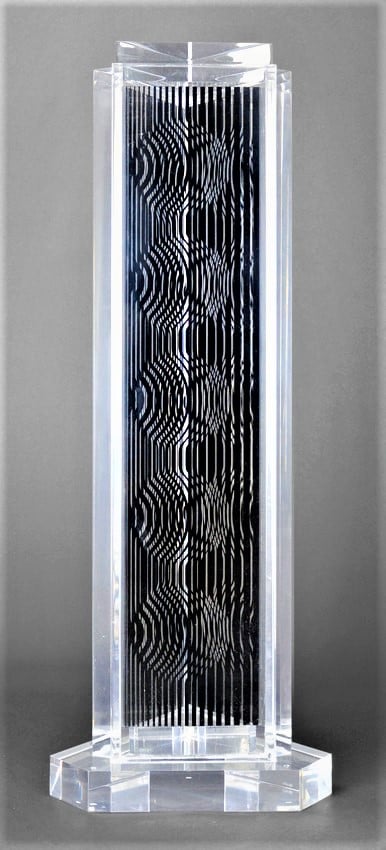
Victor Vasarely
HOLLD (Moire tower), 1990
Sculpture / Object
Mixed Media
EUR 5,500

Victor Vasarely
Hommage a Bartók, 1981
Limited Edition Print
Screen-print
EUR 1,500

Victor Vasarely
The Tennis Player, 1980
Limited Edition Print
Silkscreen
USD 650

Victor Vasarely
Flower Girl, 1980
Limited Edition Print
Silkscreen
USD 2,000

Victor Vasarely
Vega
Limited Edition Print
Silkscreen
USD 780

Yaacov Agam
Hommage a Chopin I, 1970-80
Limited Edition Print
Mixed Media
USD 1,350

Julio Le Parc
Modulation 911, 1987
Painting
Acrylic on paper
Currently Not Available

Victor Vasarely
Broey Neg
Limited Edition Print
Serigraph
EUR 950
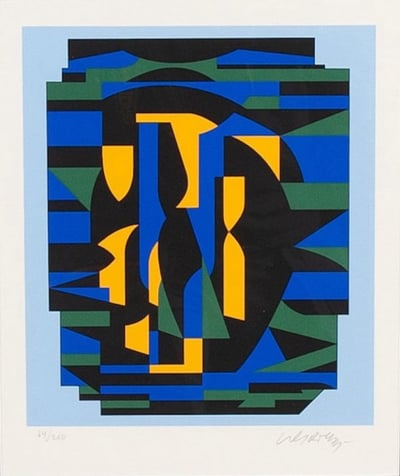
Victor Vasarely
Untitled ( From Ion)
Limited Edition Print
Serigraph
EUR 950
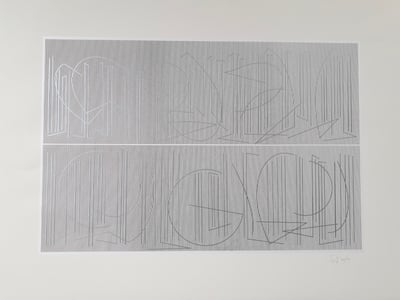
Rafael Jesus Soto
Untitled (Silver Lines)
Limited Edition Print
Screen-print
GBP 2,800
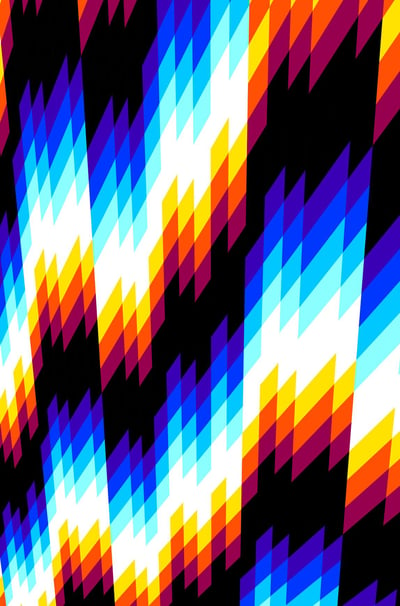
Felipe Pantone
Chromadyna Micap #5, 2021
Limited Edition Print
Lithograph
EUR 1,200

Felipe Pantone
Chromadyna Micap #4, 2021
Limited Edition Print
Lithograph
EUR 1,200
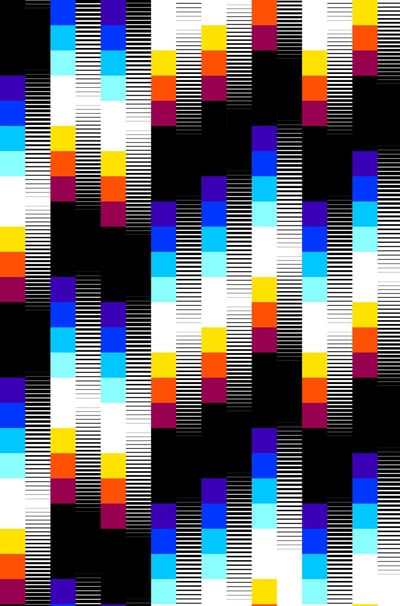
Felipe Pantone
Chromadyna Micap #3, 2021
Limited Edition Print
Lithograph
EUR 1,200

Felipe Pantone
Chromadyna Micap #2, 2021
Limited Edition Print
Lithograph
EUR 1,200

Felipe Pantone
Chromadyna Micap #1, 2021
Limited Edition Print
Lithograph
EUR 1,200
Related Articles

A plate is a broad, primarily flat vessel used for serving food, but it can also serve ceremonial or decorative purposes. Plates are typically circular, though they can be any shape and made from various water-resistant materials. Most plates have raised edges, either by curving upward or featuring a wider lip. Vessels without a raised edge or with a more rounded profile are often considered bowls or dishes, while very large, plate-shaped vessels might also be classified as dishes.

Performance Art is a genre of fine art that is traditionally interdisciplinary, involving various art forms. It can be scripted or unscripted, random or carefully orchestrated, spontaneous, or meticulously planned, with or without audience participation. Performance Art can be presented live or through media, with the artist either present or absent. It typically involves four basic elements: space, the performer’s body or presence through a medium, time, and the relationship between performer and audience. The artwork consists of actions performed by an individual or group in a specific time and space.

Generative art refers to art that is wholly or partly created through an autonomous system. This system can be independent or non-human, capable of determining features that would otherwise be decided by the artist. The generative system can act as the creator or as a collaborator with the artist. Generative art often refers to works generated algorithmically by computers, where the system plays a significant role in the creation process.
Can't find your Answer?
Thank you! Your question has been sent — we'll get back to you shortly.
