

What is pop-art?
- Show All
- Established
- Discoveries
- Show All
Artworks Related to Pop art
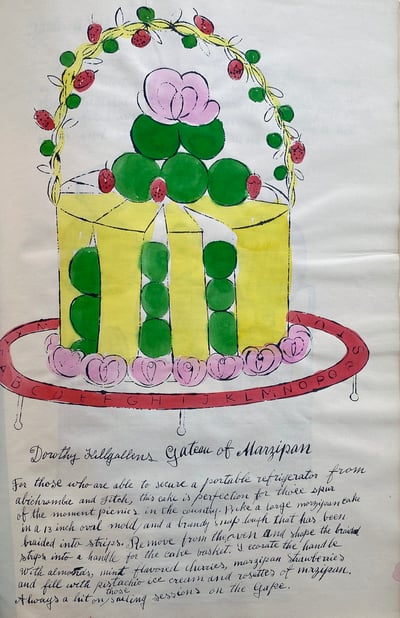
Andy Warhol
Wild Raspberries IV.139A, 1959
Limited Edition Print
Offset Print
USD 8,400
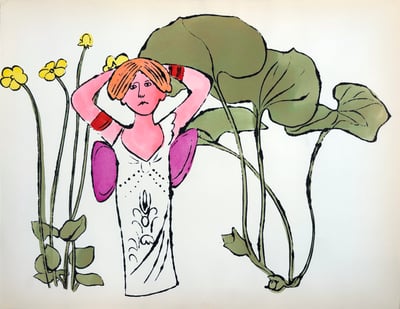
Andy Warhol
In The Bottom of my Garden IV.93A, CA. 1956
Limited Edition Print
Lithograph
Inquire For Price
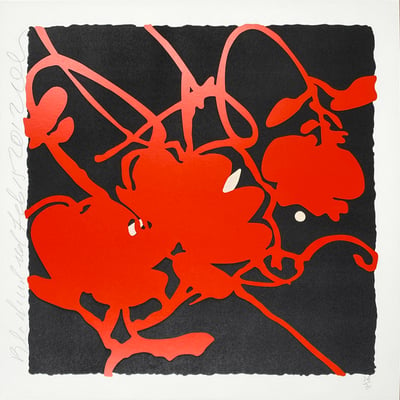
Donald Sultan
Black and Red - Lantern Flowers, 2012
Limited Edition Print
Screen-print
USD 7,300
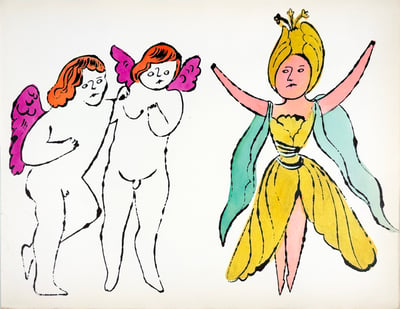
Andy Warhol
In The Bottom of my Garden IV.96A, CA. 1956
Limited Edition Print
Lithograph
Inquire For Price
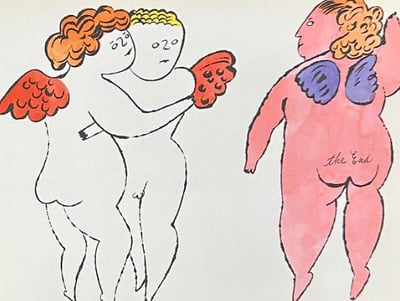
Andy Warhol
In The Bottom of my Garden IV.105A, CA. 1956
Limited Edition Print
Lithograph
USD 4,850
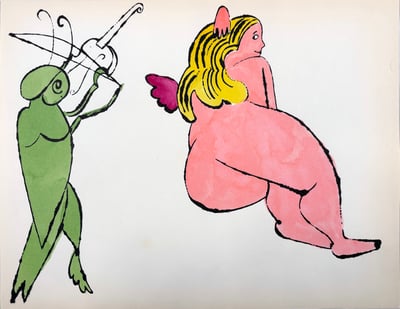
Andy Warhol
In The Bottom of my Garden IV.103A, CA. 1956
Limited Edition Print
Lithograph
Inquire For Price

Donald Sultan
Playing Card (Three of Diamonds), 1990
Limited Edition Print
Aquatint
USD 1,450

Jeff Koons
Blue Balloon Dog, 2002
Sculpture / Object
Porcelain
USD 17,750
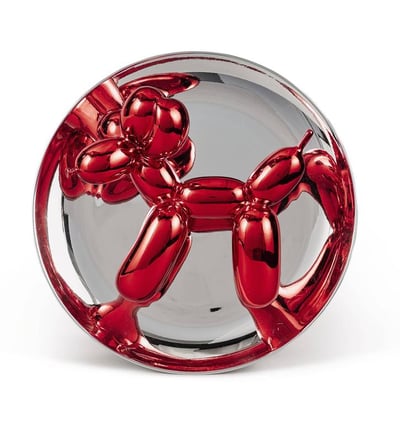
Jeff Koons
Red Balloon Dog, 1995
Sculpture / Object
Porcelain
USD 21,200

KAWS
Tension #3, 2019
Limited Edition Print
Serigraph
USD 15,500

Takashi Murakami
Homage to Francis Bacon (Study of Isabel Rawsthorne), 2011
Limited Edition Print
Screen-print
USD 17,800
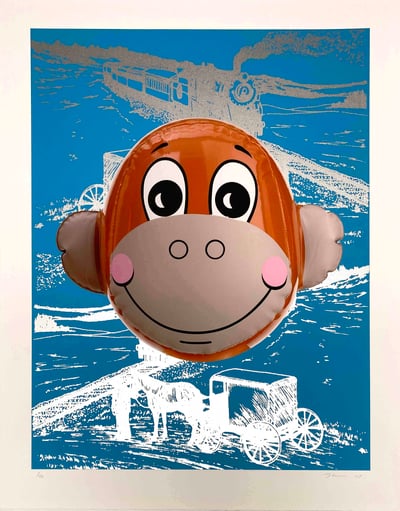
Jeff Koons
Monkey Train (Blue), 2007
Limited Edition Print
Silkscreen
USD 30,000 - 40,000

Robert Rauschenberg
Tribute 21: Art, 1994
Limited Edition Print
Lithograph
USD 4,950
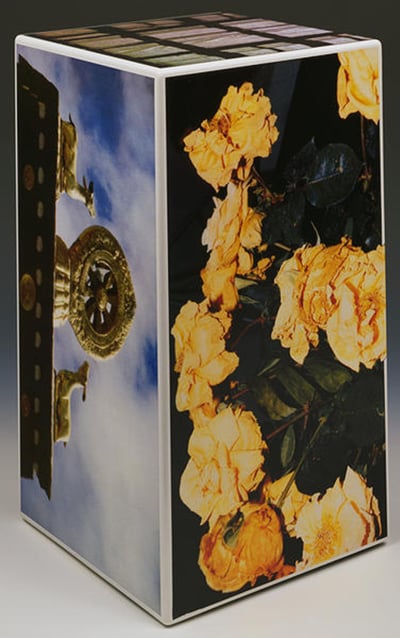
Robert Rauschenberg
Tibetan Keys (Rectangle), 1987
Sculpture / Object
Mixed Media
USD 14,250

KAWS
Companion vs Pikachu, 2002
Limited Edition Print
Screen-print
USD 11,350

KAWS
Running Chum #1, 2000
Limited Edition Print
Silkscreen
Inquire For Price
Related Articles



Attribute can function as both a noun and a verb. As a noun, it refers to an object, symbol, or animal commonly associated with a specific person, often used in art to identify figures, such as a lion with St. Mark. As a verb, it means to assign a work of art to a particular artist, usually based on stylistic analysis or other evidence, such as attributing a painting to an artist based on its technique and composition.

A curator is a professional responsible for managing and overseeing a collection of art pieces or artifacts. Employed by a gallery or museum, curators use their expertise to acquire, develop, display, and care for the collection. They also organize exhibitions and ensure that the collection is accessible to the public.

A plate is a broad, primarily flat vessel used for serving food, but it can also serve ceremonial or decorative purposes. Plates are typically circular, though they can be any shape and made from various water-resistant materials. Most plates have raised edges, either by curving upward or featuring a wider lip. Vessels without a raised edge or with a more rounded profile are often considered bowls or dishes, while very large, plate-shaped vessels might also be classified as dishes.
Can't find your Answer?
Thank you! Your question has been sent — we'll get back to you shortly.
