

What is pop-art?
- Show All
- Established
- Discoveries
- Show All
Artworks Related to Pop art
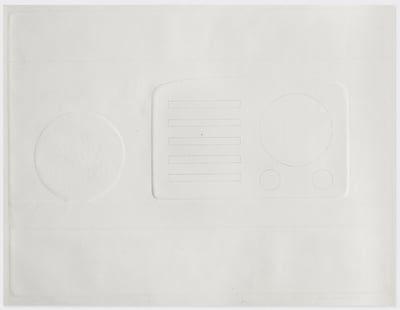
Tom Wesselmann
Still Life with Radio, 1965
Limited Edition Print
Embossing
Inquire For Price
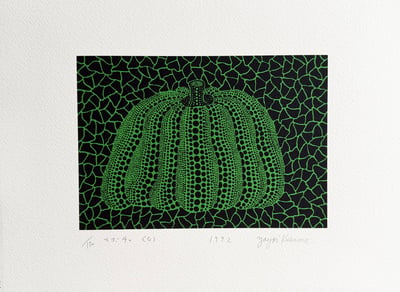
Yayoi Kusama
Pumpkin (G), 1992
Limited Edition Print
Screen-print
USD 45,750
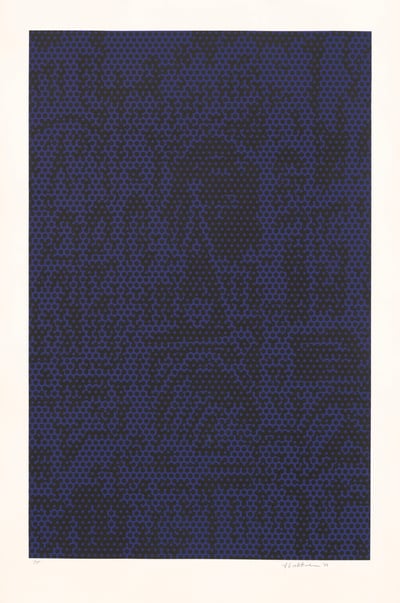
Roy Lichtenstein
Cathedral #6, 1969
Limited Edition Print
Lithograph
USD 21,200
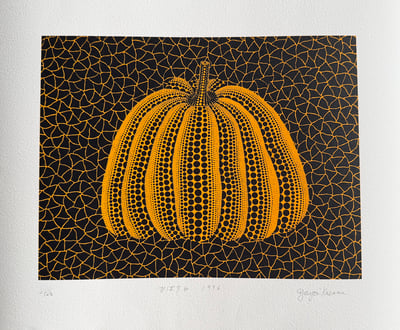
Yayoi Kusama
Pumpkin (YY), 1996
Limited Edition Print
Screen-print
USD 50,000 - 60,000

David Hockney
Untitled No. 516, 2010-2016
Limited Edition Print
Digital Print on paper
USD 60,000 - 70,000
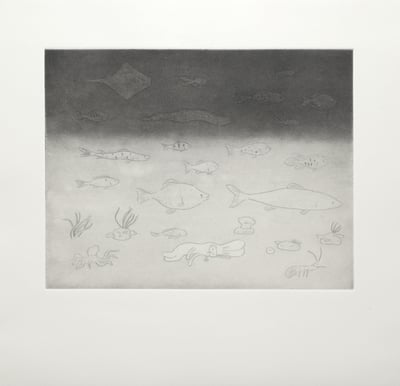
Atsushi Kaga
At the bottom of the sea, 2026
Limited Edition Print
Etching
EUR 3,500
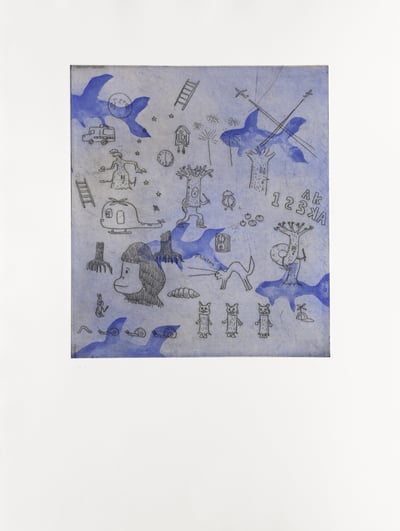
Atsushi Kaga
Baby sharks, 2026
Limited Edition Print
Etching
EUR 3,500
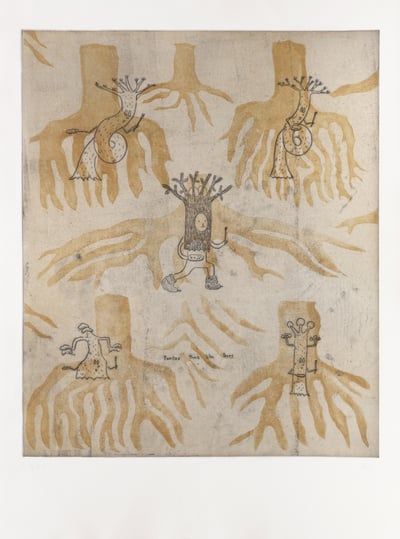
Atsushi Kaga
Painters think like trees, 2026
Limited Edition Print
Etching
EUR 3,500

Andy Warhol
Ted Turner, c. 1986
Limited Edition Print
Collage
Inquire For Price

Andy Warhol
Camouflage, II.408, 1987
Limited Edition Print
Screen-print
Inquire For Price
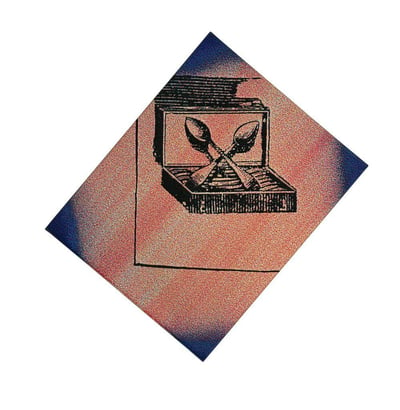
Sigmar Polke
Dr Pabscht het z’Schpiez s’Schpäckbschteck z’schpät bschteut, 1980/1991
Limited Edition Print
Mixed Media
EUR 13,000

Andy Warhol
Paloma Picasso, 1975
Limited Edition Print
Serigraph
Inquire For Price
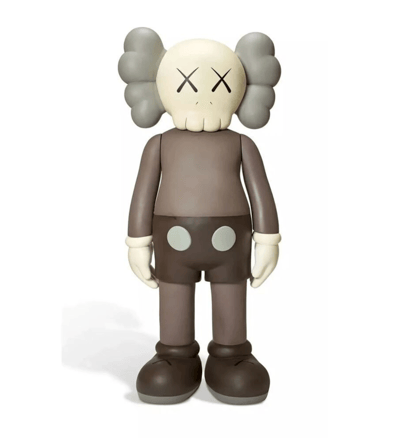
KAWS
Four Foot Companion - Brown, 2007
Sculpture / Object
Mixed Media
Inquire For Price
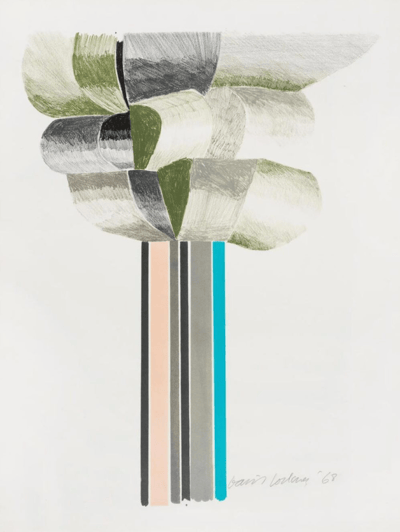
David Hockney
Trees, 1968
Limited Edition Print
Lithograph
Inquire For Price
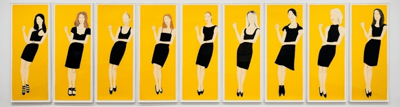
Alex Katz
Black Dress (Portfolio of 9), 2015
Limited Edition Print
Silkscreen
Inquire For Price
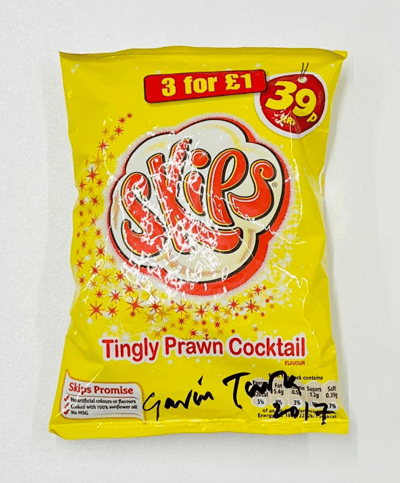
Gavin Turk
Transubsantiation, 2017
Sculpture / Object
Mixed Media
Inquire For Price
Related Articles


Glass is a transparent solid that varies in composition depending on the type. Artists use different types of glass to create art forms such as stained glass, blown glass, and various decorated pieces. Glass can be cut, textured, overlaid, engraved, and shaped in many ways to produce intricate and beautiful works of art.

Nouveau Réalisme is an artistic movement founded in 1960 by art critic Pierre Restany and painter Yves Klein during a collective exhibition at a gallery in Milan. Restany wrote the original manifesto in April 1960, proclaiming the movement. In October of that year, nine artists, including Martial Raysse, Yves Klein, Daniel Spoerri, Jean Tinguely, Arman, Pierre Restany, and three Ultra-Lettrists—Jacques de la Villeglé, François Dufrêne, and Raymond Hains—signed the declaration. In 1961, the movement expanded to include Mimmo Rotella, Niki de Saint Phalle, Gérard Deschamps, and César. The movement emphasized a return to reality in art, often incorporating everyday objects and exploring the boundaries between art and life.

Sometimes known as Figurativism, figurative art refers to sculptures and paintings that are clearly or specifically derived from real objects, making them representational. The term figurative art is often used in contrast to abstract art. However, since the emergence of abstract art, figurative art has come to describe any form of modern art that has strong references to the real world or actual situations.
Can't find your Answer?
Thank you! Your question has been sent — we'll get back to you shortly.
