Stamped by artist's estate, Printed gallery text, recto.
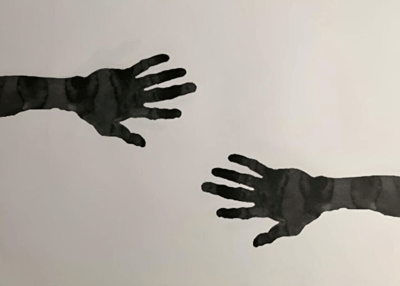
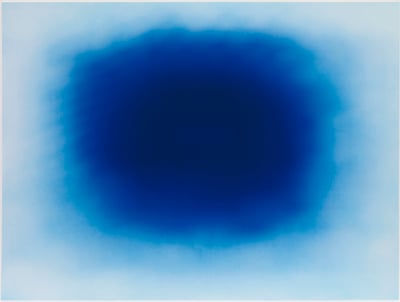
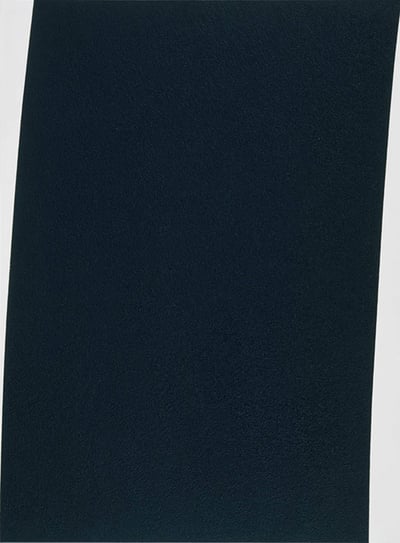
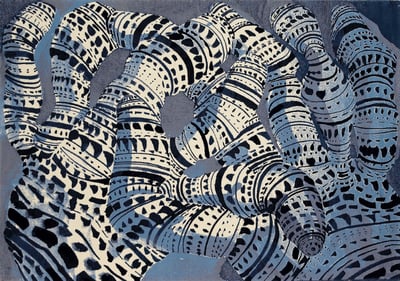
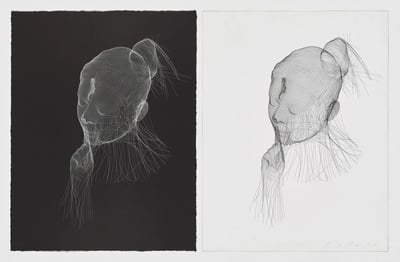
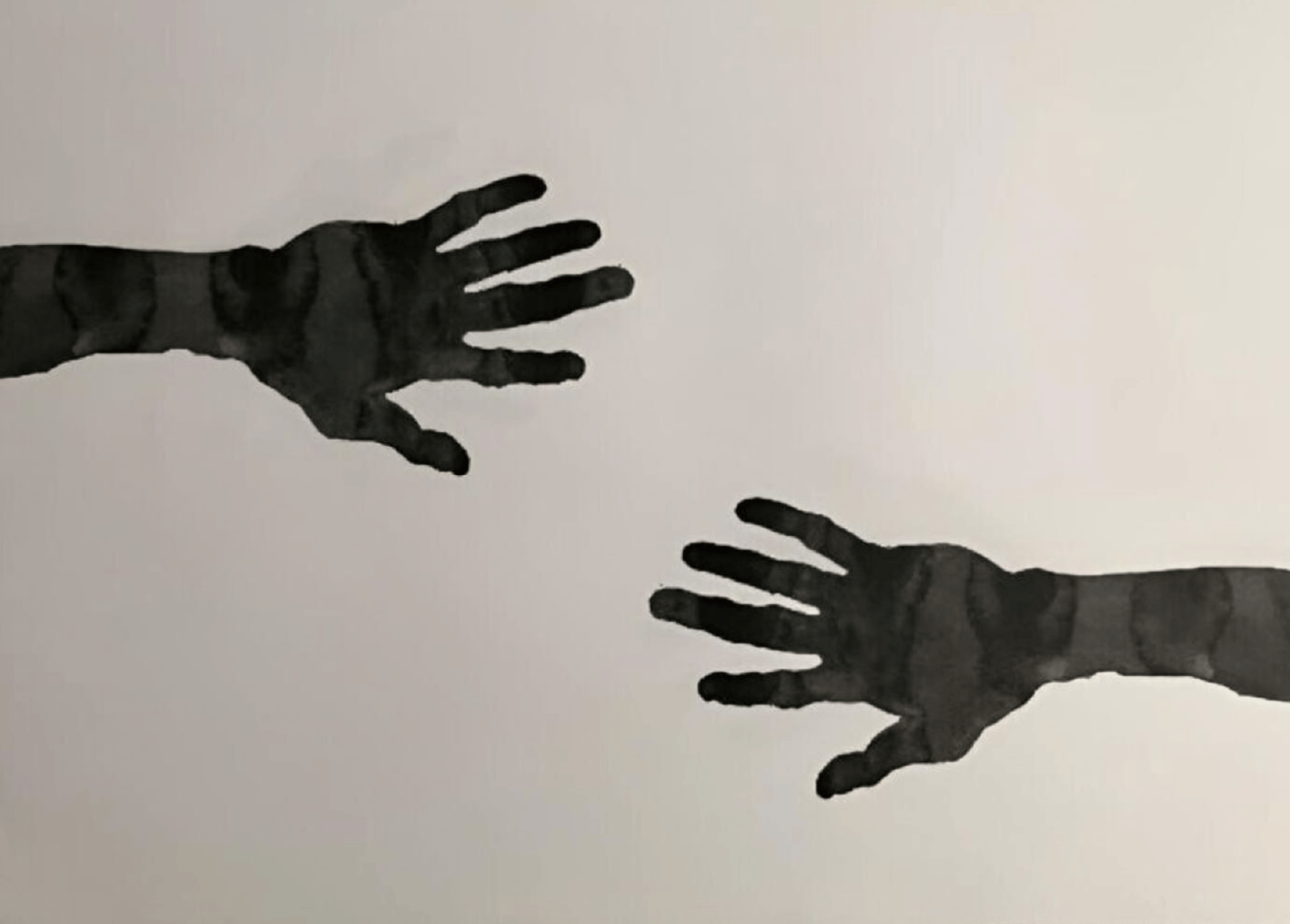
Hands (2005) by Antony Gormley is a lithograph depicting two extended arms reaching toward one another, rendered in dark, inky tones on a stark white background. The composition suggests connection, vulnerability, and the universal human gesture of reaching out. Known for exploring the human body's relationship to space, Gormley uses minimal elements here to evoke emotional and physical presence. The print, produced in an edition of 2000, bears the artist's estate stamp and printed gallery text, offering a widely accessible piece from a major British sculptor.
Antony Gormley (United Kingdom, 1950) is a British sculptor celebrated for his exploration of the human form and its relationship to space. Known for iconic works like Angel of the North and Another Place, Gormley often uses his own body as a template. His sculptures challenge perceptions of identity, presence, and the environment.
Lithograph Lithography is a printing method based on the principle that water and oil do not mix. It can be used to print artwork or text onto paper or other suitable materials. Traditionally, an image was drawn with wax, fat, or oil onto a lithographic limestone surface or plate. Today, metal plates and other surfaces are also used in lithographic printing.
Stamped by artist's estate, Printed gallery text, recto.
Hands (2005) by Antony Gormley is a lithograph depicting two extended arms reaching toward one another, rendered in dark, inky tones on a stark white background. The composition suggests connection, vulnerability, and the universal human gesture of reaching out. Known for exploring the human body's relationship to space, Gormley uses minimal elements here to evoke emotional and physical presence. The print, produced in an edition of 2000, bears the artist's estate stamp and printed gallery text, offering a widely accessible piece from a major British sculptor.
Antony Gormley (United Kingdom, 1950) is a British sculptor celebrated for his exploration of the human form and its relationship to space. Known for iconic works like Angel of the North and Another Place, Gormley often uses his own body as a template. His sculptures challenge perceptions of identity, presence, and the environment.
I'm trying to make work that is reflective and is encouraging of reflection.
- Antony Gormley
As a sculptor, almost all of Antony Gormley’s works take the human body as its subject – many works make use of his own body, or that of his friends, as the basis for metal casts. Gormley has described his work as ‘an attempt to materialise the place at the other side of appearance where we all live’ - his Event Horizon piece featured 31 separate life-sized and anatomically correct casts of his body – four in iron and 27 in fiberglass – situated along the tops of buildings along London’s South Bank, and later installed around Madison Square in New York City; of these works, Gormley has stated that they may encourage individuals to ‘reassess their own position in the world’ and become aware of their ‘status of embedment’. Among other notable works is the Angel of The North, a public steel sculpture situated in Gateshead, United Kingdom – the sculpture measures at 66ft tall with wings measuring 177ft across. (Artist website)
Contemporary art refers to avant-garde or innovative art created in the recent past or present day. The exact starting point of contemporary art varies depending on the institution, often tied to the founding year of museums or galleries that showcase the style. Contemporary art is characterized by its focus on current ideas, diverse media, and the exploration of new concepts and techniques.