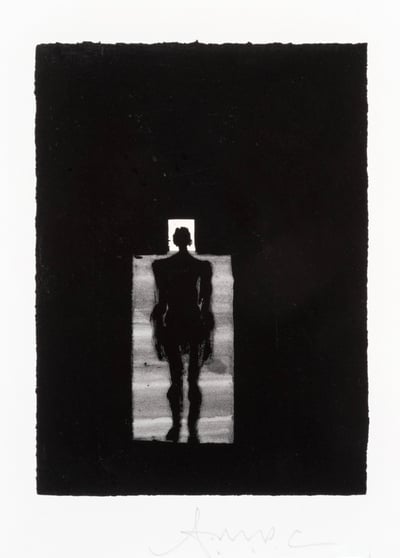
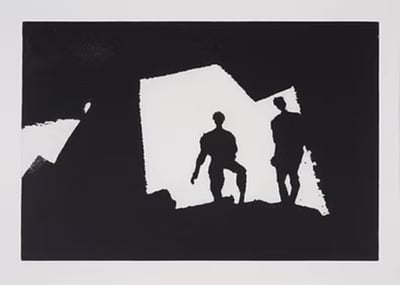
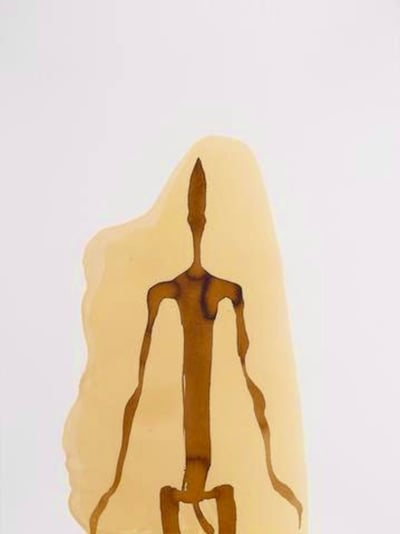
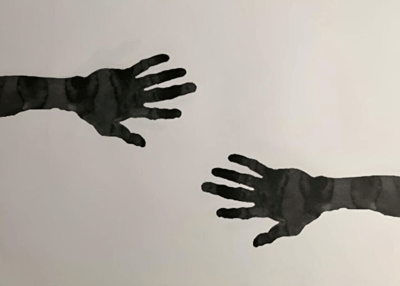
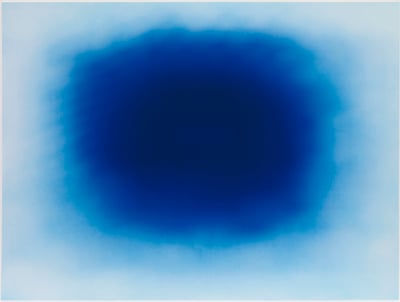
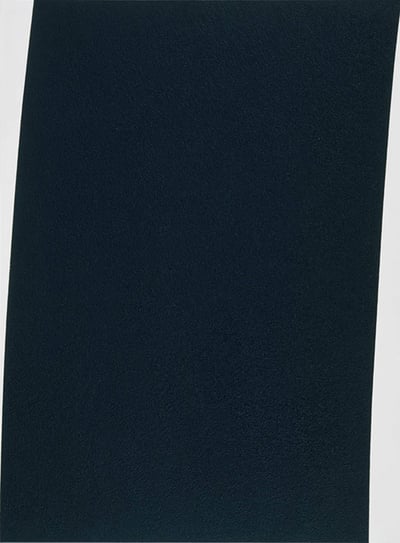
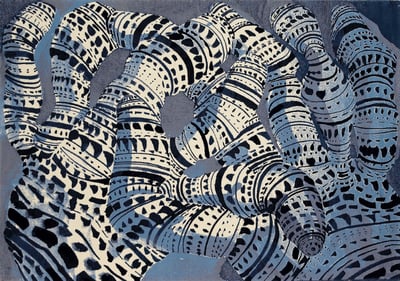
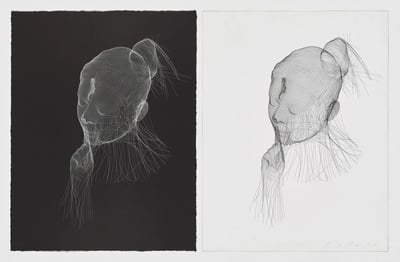
Aquatint from multiple plates on Fabriano Tiepolo Bianco 290 gsm paper
Matrix X by Antony Gormley, created in 2016, is a limited edition aquatint print that embodies minimalism and geometric abstraction. Using multiple plates, Gormley has layered semi-transparent shapes to create an intricate play of depth and density. The dark overlapping forms, set against the clean background of Fabriano Tiepolo Bianco paper, create a sense of volume within the flat plane, resembling an abstracted architectural structure or a densely stacked form. This piece exemplifies Gormley’s exploration of space and form, inviting viewers to consider the boundaries between presence and absence, solidity and void.
Antony Gormley (United Kingdom, 1950) is a British sculptor celebrated for his exploration of the human form and its relationship to space. Known for iconic works like Angel of the North and Another Place, Gormley often uses his own body as a template. His sculptures challenge perceptions of identity, presence, and the environment.
AquatintIntaglio is a printmaking technique where the artist creates marks on a metal plate that hold ink or dye. The inked plate is then pressed onto paper, transferring the ink to the sheet. This process can be repeated multiple times depending on the technique. Intaglio methods, such as etching, often involve applying a mordant (acid) to the metal plate to create the design. Intaglio encompasses various techniques, including engraving, etching, and drypoint.
Aquatint from multiple plates on Fabriano Tiepolo Bianco 290 gsm paper
Matrix X by Antony Gormley, created in 2016, is a limited edition aquatint print that embodies minimalism and geometric abstraction. Using multiple plates, Gormley has layered semi-transparent shapes to create an intricate play of depth and density. The dark overlapping forms, set against the clean background of Fabriano Tiepolo Bianco paper, create a sense of volume within the flat plane, resembling an abstracted architectural structure or a densely stacked form. This piece exemplifies Gormley’s exploration of space and form, inviting viewers to consider the boundaries between presence and absence, solidity and void.
Antony Gormley (United Kingdom, 1950) is a British sculptor celebrated for his exploration of the human form and its relationship to space. Known for iconic works like Angel of the North and Another Place, Gormley often uses his own body as a template. His sculptures challenge perceptions of identity, presence, and the environment.
I'm trying to make work that is reflective and is encouraging of reflection.
- Antony Gormley
As a sculptor, almost all of Antony Gormley’s works take the human body as its subject – many works make use of his own body, or that of his friends, as the basis for metal casts. Gormley has described his work as ‘an attempt to materialise the place at the other side of appearance where we all live’ - his Event Horizon piece featured 31 separate life-sized and anatomically correct casts of his body – four in iron and 27 in fiberglass – situated along the tops of buildings along London’s South Bank, and later installed around Madison Square in New York City; of these works, Gormley has stated that they may encourage individuals to ‘reassess their own position in the world’ and become aware of their ‘status of embedment’. Among other notable works is the Angel of The North, a public steel sculpture situated in Gateshead, United Kingdom – the sculpture measures at 66ft tall with wings measuring 177ft across. (Artist website)
Geometric abstraction is a form of abstract art that uses geometric shapes arranged in a non-illusionistic space (though not always) and combined into non-representational (non-objective) compositions. Based on years of artistic research, some artists have proposed that geometric abstraction offers a solution to modern challenges by rejecting traditional illusionistic practices in favor of clarity and simplicity.