

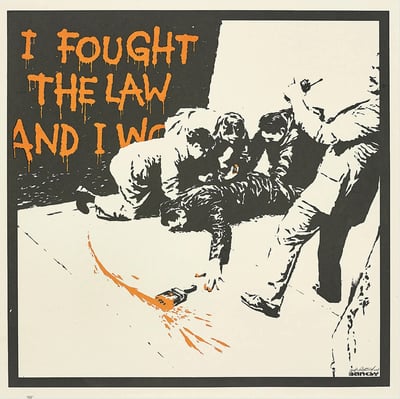
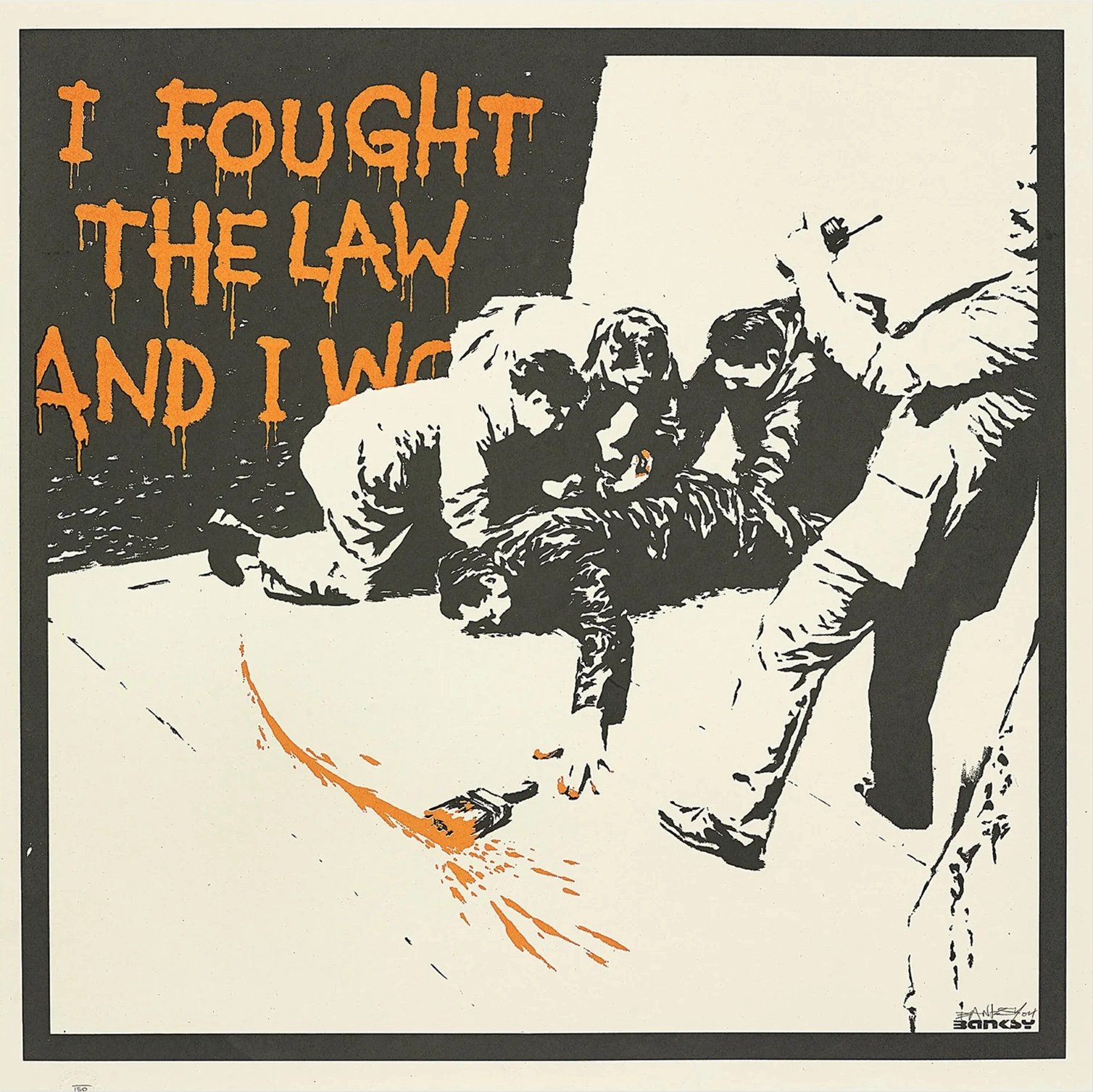
Screenprint in colours. Hand-signed, numbered, and blind stamped.// I Fought The Law captures Banksy at the height of his subversive powers, a boldly political screenprint that inverts the visual language of law enforcement to challenge institutional authority. Two policemen crouch in poses of devotion, not over weapons or evidence, but over a small cluster of flowers growing from the pavement — an inversion so complete and so perfectly executed that it carries devastating philosophical force. The composition is anchored by blazing orange text reading 'I FOUGHT THE LAW AND I W...' (the phrase cutting off mid-word, invoking the song by The Clash while suggesting that language itself is truncated, incomplete), rendered in a colour that burns against the muted black-and-white palette of the figures and their urban context. Banksy's logic here is deceptively simple: if police officers — symbols of institutional power, coercion, and control — are depicted with absolute seriousness and reverence focussed on nature and beauty, then perhaps the true law, the true authority worth defending, is the organic world and not the machinery of state. The work was created in 2004, during Banksy's peak period of street-level productivity and political conviction, when his transition to the gallery system was still contested and his work retained maximum provocative power. This signed and numbered edition of 150 remains a cornerstone of his printed oeuvre, representing the marriage of graphic sophistication with political clarity. The bold orange against black and white is also technically masterful, demonstrating complete command of the screenprint medium.
I Fought The Law, 2004
Form
Medium
Size
- Inches
- Centimeters
Edition
Price
- Authenticity Guaranteed
- Insured Shipping
- Online Since 2005
Screenprint in colours. Hand-signed, numbered, and blind stamped.// I Fought The Law captures Banksy at the height of his subversive powers, a boldly political screenprint that inverts the visual language of law enforcement to challenge institutional authority. Two policemen crouch in poses of devotion, not over weapons or evidence, but over a small cluster of flowers growing from the pavement — an inversion so complete and so perfectly executed that it carries devastating philosophical force. The composition is anchored by blazing orange text reading 'I FOUGHT THE LAW AND I W...' (the phrase cutting off mid-word, invoking the song by The Clash while suggesting that language itself is truncated, incomplete), rendered in a colour that burns against the muted black-and-white palette of the figures and their urban context. Banksy's logic here is deceptively simple: if police officers — symbols of institutional power, coercion, and control — are depicted with absolute seriousness and reverence focussed on nature and beauty, then perhaps the true law, the true authority worth defending, is the organic world and not the machinery of state. The work was created in 2004, during Banksy's peak period of street-level productivity and political conviction, when his transition to the gallery system was still contested and his work retained maximum provocative power. This signed and numbered edition of 150 remains a cornerstone of his printed oeuvre, representing the marriage of graphic sophistication with political clarity. The bold orange against black and white is also technically masterful, demonstrating complete command of the screenprint medium.
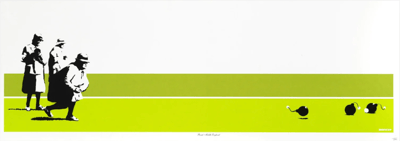
Banksy
Bomb Middle England (Unsigned), 2002
Limited Edition Print
Screen-print
GBP 15,000 - 2,000

Banksy
Western Super Mare, 2003
Limited Edition Print
Screen-print
GBP 15,000 - 2,000

Banksy
Napalm, 2004
Limited Edition Print
Screen-print
GBP 32,000 - 38,000

Banksy
Donuts - Strawberry, 2009
Limited Edition Print
Screen-print
Inquire For Price

Banksy
Gangsta Rat (Unsigned), 2004
Limited Edition Print
Screen-print
GBP 18,000 - 23,000

Banksy
CND Soldiers (Unsigned), 2005
Limited Edition Print
Screen-print
GBP 14,000 - 18,200
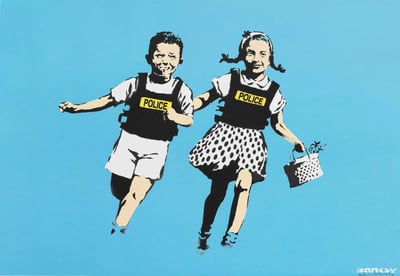
Banksy
Jack & Jill, 2005
Limited Edition Print
Screen-print
GBP 33,000 - 40,000
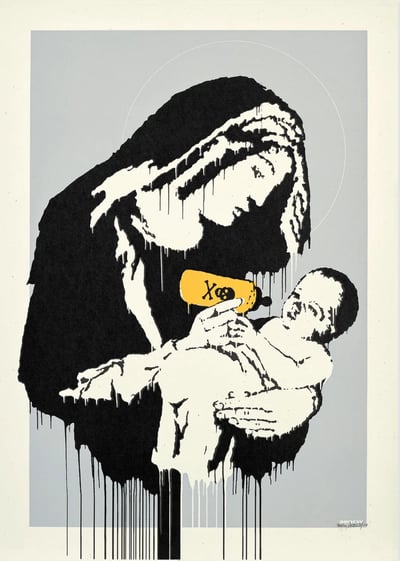
Banksy
Toxic Mary, 2003
Limited Edition Print
Screen-print
GBP 34,000 - 42,000
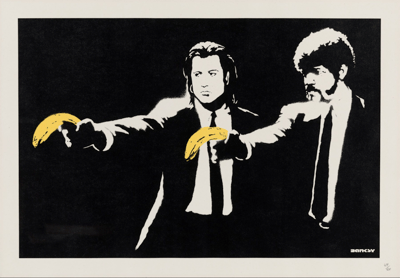
Banksy
Pulp Fiction, 2004
Limited Edition Print
Screen-print
Inquire For Price
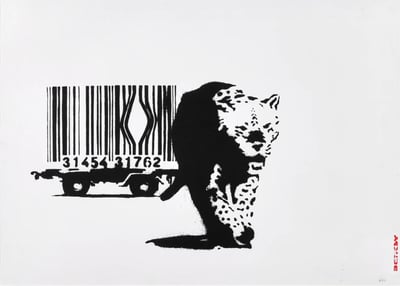
Banksy
Barcode (unsigned), 2004
Limited Edition Print
Screen-print
EUR 25,000 - 30,000
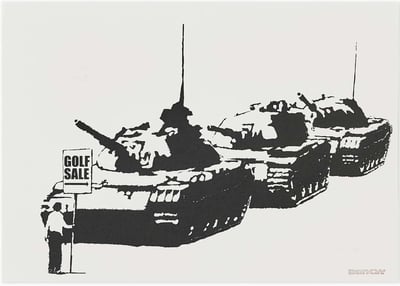
Banksy
Golf Sale (Unsigned), 2003
Limited Edition Print
Screen-print
GBP 14,300

Banksy
Trolleys (Black & White Unsigned), 2007
Limited Edition Print
Screen-print
GBP 14,870
Banksy
I Fought The Law, 2004
Limited Edition Print
Screen-print
Inquire For Price
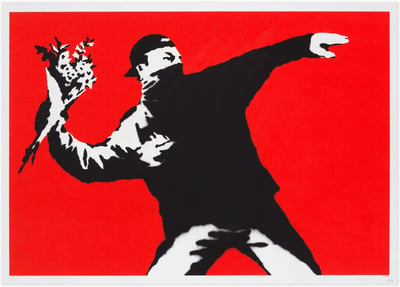
Banksy
Love Is In The Air (Unsigned), 2003
Limited Edition Print
Screen-print
Inquire For Price
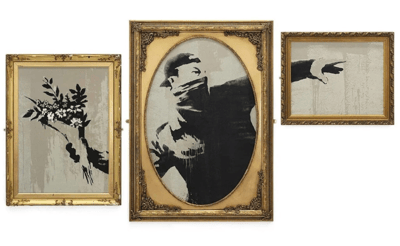
Banksy
Thrower Triptych (VIP), 2019
Limited Edition Print
Screen-print
Inquire For Price

Banksy
No Ball Games - grey, 2009
Limited Edition Print
Screen-print
GBP 70,000 - 80,000

Banksy
Laugh Now (unsigned), 2003
Limited Edition Print
Screen-print
GBP 40,000 - 55,000

Banksy
Precision Bombing, 2000
Limited Edition Print
Mixed Media
GBP 250,000 - 280,000
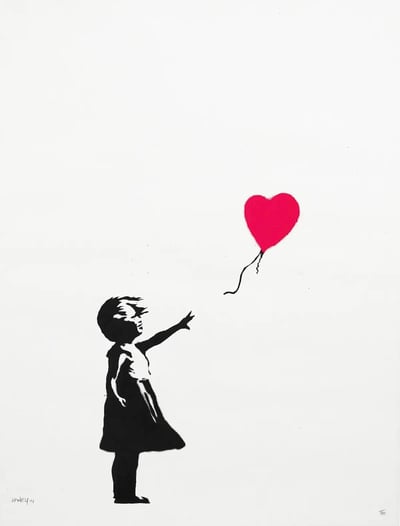
Banksy
Girl With A Balloon, 2004
Limited Edition Print
Screen-print
GBP 240,000 - 270,000

Banksy
Trolley Hunters, 2007
Limited Edition Print
Screen-print
GBP 30,000 - 40,000
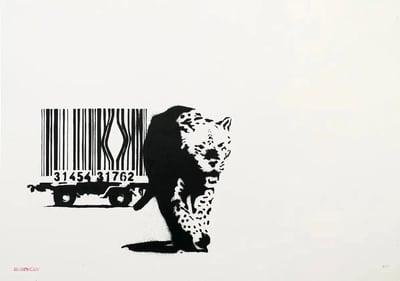
Banksy
Barcode, 2004
Limited Edition Print
Screen-print
GBP 70,000 - 90,000
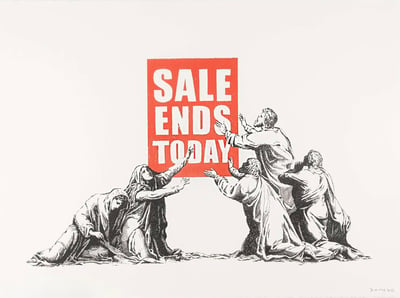
Banksy
Sale Ends (v2), 2017
Limited Edition Print
Screen-print
GBP 35,000 - 45,000

Banksy
Four Soup Cans - Gold on Cream, 2005
Limited Edition Print
Screen-print
GBP 40,000 - 60,000
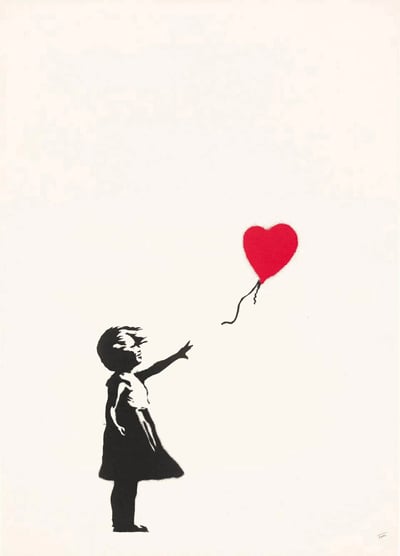
Banksy
Girl With A Balloon (unsigned), 2004
Limited Edition Print
Screen-print
GBP 90,000 - 110,000
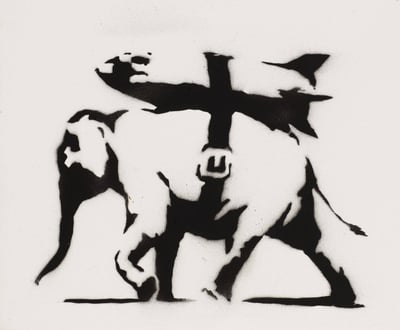
Banksy
Heavy Weaponry, 2004
Limited Edition Print
Mixed Media
GBP 150,000 - 170,000

Banksy
Pulp Fiction (unsigned), 2004
Limited Edition Print
Screen-print
GBP 40,000 - 50,000

Banksy
Morons (Sepia), 2007
Limited Edition Print
Screen-print
USD 80,000 - 95,000

Banksy
Turf war , 2003
Limited Edition Print
Screen-print
GBP 34,800
Related Artists


What is appropriation?
Appropriation in art involves using pre-existing images or objects with little or no modification. This technique has played a significant role across various art forms, including visual arts, music, performance, and literature. In visual arts, appropriation refers to the practice of adopting, sampling, recycling, or borrowing elements—or even entire forms—of existing visual culture, integrating them into new works to create meaning or critique.

Banksy
I Fought The Law, 2004
70 x 70 cm


