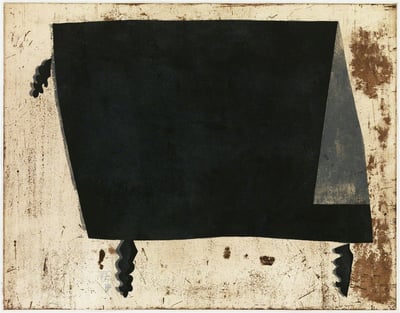
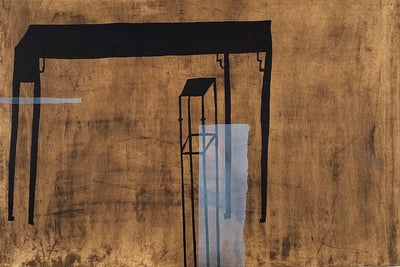
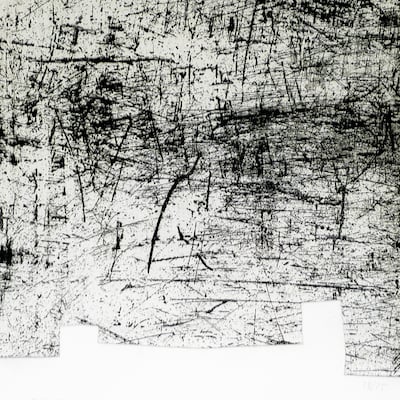
// Moon Light on the Table by Wang Huai-Qing is a limited edition etching from 2008, created in an edition of 60. This artwork features a large, abstract black shape with angular, asymmetrical sides, resembling a draped tablecloth over a table. The texture of the black form contrasts with the rough, earthy background, suggesting a worn, aged surface. Curved, spiral-like shapes protrude from beneath the dark mass, adding a surreal quality. The stark contrast between the dark central form and the lighter, textured background evokes the subtle, quiet presence of moonlight illuminating the edges. Wang’s piece uses abstract forms to explore themes of emptiness, shadow, and illumination, hinting at the quiet beauty found in everyday objects under the soft light of night.
Wang Huai-Qing (China, 1944) is a contemporary artist celebrated for blending traditional Chinese calligraphy with modern abstraction. His bold, minimalist compositions often deconstruct classical motifs, creating a dialogue between heritage and innovation. Using ink and oil, Wang reimagines Chinese visual culture in a global context.
EtchingEtching is a technique where a design is created on a metal surface by using a strong acid or mordant to eat away the unprotected parts of the metal, leaving the desired pattern in relief (intaglio). In modern art and manufacturing, different chemicals may be used depending on the material being etched.
Size
Inches
Centimeters
76 X 97 cm
Edition
Edition of 60
Price
USD
EUR
GBP
CHF
4,300EUR
?
+ VAT/import Duties (if applicable)
Authenticity Guaranteed
Insured Shipping
Online Since 2005
Share
●Inventory 2997
●Signed
●Comes with gallery invoice and certificate
●Any questions?
// Moon Light on the Table by Wang Huai-Qing is a limited edition etching from 2008, created in an edition of 60. This artwork features a large, abstract black shape with angular, asymmetrical sides, resembling a draped tablecloth over a table. The texture of the black form contrasts with the rough, earthy background, suggesting a worn, aged surface. Curved, spiral-like shapes protrude from beneath the dark mass, adding a surreal quality. The stark contrast between the dark central form and the lighter, textured background evokes the subtle, quiet presence of moonlight illuminating the edges. Wang’s piece uses abstract forms to explore themes of emptiness, shadow, and illumination, hinting at the quiet beauty found in everyday objects under the soft light of night.
Wang Huai-Qing (China, 1944) is a contemporary artist celebrated for blending traditional Chinese calligraphy with modern abstraction. His bold, minimalist compositions often deconstruct classical motifs, creating a dialogue between heritage and innovation. Using ink and oil, Wang reimagines Chinese visual culture in a global context.
Huai-Qing Wang (b. 1944, China) is a Chinese artist renowned for his unique approach to contemporary Chinese painting, blending traditional techniques with modern abstract forms. His work often explores the tension between the ancient and the modern, the East and the West, using a minimalist palette of ink and color on paper to create powerful, contemplative compositions. Wang's art is deeply influenced by Chinese philosophy and calligraphy, as well as Western modernist movements, resulting in a style that is both introspective and universal. His abstract landscapes and figures, often rendered in a gestural, almost calligraphic manner, evoke a sense of spiritual depth and harmony. Wang's work has been widely exhibited in China and internationally, establishing him as a significant figure in the global contemporary art scene.
Abstract art uses form, shape, line, and color to create a visual experience without attempting to represent external reality. The composition exists independently of the world's visual references, focusing on expressing ideas and emotions through non-representational means.