

Screenprint
Jean Tinguely’s Fontaine Joe Syffert from Eight by Eight, 1984 is a vibrant and chaotic screen-print that exudes energy and movement. The composition bursts with color, featuring dynamic swirls of red, pink, yellow, and green against a deep black background. The abstract forms seem to explode from the center, giving the piece a sense of spontaneity and action. Tinguely’s use of vibrant paint splatters and bold strokes creates a sense of both chaos and harmony. The handwritten elements and signatures at the bottom add a personal and playful touch to this limited edition work, typical of Tinguely’s style, which often embraces mechanical movement and playful abstraction.
Artwork Copyright © Jean TinguelyJean Tinguely (Switzerland, 1925–1991) was a Swiss sculptor renowned for his kinetic art, creating mechanical sculptures that often satirized automation and the overproduction of material goods. His notable works include 'Homage to New York' (1960), a self-destructing sculpture exhibited at the Museum of Modern Art in New York.
Artwork Copyright © Jean TinguelyFontaine Joe Syffert from Eight by Eight, 1984
Form
Medium
Size
- Inches
- Centimeters
Edition
Price
- USD
- EUR
- GBP
- CHF
- Authenticity Guaranteed
- Insured Shipping
- Online Since 2005
●Inventory 14613
●Signed
●Comes with gallery invoice and certificate
●Sell Us a Similar Artwork. Learn more.
Screenprint
Jean Tinguely’s Fontaine Joe Syffert from Eight by Eight, 1984 is a vibrant and chaotic screen-print that exudes energy and movement. The composition bursts with color, featuring dynamic swirls of red, pink, yellow, and green against a deep black background. The abstract forms seem to explode from the center, giving the piece a sense of spontaneity and action. Tinguely’s use of vibrant paint splatters and bold strokes creates a sense of both chaos and harmony. The handwritten elements and signatures at the bottom add a personal and playful touch to this limited edition work, typical of Tinguely’s style, which often embraces mechanical movement and playful abstraction.
Artwork Copyright © Jean TinguelyJean Tinguely (Switzerland, 1925–1991) was a Swiss sculptor renowned for his kinetic art, creating mechanical sculptures that often satirized automation and the overproduction of material goods. His notable works include 'Homage to New York' (1960), a self-destructing sculpture exhibited at the Museum of Modern Art in New York.
Artwork Copyright © Jean TinguelyAvailability
Size
Form
Medium
SORT BY
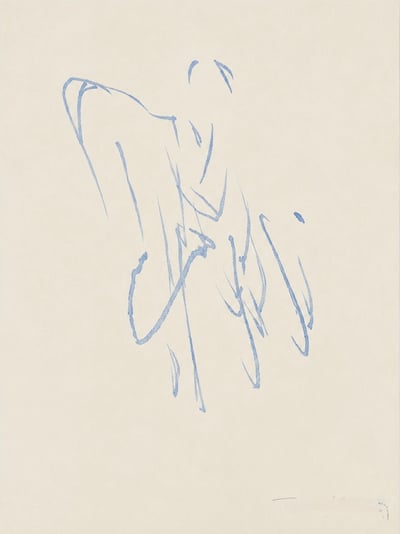
Jean Tinguely
Meta – Matic N9, 1960
Drawing / Watercolor
Pen and ink
EUR 500

Jean Tinguely
Shooting paintings, 1970
Drawing / Watercolor
Ink
EUR 4,000

Jean Tinguely
Fontaine Joe Syffert from Eight by Eight, 1984
Limited Edition Print
Screen-print
USD 1,300

Jean Tinguely
Chaos I, 1973
Limited Edition Print
Etching
Currently Not Available

Jean Tinguely
Roto Zaza No. 1, 1975
Limited Edition Print
Screen-print
Currently Not Available
Related Artists

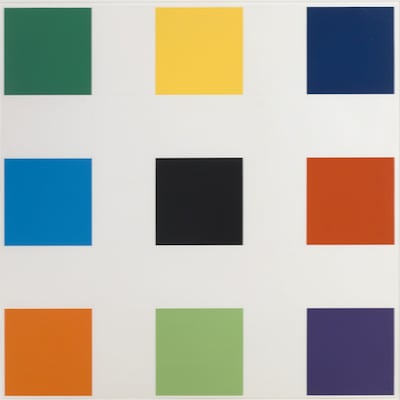
Artwork by Ellsworth Kelly
What is Hard Edge Art?
Hard Edge art is a style of abstract painting that became popular in the 1960s. It features areas of color separated by crisp, sharp edges that are painted with geometric precision. The term hard-edge painting was coined by art critic Jules Langsner to describe this approach, which contrasts with the softer, more fluid forms of other abstract styles.


Jean Tinguely
Fontaine Joe Syffert from Eight by Eight, 1984
104.8 x 73 cm


