


Ink on paper
This ink drawing documents the installation designed by Jean Tinguely for Tir (“Shooting Paintings”), performed by Niki de Saint Phalle in Milan in 1970 during the Festival of Nouveau Réalisme.
Combining technical notation and schematic clarity, Tinguely outlines the protective structure, shooting distance, and reinforced panels surrounding the target. The annotated measurements and directional arrows reveal the mechanical planning behind the action, reflecting his characteristic fusion of engineering and artistic intervention.
The work captures the collaborative dynamic of the Tirs, in which rifle shots released concealed paint, transforming the surface through controlled destruction. As both preparatory plan and conceptual statement, the drawing offers a concise record of the performative infrastructure behind one of Nouveau Réalisme’s most emblematic gestures.
Artwork Copyright © Jean TinguelyJean Tinguely (Switzerland, 1925–1991) was a Swiss sculptor renowned for his kinetic art, creating mechanical sculptures that often satirized automation and the overproduction of material goods. His notable works include 'Homage to New York' (1960), a self-destructing sculpture exhibited at the Museum of Modern Art in New York.
Artwork Copyright © Jean TinguelyShooting paintings, 1970
Form
Medium
Size
- Inches
- Centimeters
Edition
Price
- USD
- EUR
- GBP
- CHF
- Authenticity Guaranteed
- Insured Shipping
- Online Since 2005
●Inventory 16661
●Signed
●Comes with gallery invoice and certificate
●Sell Us a Similar Artwork. Learn more.
Ink on paper
This ink drawing documents the installation designed by Jean Tinguely for Tir (“Shooting Paintings”), performed by Niki de Saint Phalle in Milan in 1970 during the Festival of Nouveau Réalisme.
Combining technical notation and schematic clarity, Tinguely outlines the protective structure, shooting distance, and reinforced panels surrounding the target. The annotated measurements and directional arrows reveal the mechanical planning behind the action, reflecting his characteristic fusion of engineering and artistic intervention.
The work captures the collaborative dynamic of the Tirs, in which rifle shots released concealed paint, transforming the surface through controlled destruction. As both preparatory plan and conceptual statement, the drawing offers a concise record of the performative infrastructure behind one of Nouveau Réalisme’s most emblematic gestures.
Artwork Copyright © Jean TinguelyJean Tinguely (Switzerland, 1925–1991) was a Swiss sculptor renowned for his kinetic art, creating mechanical sculptures that often satirized automation and the overproduction of material goods. His notable works include 'Homage to New York' (1960), a self-destructing sculpture exhibited at the Museum of Modern Art in New York.
Artwork Copyright © Jean TinguelyAvailability
Size
Form
Medium
SORT BY
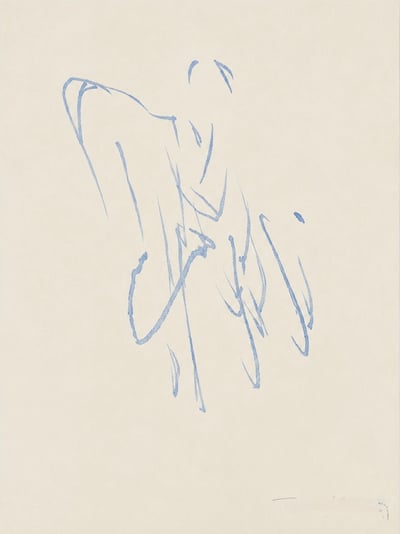
Jean Tinguely
Meta – Matic N9, 1960
Drawing / Watercolor
Pen and ink
EUR 500

Jean Tinguely
Shooting paintings, 1970
Drawing / Watercolor
Ink
EUR 4,000

Jean Tinguely
Fontaine Joe Syffert from Eight by Eight, 1984
Limited Edition Print
Screen-print
USD 1,300

Jean Tinguely
Chaos I, 1973
Limited Edition Print
Etching
Currently Not Available

Jean Tinguely
Roto Zaza No. 1, 1975
Limited Edition Print
Screen-print
Currently Not Available
Related Artists

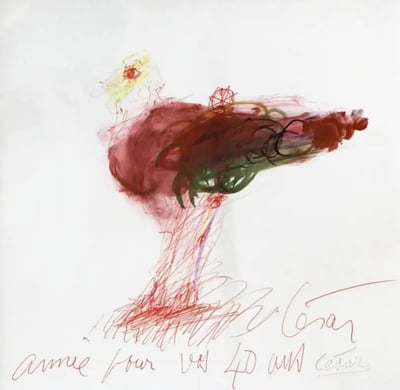
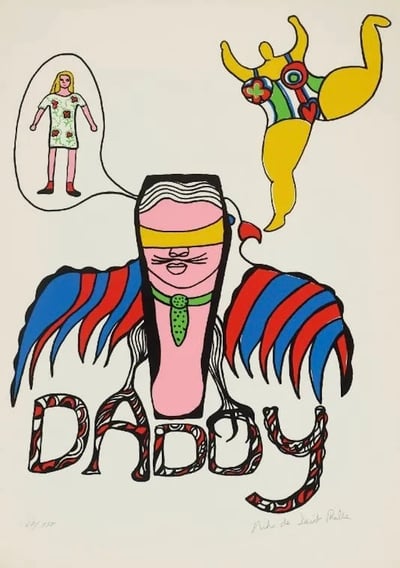
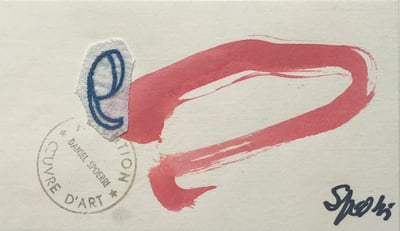
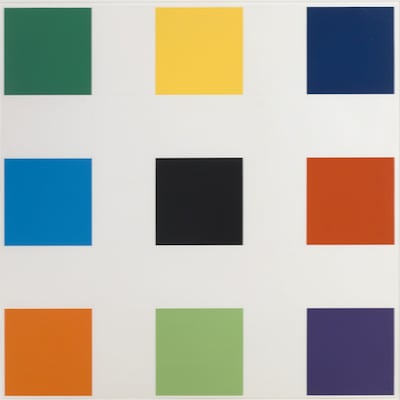
Artwork by Ellsworth Kelly
What is Hard Edge Art?
Hard Edge art is a style of abstract painting that became popular in the 1960s. It features areas of color separated by crisp, sharp edges that are painted with geometric precision. The term hard-edge painting was coined by art critic Jules Langsner to describe this approach, which contrasts with the softer, more fluid forms of other abstract styles.


Jean Tinguely
Shooting paintings, 1970
11.5 x 16 cm


