

Fine black and white photography, signed by the artist.
This black and white photograph by Lucien Clergue captures the iconic artist Pablo Picasso in a moment of introspective stillness. Cloaked in shadow, Picasso’s intense gaze is highlighted by the high-contrast lighting, creating a powerful and contemplative portrait. Dressed in a plaid shirt and with his arms crossed, Picasso appears both approachable and enigmatic, embodying the strength and mystery often associated with his persona. Clergue’s composition emphasizes depth and contrast, using darkness to frame Picasso’s face and expression, making this limited edition (30 copies) photograph a compelling study of one of the most influential figures in modern art.
Artwork Copyright © Lucien ClergueLucien Clergue (France, 1934–2014) was a celebrated photographer known for his black-and-white images of nudes, landscapes, and Mediterranean culture. A close friend of Pablo Picasso, his work combined poetic composition with striking contrasts of light and shadow. Clergue was the first photographer elected to the Académie des Beaux-Arts in France.
Artwork Copyright © Lucien ClerguePicasso
Form
Medium
Size
- Inches
- Centimeters
Edition
Price
- USD
- EUR
- GBP
- CHF
- Authenticity Guaranteed
- Insured Shipping
- Online Since 2005
●Inventory 5168
●Signed
●Comes with gallery invoice and certificate
●Sell Us a Similar Artwork. Learn more.
Fine black and white photography, signed by the artist.
This black and white photograph by Lucien Clergue captures the iconic artist Pablo Picasso in a moment of introspective stillness. Cloaked in shadow, Picasso’s intense gaze is highlighted by the high-contrast lighting, creating a powerful and contemplative portrait. Dressed in a plaid shirt and with his arms crossed, Picasso appears both approachable and enigmatic, embodying the strength and mystery often associated with his persona. Clergue’s composition emphasizes depth and contrast, using darkness to frame Picasso’s face and expression, making this limited edition (30 copies) photograph a compelling study of one of the most influential figures in modern art.
Artwork Copyright © Lucien ClergueLucien Clergue (France, 1934–2014) was a celebrated photographer known for his black-and-white images of nudes, landscapes, and Mediterranean culture. A close friend of Pablo Picasso, his work combined poetic composition with striking contrasts of light and shadow. Clergue was the first photographer elected to the Académie des Beaux-Arts in France.
Artwork Copyright © Lucien Clergue- Recently Added
- Price (Low-High)
- Price (High-Low)
- Year (Low-High)
- Year (High-Low)

Lucien Clergue
Nyu de la Mer Camargue, 1979
Photography
Photograph
USD 2,735

Lucien Clergue
Picasso En La playa, 1965
Photography
Photograph
EUR 3,125

Lucien Clergue
Picasso
Photography
Photograph
EUR 3,125

Lucien Clergue
Picasso con un cigarro, 1956
Photography
Photograph
EUR 3,125
Related Artists


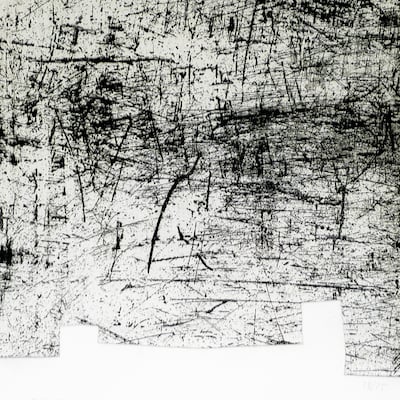
Artwork by Eduardo Chillida
What is abstract art?
Abstract art uses form, shape, line, and color to create a visual experience without attempting to represent external reality. The composition exists independently of the world's visual references, focusing on expressing ideas and emotions through non-representational means.

Lucien Clergue
Picasso
30 x 40 cm


