

Asger Jorn
Asger Jorn (Denmark, 1914–1973) was a Danish painter, sculptor, and ceramicist, co-founding the avant-garde movement COBRA and the Situationist International. His dynamic, expressive works often combined abstract forms with vibrant colors, reflecting his interest in spontaneous creation and critique of contemporary society. Jorn's legacy includes a significant influence on European post-war art.
© Asger Jorn. All rights reserved.
- Recently Added
- Price (Low-High)
- Price (High-Low)
- Year (Low-High)
- Year (High-Low)

Asger Jorn
Sans titre, 1967
Limited Edition Print
Lithograph
EUR 2,550
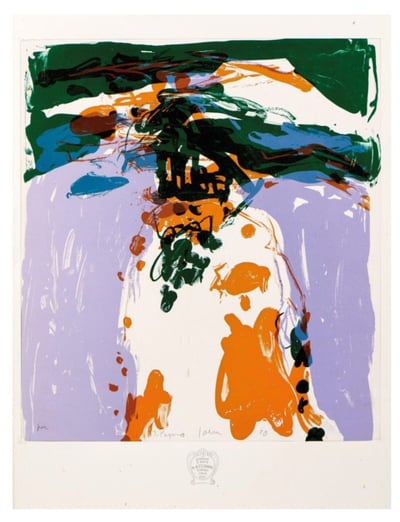
Asger Jorn
Lithographie couleur, 1970
Limited Edition Print
Lithograph
EUR 1,200

Asger Jorn
L’oubli, 1960/61
Limited Edition Print
Lithograph
USD 3,000

Asger Jorn
Dans le Sillage d’if-Aube, 1971
Limited Edition Print
Woodcut
Currently Not Available
If you add something to a painting, never let it be for aesthetic reasons. Only let it be for reasons of expression.
- Asger Jorn
- Asger Jorn
Asger Jorn was a Danish painter, ceramic artist, sculptor and author from the years just before World War II into the 1970s. He was a student at the Royal Danish Academy of Fine Arts, from 1937 until 1942, in Copenagen. Later, Asger Jorn was one of the artists who founded the Situationist International and COBRA, an avant-garde movement. The largest collection of Jorn works today appears in Silkeborg, Denmark, in the Museum Jorn. When Asger Jorn painted, he did so in oil on canvas, and over the course of his career he made more than 2,500 total works - including ceramics, drawing, prints, sculptures, collages and tapestries. His books include "Luck and Chance: Dagger and Guitar," "Value and Economy" and "the Natural Order." He spent most of his life railing against establishments, whether in government, the Danish Communist Party or even the world of art. In 1964, he received a Guggenheim Award, but he sent an enraged telegram to Harry F. Guggenheim himself, refusing the prize and wanting "public confirmation not to have participated in [this] ridiculous game
Related Artists

Related Articles
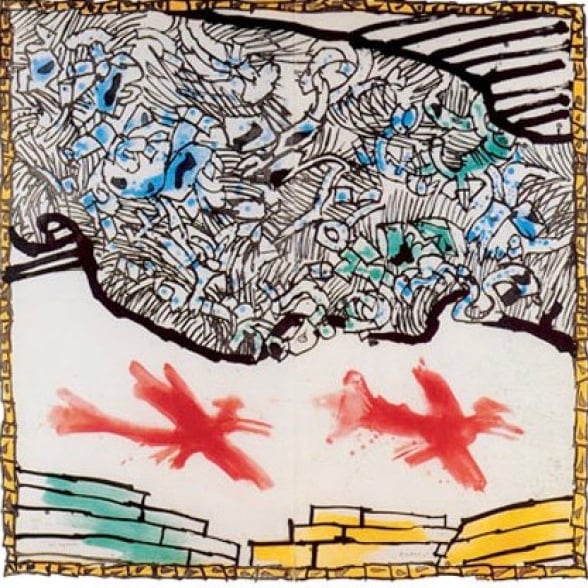
Artists - February 4, 2025
Pierre Alechinsky: Bridging East and West in Modern Art
Discover how Pierre Alechinsky fused European expressionism with Japanese calligraphy, pioneering a unique cross-cultural artistic language.Read More
Art Movements - November 21, 2022
Botch, Blotch and Splotch: The Exuberant Maelstrom of the Cobra Art Movement.
Explore the CoBrA movement’s bold creativity, blending raw expression and experimentation. Discover its impact on post-war art and avant-garde traditions.Read More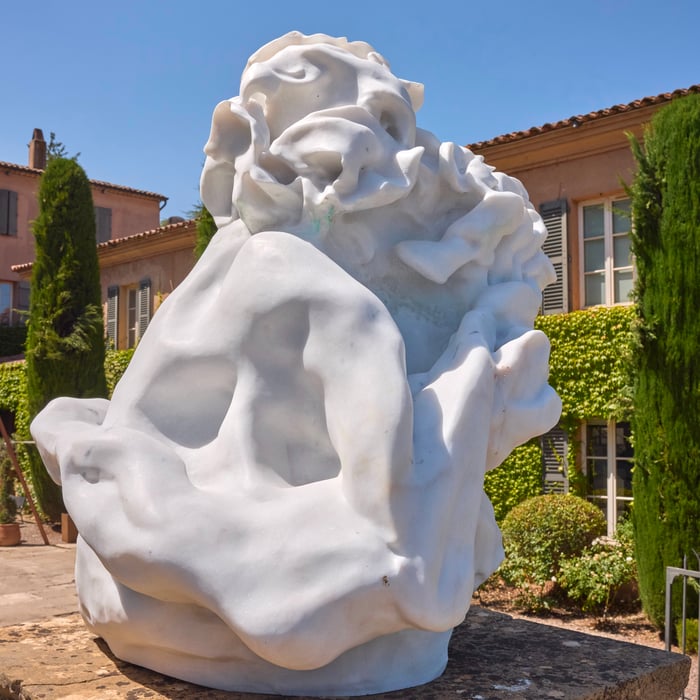
News, Popular, Collecting, Artists - August 12, 2026
In Minor Keys: Finding Intimacy and Identity at the 61st Venice Biennale — and in Your Collection
Explore how Koyo Kouoh’s 61st Venice Biennale vision, In Minor Keys, is shifting contemporary collecting toward quiet introspection, memory, and personal identi…Read More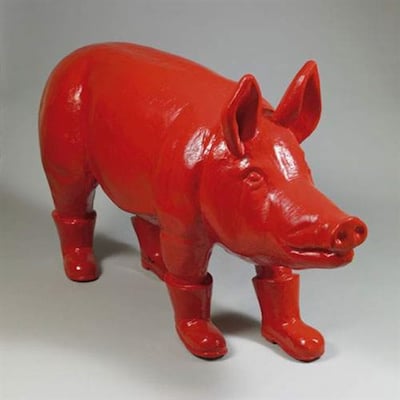 Artwork by William Sweetlove
What is Kitsch?
Kitsch is a term used to describe cheap, commercial, sentimental, or vulgar art and objects commonly associated with popular culture. The word is borrowed from German, where it originally means trash. Since the 1920s, kitsch has been used to denote the opposite of high art, often implying that the work lacks sophistication or artistic merit.
Explore »

