

Netherlands
The contemporary art scene in the Netherlands is renowned for its innovative spirit and diverse creative expressions. Key institutions like the Stedelijk Museum in Amsterdam and Museum Boijmans Van Beuningen in Rotterdam showcase internationally acclaimed artists and foster emerging talent. Prominent figures such as Marlene Dumas, known for her thought-provoking paintings, and Rineke Dijkstra, celebrated for her intimate portraiture, underscore the country's contribution to contemporary art. Events like the annual Amsterdam Art Weekend further highlight the Netherlands' dynamic art scene. Discover Dutch contemporary art on Composition Gallery's website.
- Show All
- Established
- Discoveries
- Show All
Artworks Related to Netherlands
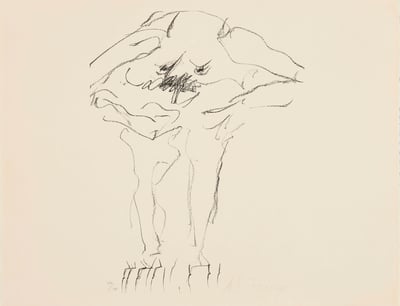
Willem de Kooning
Clam Digger, 1966
Limited Edition Print
Lithograph
USD 3,950

Guillaume Corneille
Tête de femme et oiseau pensif, 1980
Limited Edition Print
Lithograph
EUR 570

Karel Appel
Once I Was The Sun, 1978
Limited Edition Print
Lithograph
USD 1,100

Karel Appel
Flower with Blue Eyes, 1977
Sculpture / Object
Wood
Currently Not Available

Karel Appel
Obra gráfica, 1974
Limited Edition Print
Serigraph
EUR 1,550

Constant Nieuwenhuys
L'ultima cena, 1980
Limited Edition Print
Etching and Aquatint
EUR 2,990

Guillaume Corneille
Aurore sur la montagne, 1991
Limited Edition Print
Lithograph
EUR 1,900

Mark Manders
Man-size Calculation Casting Shadow, 2017
Limited Edition Print
Mixed Media
Currently Not Available
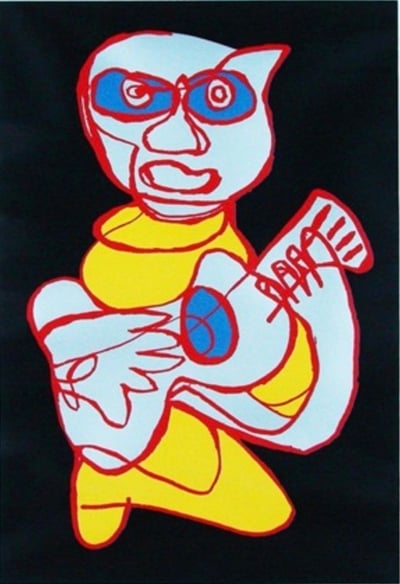
Karel Appel
Kool luke singing hands, 1978
Limited Edition Print
Silkscreen
USD 1,700

Karel Appel
Red cat singing hands, 1978
Limited Edition Print
Silkscreen
USD 1,700

Karel Appel
Floating flower passion, 1978
Limited Edition Print
Silkscreen
USD 1,700

Karel Appel
Green floating passion , 1975
Limited Edition Print
Silkscreen
USD 1,700
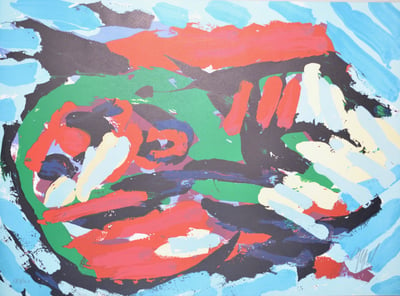
Karel Appel
Flying head over ocean, 1972
Limited Edition Print
Lithograph
USD 800

Bram Van Velde
Déchirure, 1977
Limited Edition Print
Lithograph
EUR 1,875
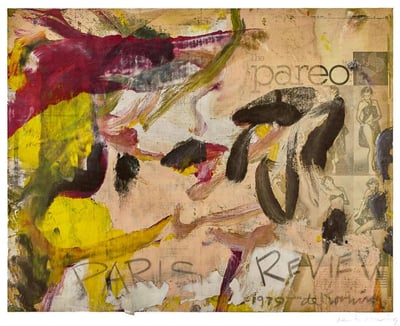
Willem de Kooning
Paris Review, 1979
Limited Edition Print
Lithograph
Currently Not Available

Jan Schoonhoven
Untitled M-IV, 1972
Limited Edition Print
Embossing
Currently Not Available
Related Articles


Hypermodernism is a cultural and artistic movement that emerged in the late 20th and early 21st centuries, characterized by an intense embrace of technology and a focus on speed, complexity, and the future. This movement often challenges traditional modernist values by emphasizing hyper-reality, where the boundaries between reality and virtuality blur. Hypermodernism is evident in architecture, design, and visual arts, where artists and creators use advanced digital tools and futuristic aesthetics to explore themes of globalization, identity, and the impact of technology on society.

Street Art is artwork created and executed in public spaces, outside of traditional art venues. It gained popularity during the 1980s graffiti art boom and has since evolved into various forms and styles. Common forms of Street Art include pop-up art, sticker art, stencil graffiti, and street installations or sculptures. Terms like guerrilla art, neo-graffiti, post-graffiti, and urban art are often used interchangeably to describe this genre, which challenges conventional ideas about where and how art should be displayed.

Neo-Dada is a minor visual and audio art movement with intents similar to those of Dada artwork. While it revives some of Dada's objectives, Neo-Dada emphasizes the importance of the produced artwork rather than the concept behind it. The movement is considered the foundation of Pop Art, Nouveau Réalisme, and Fluxus. Neo-Dada is known for its use of absurdist contrasts, popular imagery, and modern materials, blending high and low culture in a way that challenges traditional artistic conventions.
Can't find your Answer?
Thank you! Your question has been sent — we'll get back to you shortly.
