

What is appropriation?
- Show All
- Established
- Discoveries
- Show All
Artworks Related to Appropriation
Andy Warhol
Private Listing
Drawing / Watercolor
Andy Warhol
Private Listing
Drawing / Watercolor
Andy Warhol
Private Listing
Drawing / Watercolor
Andy Warhol
Private Listing
Drawing / Watercolor

Richard Prince
18 & Stormy, 2018
Limited Edition Print
Offset Print
Inquire For Price

Damien Hirst
Dead Black Brilliant Utopia, 2013
Limited Edition Print
Mixed Media
USD 16,700
Damien Hirst
Private Listing
Painting
Roy Lichtenstein
Private Listing
Limited Edition Print
Roy Lichtenstein
Private Listing
Limited Edition Print

Roy Lichtenstein
Untitled I, 1980
Limited Edition Print
Etching and Aquatint
USD 20,650
Roy Lichtenstein
Private Listing
Sculpture / Object
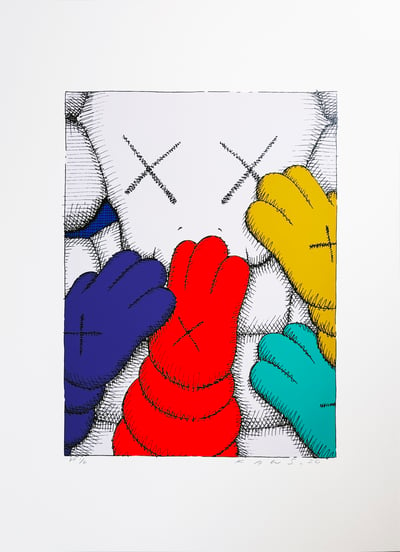
KAWS
Untitled II (Urge), 2020
Limited Edition Print
Silkscreen
Inquire For Price
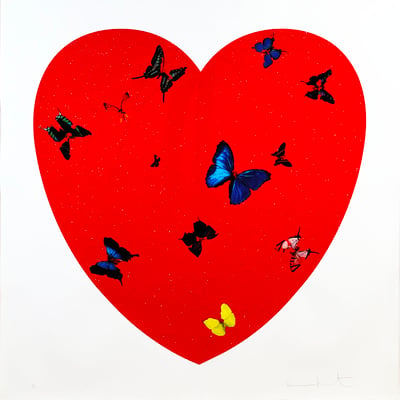
Damien Hirst
All You Need Is Love Love Love, 2010
Limited Edition Print
Screen-print
Inquire For Price

Andy Warhol
In The Bottom of my Garden IV.100A, 1956
Limited Edition Print
Mixed Media
Inquire For Price
![25 Cats Name[d] Sam and One Blue Pussy, Cover](https://images.composition.gallery/cdn-cgi/image/width=400,fit=scale-down,format=auto,quality=85,onerror=redirect/61799/andy-warhol-25-cats-cover-offset-lithograph-of-orange-striped-cat-with-yellow-eyes-and-handwritten-text-on-aged-paper1744708205-70969.jpg)
Andy Warhol
25 Cats Name[d] Sam and One Blue Pussy, Cover, ca. 1954
Limited Edition Print
Offset Print
USD 13,200

Andy Warhol
Albert Einstein (FS.II 229), 1980
Limited Edition Print
Screen-print
Inquire For Price
Related Articles


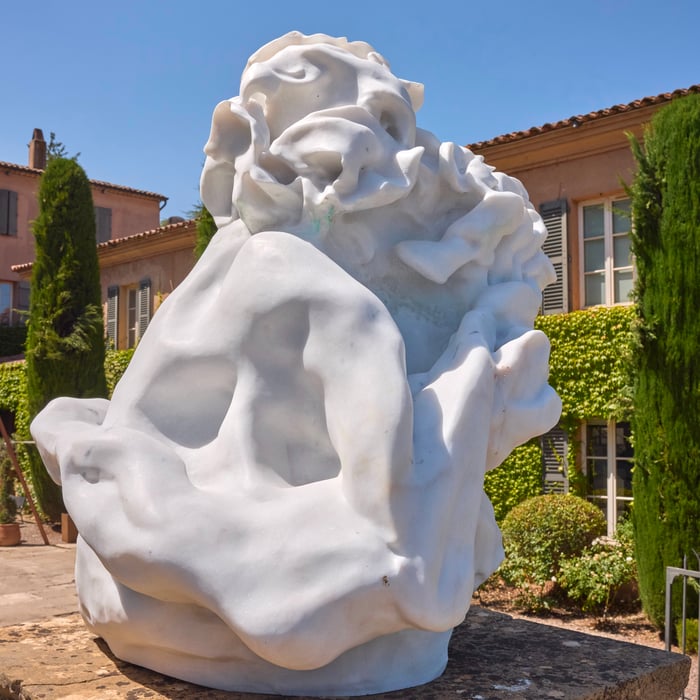
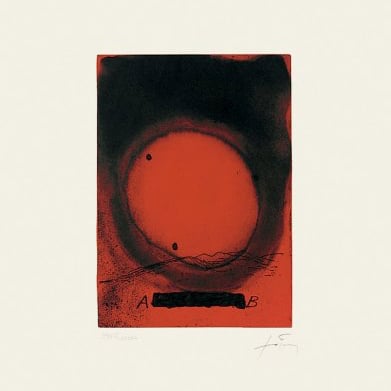
A movement and style in art that originated in Italy during the 1960s. It integrates elements of minimalism, performance art, and conceptual art by using everyday or seemingly worthless materials, such as newspapers, stones, or rags. The goal was to challenge and subvert the commercialization of art.
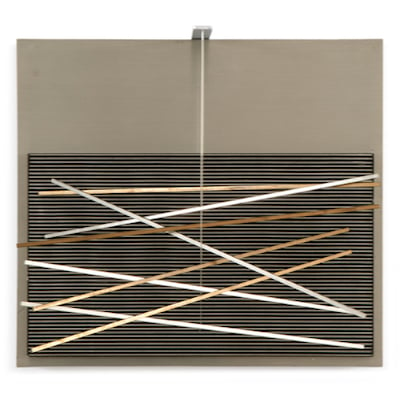
Kinetic art is an international movement that emerged in the 1920s and gained prominence in the 1960s, referring to art that involves both apparent and real motion. It encompasses any medium that includes movement, either relying on actual motion for its effect or being perceived as moving by the viewer. Early examples include canvas paintings designed to create optical illusions of movement. Today, kinetic art often refers to three-dimensional figures and sculptures, such as those operated by machines or those that move naturally. The movement covers a variety of styles and techniques that frequently overlap.

Derived from the Latin word meaning flow, Fluxus is an international movement of designers, composers, and artists known for blending various artistic disciplines and media during the 1960s. The movement remains active in visual art, performance, design, architecture, urban planning, and other creative fields. Fluxus is sometimes referred to as nter-media and continues to play a pivotal role in expanding the definitions of what art can be.
Can't find your Answer?
Thank you! Your question has been sent — we'll get back to you shortly.
