
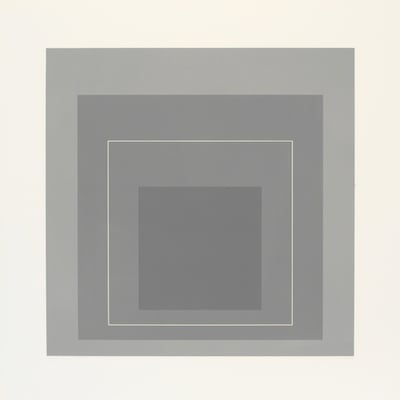
What is concrete art?
- Show All
- Established
- Discoveries
- Show All
Artworks Related to Concrete art

Julio Le Parc
Damier, 2022
Limited Edition Print
Digital Print on paper
EUR 1,000

Rupprecht Geiger
Zwei verschiedene Rot, 1967
Limited Edition Print
Silkscreen
Currently Not Available

Max Bill
Untitled (Columbus In Search of a New Tomorrow), 1992
Limited Edition Print
Silkscreen
Currently Not Available

Victor Vasarely
Diorre, 1980s
Limited Edition Print
Silkscreen
Currently Not Available

Lucio Fontana
Concetto Spaziale, 1975
Limited Edition Print
Lithograph
Currently Not Available

Francois Morellet
Untitled (Intersecting Lines), 1975
Limited Edition Print
Lithograph
EUR 1,375

Francois Morellet
Untitled (black Grid Pattern), 1975
Limited Edition Print
Lithograph
EUR 1,375

Piero Dorazio
Blue Lines, 1988
Limited Edition Print
Silkscreen
EUR 4,250

Piero Dorazio
Color fax 4, 1990
Limited Edition Print
Aquatint
EUR 2,250

Piero Dorazio
Color fax 3, 1990
Limited Edition Print
Aquatint
EUR 2,250

Piero Dorazio
Color fax 2, 1990
Limited Edition Print
Aquatint
EUR 2,250

Piero Dorazio
Color fax 1, 1990
Limited Edition Print
Aquatint
EUR 2,250

Piero Dorazio
Red Squares, 1967
Limited Edition Print
Lithograph
EUR 1,375

Piero Dorazio
Untitled Composition, 1967
Limited Edition Print
Lithograph
EUR 1,375

Antonio Dias
In Motion, 1975
Limited Edition Print
Silkscreen
EUR 6,000

Antonio Dias
Anywhere is My Land, 1975
Limited Edition Print
Silkscreen
EUR 6,000
Related Articles
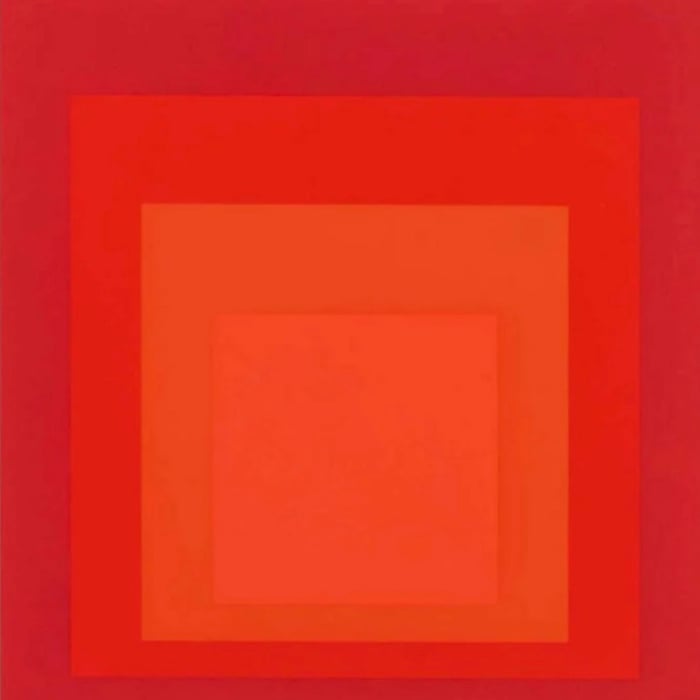

Known as Neo-Geo for short, this movement uses geometric objects and shapes to create abstract artwork as a metaphor for society. Inspired by various 20th-century art styles, including minimalism and pop art, Neo-Geo emerged in the 1980s as a response to the industrialization and commercialization of the modern world. The movement reflects on the impact of mass production, consumerism, and technology, often critiquing the superficiality of contemporary culture through its abstract, geometric compositions.

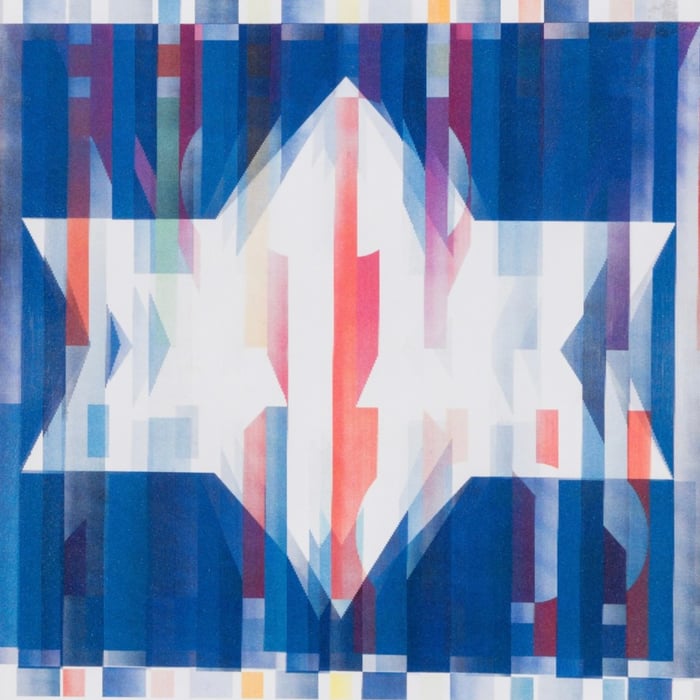
Digital art refers to art which is created using digital technology. It can be generated by computer, drawn or scanned with a tablet using a mouse. Video may be downloaded to computers so artists can manipulate images filmed with a video camera.

Recto and verso are terms used to describe the right and left pages of an open book, or the front and back of a sheet of paper. In both cases, recto refers to the right-hand page or the front of the paper, while verso refers to the left-hand page or the back of the paper. These terms are commonly used in bookbinding, printmaking, and art to distinguish between the two sides of a sheet.
Can't find your Answer?
Thank you! Your question has been sent — we'll get back to you shortly.
