

What is constructivism?
- Show All
- Established
- Discoveries
- Show All
Artworks Related to Constructivism

Piero Dorazio
Blue Lines, 1988
Limited Edition Print
Silkscreen
EUR 4,250

Piero Dorazio
Color fax 4, 1990
Limited Edition Print
Aquatint
EUR 2,250

Piero Dorazio
Color fax 3, 1990
Limited Edition Print
Aquatint
EUR 2,250

Piero Dorazio
Color fax 2, 1990
Limited Edition Print
Aquatint
EUR 2,250

Piero Dorazio
Color fax 1, 1990
Limited Edition Print
Aquatint
EUR 2,250

Piero Dorazio
Red Squares, 1967
Limited Edition Print
Lithograph
EUR 1,375

Piero Dorazio
Untitled Composition, 1967
Limited Edition Print
Lithograph
EUR 1,375
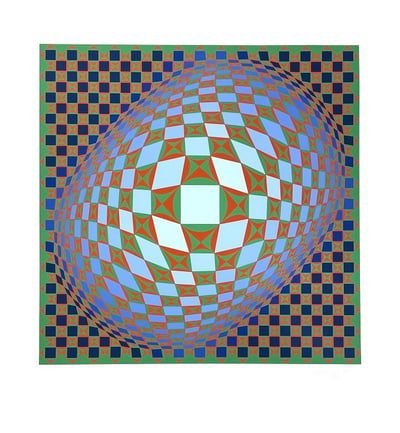
Victor Vasarely
Vilag
Limited Edition Print
Screen-print
EUR 2,300

Victor Vasarely
Omega V, 1979
Limited Edition Print
Serigraph
Inquire For Price
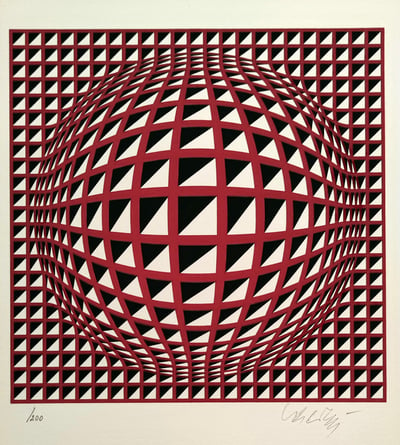
Victor Vasarely
Terz Liten, 1978
Limited Edition Print
Screen-print
EUR 650

Vera Molnar
Hyper transformation, 1974
Limited Edition Print
Screen-print
Currently Not Available

Henry Moore
Two Women Seated, 1967
Limited Edition Print
Lithograph
USD 7,200

Henry Moore
Girl Seated at Desk IV, 1974
Limited Edition Print
Lithograph
USD 4,250
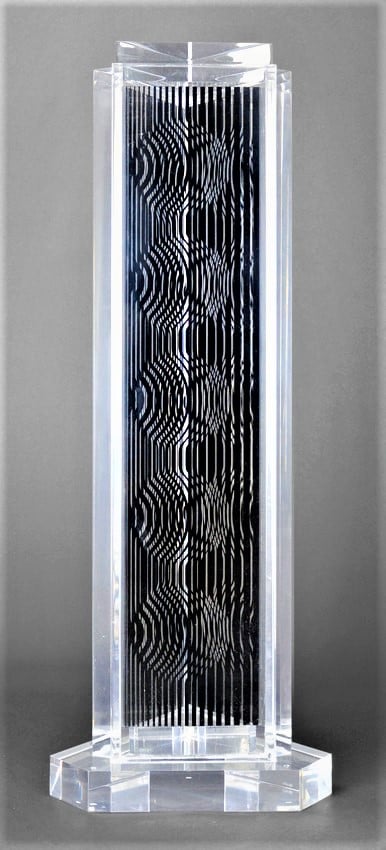
Victor Vasarely
HOLLD (Moire tower), 1990
Sculpture / Object
Mixed Media
EUR 5,500

Victor Vasarely
Hommage a Bartók, 1981
Limited Edition Print
Screen-print
EUR 1,500

Victor Vasarely
The Tennis Player, 1980
Limited Edition Print
Silkscreen
USD 650
Related Articles



Anti-Art refers to artwork that challenges traditional definitions of art. The term is often attributed to artist Marcel Duchamp, who pioneered the use of readymades—everyday objects presented as art. These works defied conventional expectations that art should adhere to traditional or high art standards.
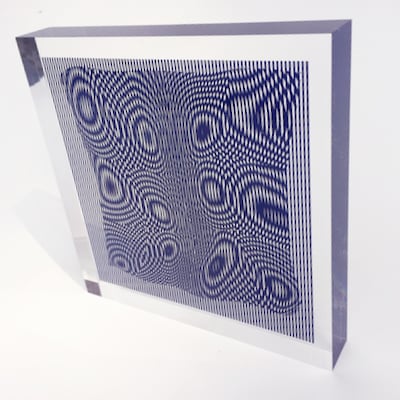
Acrylic sculpture refers to both a process and the resulting object. The artist begins by creating a sculpture from clay, plaster, or epoxy, which is then used to make a flexible mold. Melted acrylic is poured into the mold, and once it cures, the acrylic piece is hand-finished through sanding and polishing. Acrylic sculptures are valued for their clarity, durability, and ability to achieve intricate details.

Systems Art refers to a group of artists who, during the late 1960s and early 1970s, used the frameworks of conceptualism and minimalism to create art that was responsive to its environment. Rejecting traditional art themes, they embraced aesthetic systems and experimented with diverse media. Systems Art often connected with contemporary political movements of the time, emphasizing the interrelationship between the artwork, its context, and the broader social and political environment.
Can't find your Answer?
Thank you! Your question has been sent — we'll get back to you shortly.
