
What is Environmental Art?
- Show All
- Established
- Discoveries
- Show All
Artworks Related to Environmental art
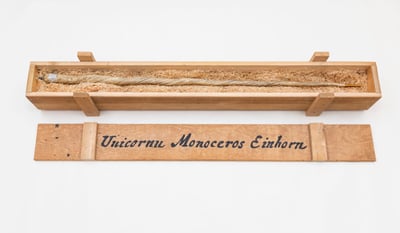
Mark Dion
My Most Priceless Treasure (unicorn), 2004
Sculpture / Object
Mixed Media
EUR 8,400
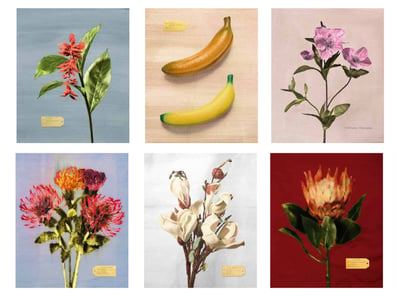
Vik Muniz
Flora Industrialis, 2024
Photography
Photograph
Currently Not Available

Yayoi Kusama
Pumpkin 2000 (Yellow), 2000
Limited Edition Print
Screen-print
Currently Not Available
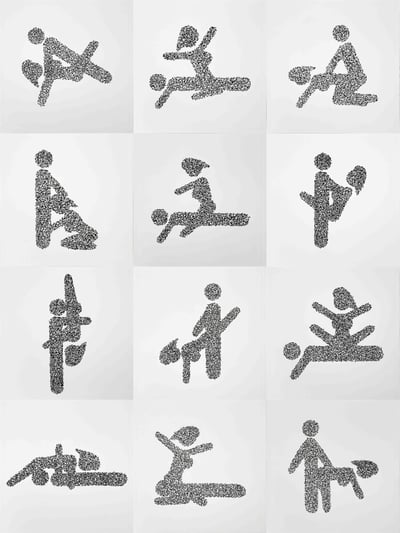
Vik Muniz
Love Bug Suite, 2014
Limited Edition Print
C-Print
Inquire For Price
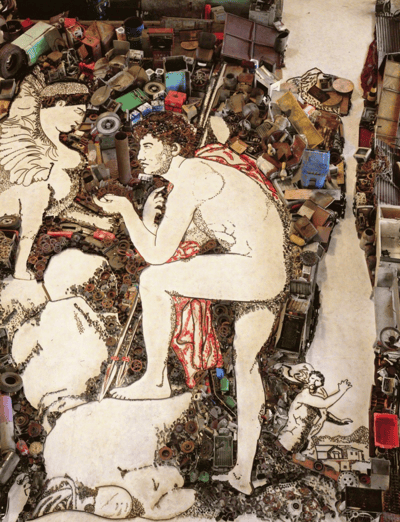
Vik Muniz
Oedipus and Sphinx, after Jean Auguste Dominique Ingres (Pictures of Junk), 2006
Photography
C-Print
Currently Not Available

Javacheff Christo
Running Fence Sunset RF-352, 1976
Limited Edition Print
Photograph
EUR 11,000

Javacheff Christo
The Gates II, 2005
Limited Edition Print
Photograph
EUR 8,900

Javacheff Christo
The Gates I, 2005
Limited Edition Print
Photograph
EUR 8,900

Javacheff Christo
The Gates IV, 2005
Photography
Photograph
EUR 4,500

Javacheff Christo
The Gates III, 2005
Photography
Photograph
Currently Not Available

Javacheff Christo
The Gates längs und quer M2, 2005
Photography
Photograph
EUR 6,000

Javacheff Christo
The Gates Lange Reihe M1, 2005
Photography
Photograph
EUR 6,000
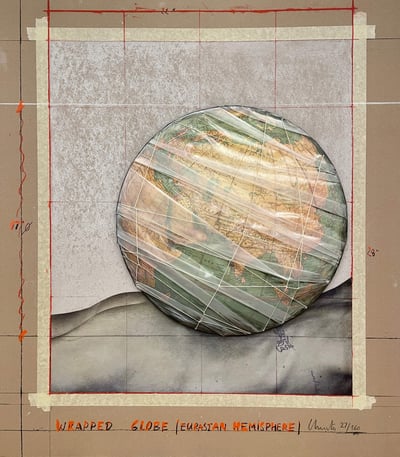
Javacheff Christo
Wrapped Globe, 2020
Limited Edition Print
Collage
Inquire For Price

Javacheff Christo
Wrapped Reichstag/Berlin Nachmittag, 1995
Limited Edition Print
Photograph
EUR 10,000
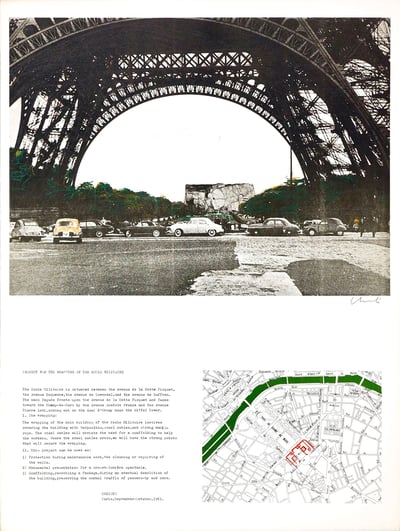
Javacheff Christo
Project Ecole Militaire, Paris, 1961
Limited Edition Print
Lithograph
EUR 3,800

Javacheff Christo
Kunsthalle Bern, 1972
Limited Edition Print
Mixed Media
EUR 18,000
Related Articles



A Lambda print is produced using a Lambda laser printer, a technology developed by the Durst company. The Durst Lambda was one of the first printers to use digital laser technology to create archival-quality prints. This process, also known as a Lambda c-type print, involves exposing photographic paper to laser light, resulting in high-quality, long-lasting images.

Monochromatic describes paintings, photographs, designs, or drawings that utilize one color or various shades of a single color. Monochromatic objects have a limited range of hues. While the term often refers to black and white or grayscale images, it can also apply to any artwork that contains tones of just one color.

Attribute can function as both a noun and a verb. As a noun, it refers to an object, symbol, or animal commonly associated with a specific person, often used in art to identify figures, such as a lion with St. Mark. As a verb, it means to assign a work of art to a particular artist, usually based on stylistic analysis or other evidence, such as attributing a painting to an artist based on its technique and composition.
Can't find your Answer?
Thank you! Your question has been sent — we'll get back to you shortly.
