

What is etching?
- Show All
- Established
- Discoveries
- Show All
Artworks Related to Etching

Paul Delvaux
L'Eventail, 1968
Limited Edition Print
Etching
EUR 2,650

Antoni Tapies
Cobert de Roig, 1984
Limited Edition Print
Etching
EUR 7,450

Rashid Johnson
Untitled (Small Anxious Man), 2021
Limited Edition Print
Etching
USD 13,500

Michael Borremans
Soubirous, 2017
Limited Edition Print
Etching
Currently Not Available

Alexander Calder
Santa Claus X, 1974
Limited Edition Print
Etching
USD 1,700

Claes Oldenburg
Pick-Axe Superimposed on a Drawing of Site by EL Grimm, 1982
Limited Edition Print
Etching
Currently Not Available
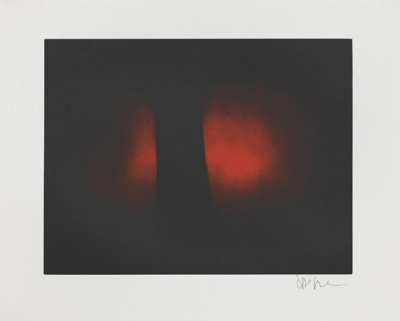
Anish Kapoor
Untitled (red on dark background), 2015
Limited Edition Print
Etching
GBP 5,300

David Hockney
Two Peppers, 1973
Limited Edition Print
Etching
Currently Not Available

Marc Chagall
Bath-Sheba at the Feet of David, 1958
Limited Edition Print
Etching
EUR 10,000 - 15,000

Joan Miró
Plate IV from Espriu, 1975
Limited Edition Print
Etching
EUR 19,500

Marc Chagall
The infant being revived by Elijah - MCH84
Limited Edition Print
Etching
USD 8,600

Marc Chagall
Joshua reading The Word Of The Law - MCH47
Limited Edition Print
Etching
USD 8,600

Marc Chagall
The suffering of Jeremiah - MCH103
Limited Edition Print
Etching
USD 8,600

Pablo Picasso
Peintre Avec Deux Modeles Regardant une Toile, 1927
Limited Edition Print
Etching
USD 7,950

Zao Wou-Ki
Paysage au Soleil, 1950
Limited Edition Print
Etching
Currently Not Available

Etel Adnan
L'Express Beyrouth-Enfer, 2021
Limited Edition Print
Etching
Currently Not Available
Related Articles


Carborundum is the trademark name for silicon carbide crystals, an abrasive material commonly used in sandpaper, cutting tools, and grinding wheels. Originally, artists used carborundum for grinding lithography stones. In collagraph printmaking, it is applied to plates to create texture and tone gradients, adding depth and contrast to the prints.

Marouflage on canvas is a technique where a paper artwork is affixed to a canvas using a transparent adhesive. This method is often used to avoid the need for framing behind glass and is usually reversible. Marouflage helps to preserve the artwork while allowing it to be displayed like a traditional painting.

Grupo Frente was a movement founded in 1954 in Brazil by teaching artist Ivan Serpa. The movement included many students from the Rio de Janeiro Museum of Modern Art and sought to reject the nationalism and figuration present in the modernist forms of Brazilian painting. Grupo Frente emphasized experimentation and abstraction, aiming to explore new artistic possibilities beyond traditional constraints.
Can't find your Answer?
Thank you! Your question has been sent — we'll get back to you shortly.
