
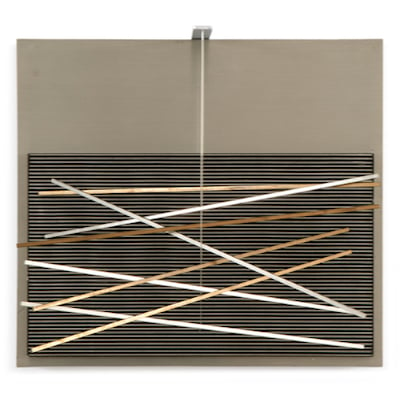
What is kinetic art?
- Show All
- Established
- Discoveries
- Show All
Artworks Related to Kinetic art

Victor Vasarely
Gordes Nives, 1971
Limited Edition Print
Lithograph
EUR 1,400
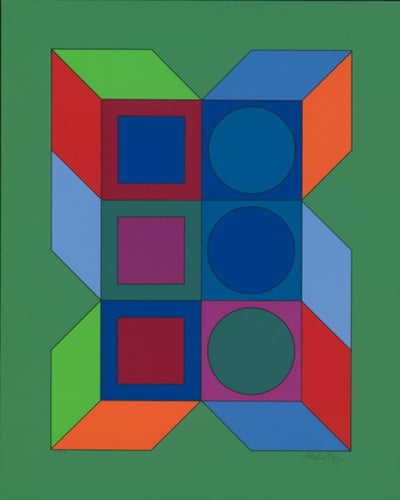
Victor Vasarely
XLV
Limited Edition Print
Silkscreen
EUR 2,200
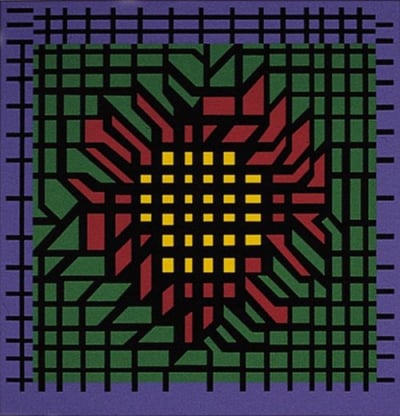
Victor Vasarely
Kat-Zag, 1980
Limited Edition Print
Lithograph
EUR 1,980
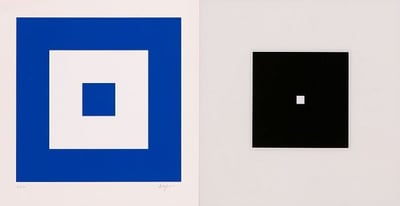
Yaacov Agam
Big Bang Blue
Limited Edition Print
Silkscreen
EUR 980
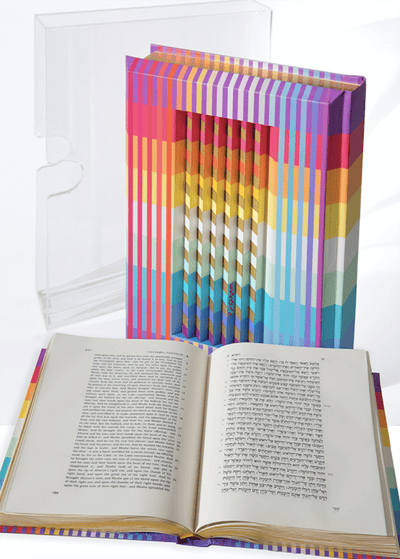
Yaacov Agam
Rainbow Torah, 1992
Sculpture / Object
Plastic
Currently Not Available

Victor Vasarely
Pleionne, 1990
Sculpture / Object
Acrylic sculpture
Currently Not Available

Dario Perez-Flores
Prochromatique YC2, 2013
Painting
Acrylic on canvas
EUR 3,500

Dario Perez-Flores
Relief Prochromatique 2, 2015
Painting
Mixed Media
EUR 3,500

Dario Perez-Flores
Relief Prochromatique 1, 2015
Limited Edition Print
Mixed Media
EUR 3,500

Dario Perez-Flores
Prochromatique Tryptich, 2015
Limited Edition Print
Lithograph
EUR 250

Dario Perez-Flores
Prochromatique 2, 2010
Sculpture / Object
Mixed Media
EUR 2,500

Rebecca Horn
Zenith of the Ocean II, 2007
Photography
C-Print
Currently Not Available

Carlos Cruz-Diez
Céramique # 5, 2008
Ceramics
Ceramic
EUR 12,000

Francois Morellet
Chartres - vert orange, 1973
Limited Edition Print
Silkscreen
EUR 1,700

Francois Morellet
Chartres bleu rouge, 1973
Limited Edition Print
Silkscreen
EUR 1,700

Francois Morellet
Chartres - bleu violet, 1973
Limited Edition Print
Silkscreen
EUR 1,700
Related Articles


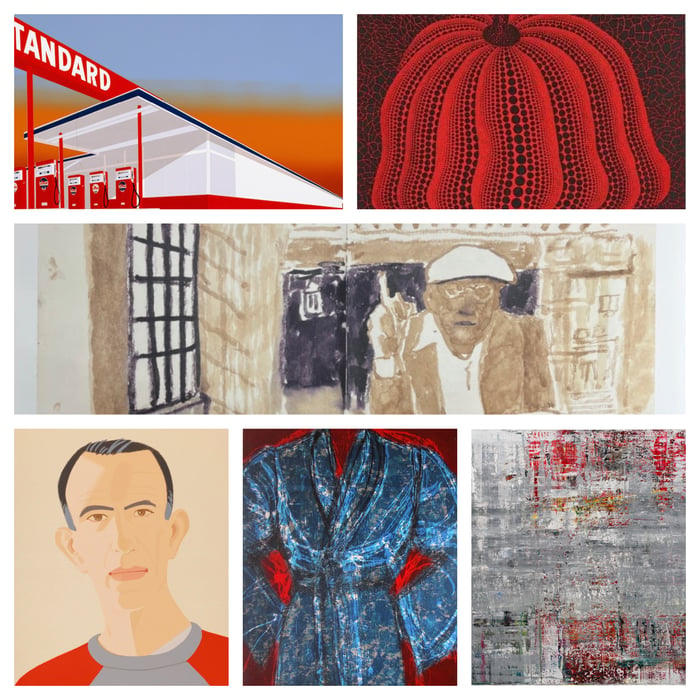

Original artwork is art that stems directly from the personal inspiration and creativity of an artist. It is not a direct copy of another artist’s work, though it may be inspired by it. The subject matter can be similar, but it cannot be an exact replication. The term also refers to a unique piece, as opposed to a multiple or edition.
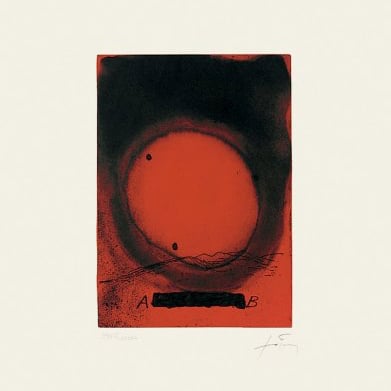
A movement and style in art that originated in Italy during the 1960s. It integrates elements of minimalism, performance art, and conceptual art by using everyday or seemingly worthless materials, such as newspapers, stones, or rags. The goal was to challenge and subvert the commercialization of art.

Acrylic on paper is a technique that involves using acrylic paints on various paper types and textures. Artists often choose watercolor paper with smooth or rough surfaces to apply acrylics using watercolor techniques such as bleeding, washing, and spattering. This approach allows for a wide range of effects, combining the flexibility of acrylics with the delicate qualities of watercolor methods.
Can't find your Answer?
Thank you! Your question has been sent — we'll get back to you shortly.
