
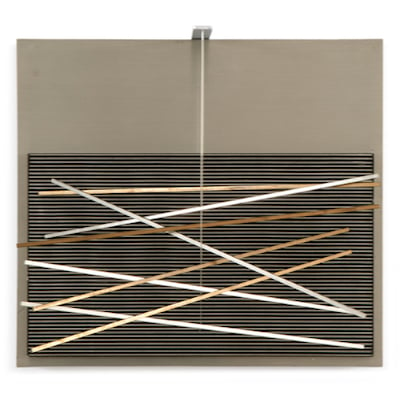
What is kinetic art?
- Show All
- Established
- Discoveries
- Show All
Artworks Related to Kinetic art

Gunther Uecker
Ouroboros #10, 2018
Limited Edition Print
Sand
EUR 8,000

Yaacov Agam
Geometric 3 Agam, c. 1975-1980
Limited Edition Print
Screen-print
EUR 2,900

Yaacov Agam
Star of Hope, Agamograph, 1975
Limited Edition Print
Screen-print
EUR 2,800

Otto Piene
Addis Abeba 8, 1972
Limited Edition Print
Screen-print
EUR 3,200

Julio Le Parc
Mobile Translucide Bleu, 2017
Sculpture / Object
Mixed Media
EUR 15,000

Chris Burden
Can not do nails, 1974
Photography
Lithograph
USD 11,300

Chris Burden
Submarine, 1987
Sculpture / Object
Mixed Media
USD 4,850
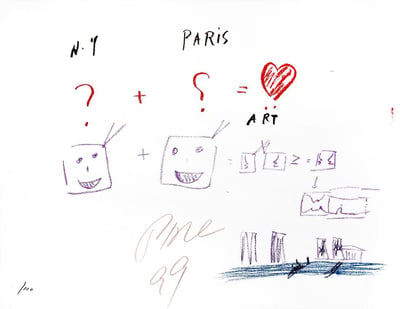
Nam June Paik
NY + Paris = Art, 1999
Limited Edition Print
Lithograph
Currently Not Available

Yaacov Agam
Tactile painting, 2013
Digital Art
Mixed Media
EUR 3,000

Yaacov Agam
Night-Lights Prismagraph, 1991
Limited Edition Print
Mixed Media
EUR 5,900

Yaacov Agam
Magic Raindrops II
Limited Edition Print
Silkscreen
Currently Not Available

Carlos Cruz-Diez
Inducción Cromática a doble frecuencia Toledo., 2017
Limited Edition Print
Lithograph
Currently Not Available
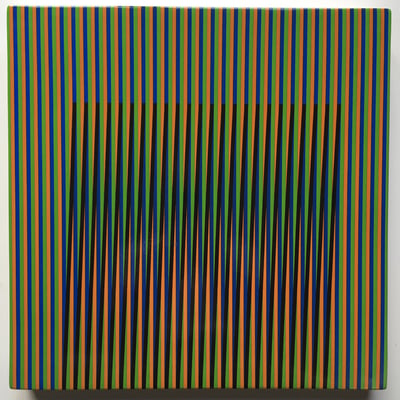
Carlos Cruz-Diez
Cerámico #4
Ceramics
Ceramic
EUR 12,000

Antonio Asis
Asistype 20 - boule sur cercle, 2016
Sculpture / Object
Monotype
EUR 3,500
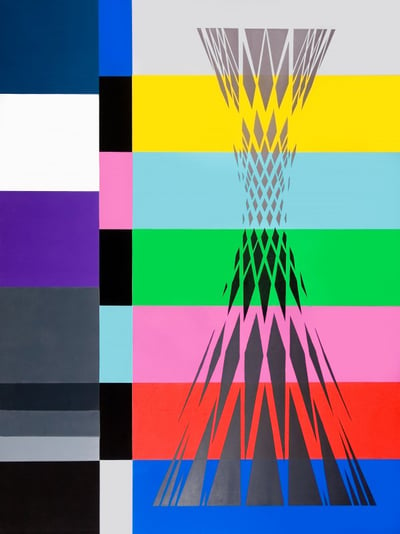
Rita McBride
Mae West, 2010
Limited Edition Print
Woodcut
EUR 15,000
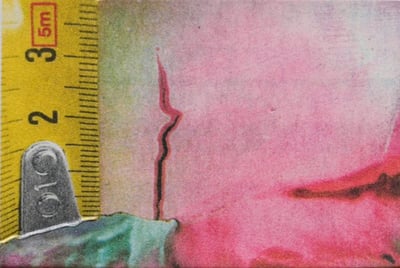
Rita McBride
Untitled (Rulers II), 2011
Photography
Photogravure
EUR 900
Related Articles

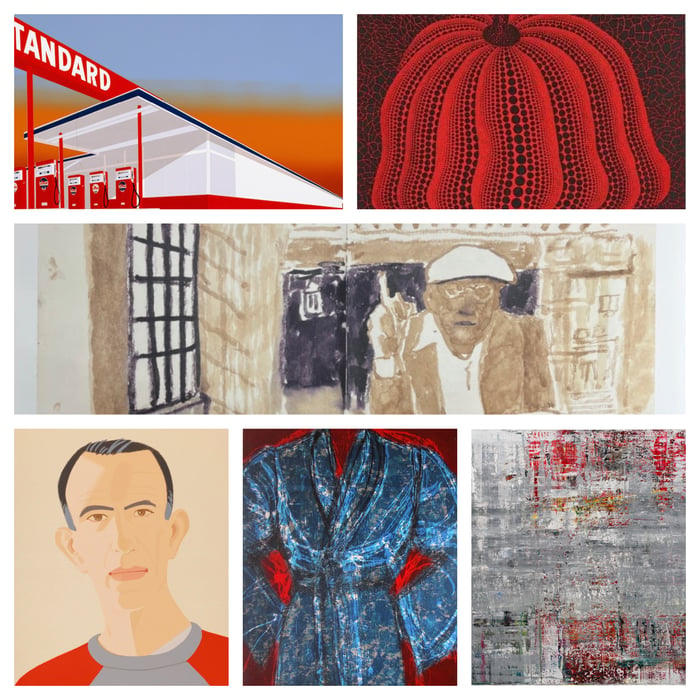

Systems Art refers to a group of artists who, during the late 1960s and early 1970s, used the frameworks of conceptualism and minimalism to create art that was responsive to its environment. Rejecting traditional art themes, they embraced aesthetic systems and experimented with diverse media. Systems Art often connected with contemporary political movements of the time, emphasizing the interrelationship between the artwork, its context, and the broader social and political environment.

Perspective refers to the techniques artists use to represent three-dimensional objects on a two-dimensional surface. These techniques create the illusion of depth and space, making objects appear as they do in the real world, despite the limitations of a flat surface. Common types of perspective include linear and atmospheric perspective.

Silkscreen is a printmaking method that uses a screen made of silk or other mesh fabric. The screen is treated with a substance that blocks ink in certain areas, allowing ink to pass through only in the desired sections. Each color in the print requires a separate screen.
Can't find your Answer?
Thank you! Your question has been sent — we'll get back to you shortly.
